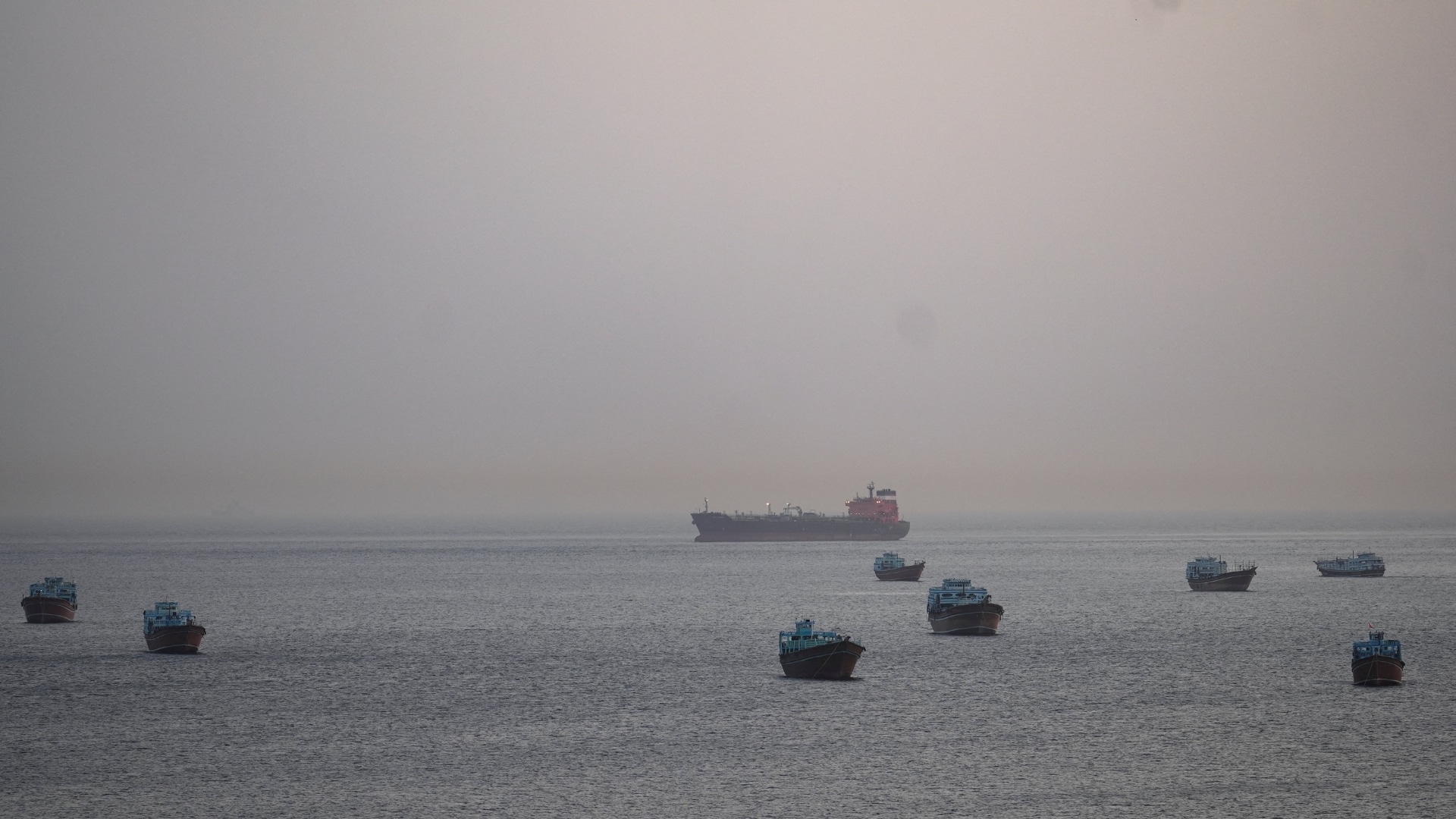
Don't let the optimistic talk from diplomats fool you. While American and Iranian negotiators are trading optimistic soundbites about a historic peace deal, the reality on the water looks entirely different. Late Friday night, US Central Command forces had to blast multiple Iranian one-way attack drones out of the sky over the Strait of Hormuz.
Iran sent these drones to slam into commercial ships in one of the most critical maritime choke points on earth. CENTCOM quick-reacted, destroyed every single target, and later took to social media to reassure the world that the international trade corridor remains open. But you have to ask yourself a simple question. If Washington and Tehran are truly on the verge of ending their conflict, why are they still shooting at each other in the Gulf?
The incident highlights a massive disconnect between political rhetoric and military realities. It reveals how fragile the current regional stability actually is.
The Gap Between Diplomacy and Exploding Drones
We are seeing a classic game of geopolitical good cop, bad cop, but played with live ammunition. Just hours before the drones were launched, Donald Trump reposted a message from Iranian Foreign Minister Abbas Araqchi stating that a memorandum of understanding to end the war had "never been closer." It looked like a breakthrough.
Then came the drones.
This isn't an isolated miscommunication. It's a calculated strategy. The Iranian regime frequently uses military leverage right when talks reach a critical juncture. By threatening the shipping lanes, they want to remind Washington exactly how high the stakes are if negotiations fall through.
The strategy backfires when US forces prove they can neutralize the threat without breaking a sweat. According to defense officials, the intercepted drones were standard Iranian-made loitering munitions, likely Shahed variants, designed to crash into vessels and detonate. CENTCOM didn't release the exact platforms used to down the aircraft, but navy destroyers and regional land-based air defense systems have been keeping a continuous watch over the strait. Traffic didn't even slow down.
Why the Strait of Hormuz Controls Global Markets
If you think a few drones in a distant strait don't affect your daily life, think again. The Strait of Hormuz is the literal jugular vein of the global energy economy.
At its narrowest point, the shipping lane is only two miles wide in either direction. Yet, roughly a fifth of the world's petroleum passes through this tiny strip of water daily. When the US and Israel launched major strikes on Iran back in late February, the subsequent disruption sent grocery prices, shipping costs, and global fuel rates through the roof.
- The Daily Volume: Over 20 million barrels of oil move through here every day.
- The Vulnerability: Ships have nowhere to maneuver if they come under swarm attacks.
- The Economic Impact: Even a temporary closure spikes insurance premiums for global shipping container fleets, driving up the cost of everything you buy.
Iran knows this. They don't need to sink an entire fleet to win a psychological victory. They just need to make the route look too dangerous for commercial insurers to handle. That's why the Islamic Revolutionary Guard Corps targets commercial tankers instead of going head-to-head with heavily armed US Navy warships. They want to squeeze the global economy until the West concedes to better terms at the negotiating table.
A History of Broken Ceasefires
This isn't the first time this month that things turned violent despite a nominal ceasefire. Just last week, Iranian forces launched seven ballistic missiles toward American facilities and allies in Kuwait and Bahrain, immediately following a previous US intercept of four drones in the strait.
Every time a weapon is fired, both sides claim the other guy started it. Tehran claims the US is violating the April 8 ceasefire terms. Washington counters that defending international commercial shipping is non-negotiable.
What we're seeing isn't a peaceful resolution. It's a highly managed, high-stakes conflict where both sides are trying to see how far they can push the envelope without triggering an all-out regional conflagration. President Trump claimed recently that the war is "largely finished," but acknowledged it could still end in a "more difficult way." This latest drone intercept is exactly what that difficult way looks like.
How Maritime Security Operators Handle the Threat
To understand how these intercepts work, you have to look at the tactical level. Commercial vessels transiting the Gulf can't rely entirely on the US Navy to act as a personal shield. Ship captains are actively changing how they operate.
If you manage logistics or maritime transit through the Middle East, you can't just look at the political headlines and assume the coast is clear. Companies are currently doubling down on visual lookouts, running electronic countermeasures where permitted, and keeping constant communication with the United Kingdom Maritime Trade Operations and CENTCOM's naval component.
Relying on a diplomatic signature to secure a voyage is a mistake. The real security is provided by the air defense crews tracking radar screens in the dark, waiting for the next launch. Keep your crews on high alert, monitor CENTCOM transit advisories in real-time, and don't assume the diplomatic breakthrough means the shooting has stopped.