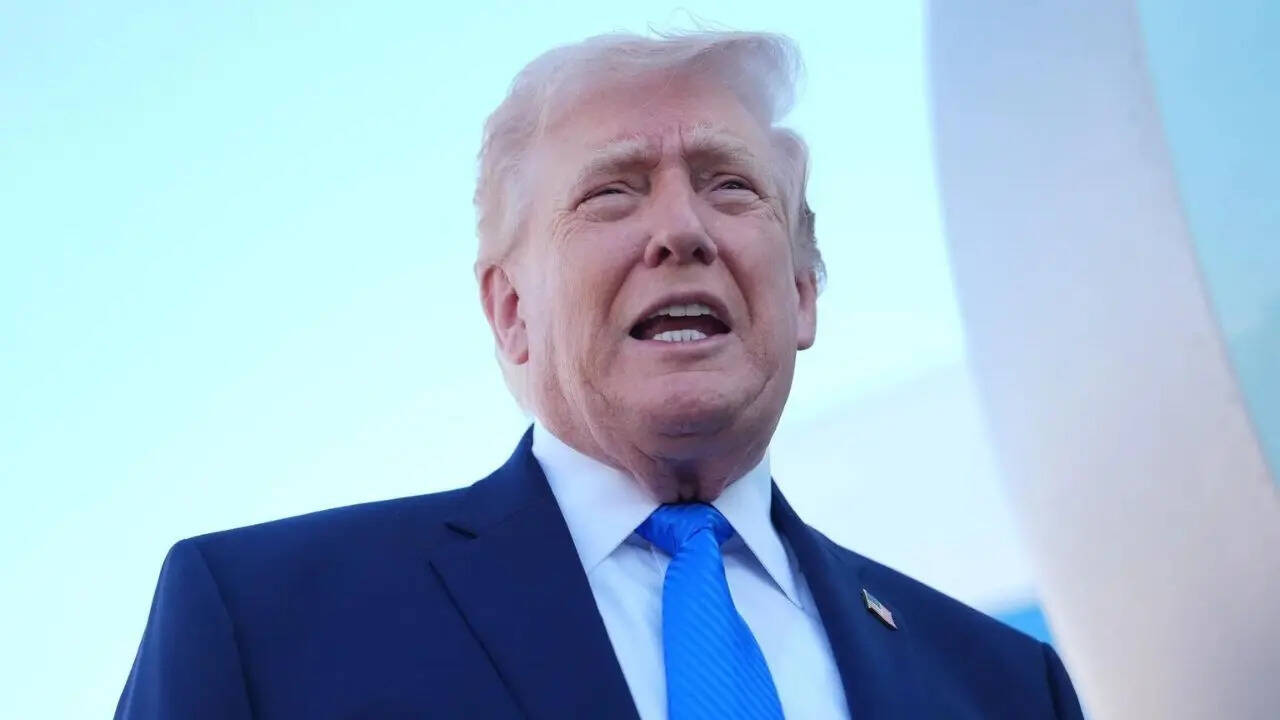
The era of the U.S. Navy acting as the world’s unpaid maritime security guard is over. On Saturday, Donald Trump signaled a tectonic shift in global energy logistics by demanding that nations dependent on the Strait of Hormuz—specifically China, Japan, South Korea, France, and the UK—deploy their own warships to secure the passage. As the waterway remains effectively choked following the February 28 outbreak of hostilities between the U.S.-Israeli coalition and Iran, the President’s "get your own oil" ultimatum has left allies and adversaries alike staring at a $100-per-barrel reality they are unequipped to handle.
The immediate crisis is simple: the Strait is the world's most vital energy artery, and right now, it is a graveyard for tankers. Despite the administration’s claim of having decimated "100% of Iran’s military capability," Tehran’s asymmetric arsenal of mines, drones, and shore-based missiles has rendered the 21-mile-wide passage a no-go zone. By telling the world that the U.S. will no longer go it alone, Trump is not just venting frustration; he is dismantling a seventy-year-old security architecture that guaranteed the free flow of commerce at the American taxpayer's expense.
The Geography of a Chokehold
To understand why the world is panicking, you have to look at the geometry of the Strait. It is not an open ocean; it is a narrow corridor where the shipping lanes are only two miles wide in either direction. On one side sits the jagged coastline of Iran, bristling with mobile missile launchers and hidden fast-attack craft. On the other, the Musandam Peninsula of Oman.
Iran’s strategy is not to win a naval battle—it is to make the cost of transit unbearable. Every drone that hits a hull and every mine bobbing in the current drives insurance premiums to levels that effectively ground the global fleet. By March, sixteen tankers had already been struck. For countries like Japan and South Korea, which source the vast majority of their crude through this needle’s eye, the sudden withdrawal of the American "security blanket" is an existential threat to their industrial economies.
The Transactional Alliance
The friction with France and the UK is particularly pointed. Trump’s criticism of France as "unhelpful" stems from Paris’s refusal to commit naval assets to a conflict they believe Washington ignited without consultation. This is the "transactional" foreign policy in its rawest form. From the White House’s perspective, if the U.S. is energy independent, there is no logical reason to risk American lives or multi-billion dollar destroyers to protect oil bound for Shanghai or Marseille.
However, the "why" goes deeper than mere isolationism. The U.S. is currently bogged down in a high-intensity air campaign against Iranian infrastructure, including the recent strikes on Kharg Island. Extending that mission to include constant close-in escort for hundreds of commercial vessels would overstretch the Fifth Fleet to a breaking point.
The Escort Dilemma
Military analysts identify a two-phase problem that the administration is currently unable to solve:
- Degradation: The U.S. must first eliminate every mobile missile battery along hundreds of miles of coastline.
- Protection: Even then, a single $50,000 "suicide" drone can disable a tanker, requiring a level of localized air defense that the U.S. Navy cannot provide for every ship simultaneously.
By demanding a coalition, Trump is trying to crowdsource the risk. He is betting that if China’s economy begins to stall due to a lack of crude, Beijing will be forced to use its own growing navy to police the waters—effectively doing Washington’s dirty work while exposing Chinese hulls to Iranian retaliation.
The Hidden Cost of "Helping a Lot"
The President’s promise that the U.S. will "help—A LOT" is the carrot to the "get your own oil" stick. In practical terms, this likely means providing "top cover": high-altitude surveillance, satellite intelligence, and long-range Aegis missile defense, while leaving the "sporty" work of minesweeping and close-quarters ship protection to the allies.
But the allies aren't biting. The UK is "intensively looking" at options—diplomatic speak for doing nothing—while France has flatly rejected sending warships into an active war zone. This leaves a vacuum that the global market is filling with volatility. When the U.S. Navy pulls back from its role as the guarantor of the commons, the "commons" cease to exist. They become a collection of private interests where only the heavily armed can trade.
A System in Ruins
The collapse of cooperation in the Strait is the physical manifestation of a broader shift in global power. For decades, the U.S. maintained the shipping lanes not out of altruism, but because a stable global economy benefited the American-led order. Now, that order is being traded for a "pay-to-play" model.
If the Strait remains closed, the ripple effects will move faster than any diplomat. We are looking at a permanent shift in how energy is priced, factoring in the cost of private or national naval protection. The era of cheap, "safe" oil is being buried in the silt of the Persian Gulf.
Countries are now forced to choose between three unattractive options:
- Direct Intervention: Risking their own limited naval assets in a meat-grinder conflict.
- Diplomacy with Tehran: Attempting to negotiate "safe passage" separate from the U.S., which effectively breaks the coalition.
- Economic Contraction: Accepting the massive price hikes and supply disruptions as a permanent feature of the new era.
The U.S. has signaled that it is comfortable with any of these outcomes as long as it isn't the one paying the bill. The standoff in the Strait of Hormuz isn't just about oil; it's the final audit of the American century.
Start the engines on your own destroyers, or leave the tankers at the dock.


