The War Premium Scam
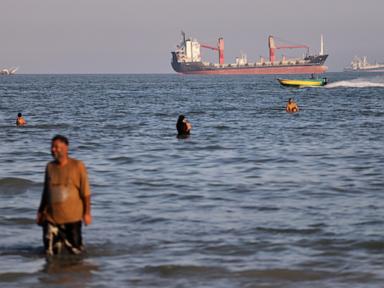
Mainstream media loves a good maritime thriller. Every time an oil tanker inches through the Strait of Hormuz under the watchful eye of Iran’s Islamic Revolutionary Guard Corps (IRGC), newsrooms treat it like the opening scene of a third world war. The narrative is always identical: a brave crew risks total annihilation, global energy markets teeter on the edge of collapse, and only military escorts can save civilization.
It is a great story. It is also completely wrong.
The idea that Iran is on the verge of choking off 20% of the world’s petroleum supply is the most lucrative ghost story in global logistics. I have spent years analyzing maritime risk and trade flows, and I can tell you that the actual danger to global commerce isn’t a missile strike; it is the blind panic engineered by insurers, security contractors, and legacy defense analysts who need the tension to keep their balance sheets fat.
When a tanker "navigates despite threats," it isn't defying the odds. It is participating in a highly calculated, mutually beneficial theater production where everyone gets paid except the consumer.
Why Iran Will Never Actually Close the Strait
Let’s dismantle the foundational myth of Middle Eastern logistics: the total blockade.
Geopolitical pundits love to look at a map, see a 21-mile-wide chokepoint, and assume it functions like a garage door. They assume the IRGC can simply drop the gate and turn off the world’s oil.
They ignore the basic economic reality of the Islamic Republic.
Iran’s economy relies heavily on illicit and semi-licit petroleum exports, largely flowing to buyers in Asia who are willing to bypass Western sanctions. Guess which waterway those tankers must use to leave the Persian Gulf? The exact same Strait of Hormuz.
Closing the strait doesn't just starve the West or raise gas prices in Chicago; it commits economic suicide for Tehran. The moment the IRGC completely shuts down the shipping lanes, they bankrupt their own regime, alienate their remaining economic lifelines in Beijing, and turn their primary geopolitical leverage into an active death warrant.
Imagine a scenario where a hostage-taker locks himself inside the vault with no key and no air supply just to prove he can. That is what a total closure looks like. Iran knows this. The Pentagon knows this. The maritime insurers know this. But admitting that the threat is strictly theatrical doesn’t justify a 15% spike in war-risk insurance premiums, does it?
The Mathematics of a Controlled Skirmish
When friction does occur—a seized vessel here, a drone strike there—it is never random chaos. It is a carefully metered diplomatic currency.
Look at the historical data of the past decade. When the IRGC intercepts a vessel, it is almost always a direct, proportional tit-for-tat response to an asset seizure elsewhere, such as Britain detaining an Iranian tanker off Gibraltar, or the US confiscating sanctioned cargo.
- Target Selection: Highly specific. Iran selects ships flying flags of convenience with loose geopolitical backing or direct ties to immediate adversaries.
- Operational Scope: Sub-lethal. The goal is to create a media event, hold a asset for leverage, and negotiate a swap.
- Market Impact: Temporary. Crude spikes for 48 hours, algorithmic traders panic, and the price normalizes once the math overrides the emotion.
The Insurance Cartel’s Favorite Crisis
If the physical risk to shipping is demonstrably low, why does the industry act like every voyage is a suicide mission? Follow the money straight to London.
The Joint War Committee (JWC) of the Lloyd's Market Association regularly updates its Listed Areas—the places Hull War, Piracy, Terrorism, and Related Perils underwriters consider high-risk. The Persian Gulf and the Gulf of Oman are permanent fixtures on this list.
The moment a tanker enters these waters, a specialized "war-risk premium" activates. This isn't a minor administrative fee; it can add hundreds of thousands of dollars to a single transit.
[Standard Transit Risk Assessment]
       │
       ▼
[Media Reports IRGC "Threat"]
       │
       ▼
[JWC Maintains High-Risk Designation] ──► [Underwriters Spike Premiums]
       │                                             │
       ▼                                             ▼
[Tankers Pass Without Incident]          [Massive Profits Retained]
This creates a perverse incentive structure. The insurance market requires the perception of imminent peril to justify these exorbitant rates. If the Strait of Hormuz were recognized for what it actually is—a heavily monitored, high-traffic commercial highway with an incredibly low statistical rate of actual hull destruction—those premiums would evaporate.
Private maritime security companies also feed at this trough. They sell compliance, escort services, and risk-assessment briefs that are essentially cut-and-paste aggregations of public news feeds, wrapped in tactical jargon to terrify corporate boardrooms.
Your Supply Chain Is Asking the Wrong Question
Corporate risk officers frequently ask: "How do we protect our assets from Iranian aggression in the Gulf?"
If you are asking that, you have already lost. You are focusing on a cinematic variable you cannot control, rather than the structural vulnerabilities you can.
The real threat to energy logistics isn't a rogue speedboat in Hormuz; it is the staggering lack of redundant infrastructure on land. The actual crisis is that the global energy infrastructure has spent forty years failing to scale alternative routes because building pipelines across borders requires difficult diplomacy, while paying insurance premiums just requires a pen.
The Failure of the Bypass Alternatives
There are pipelines designed to circumvent the strait, such as the Abu Dhabi Crude Oil Pipeline to Fujairah or Saudi Arabia’s East-West Pipeline to Yanbu. Yet, they consistently run below maximum capacity. Why? Because the market is lazy. The industry would rather complain about the IRGC and price the volatility into the pump than commit the capital required to permanently re-route the backbone of global trade.
Here is the brutal truth: the shipping industry tolerates the Hormuz theater because it allows them to socialise the cost of security. Taxpayers fund the international naval coalitions that patrol the gulf, while private operators pocket the profits of the volatile oil spikes caused by the headlines.
The Dark Side of the Contrarian Reality
Let's be completely transparent about the downside of this perspective. If you treat the Strait of Hormuz as a paper tiger, you risk underestimating the one variable that defies logic: pure human incompetence.
While a rational Iranian regime will never intentionally close the strait, the concentration of naval assets in such a tight corridor increases the statistical probability of a catastrophic accident. A nervous radar operator on an American destroyer, an over-eager IRGC commander looking for a promotion, or a navigational error by a commercial crew could spark an unintended escalatory spiral.
That is the actual risk. It isn't a calculated strategic blockade; it is a systemic blunder. And no amount of war-risk insurance or tactical escorting can mitigate a chain reaction of human stupidity.
Stop reading the breathless headlines about tankers "braving the gauntlet." They aren't braving anything. They are running a predictable, highly insured commercial route, executing a script written by politicians and funded by the consumers who buy the oil. The gauntlet doesn't exist. It's just business.