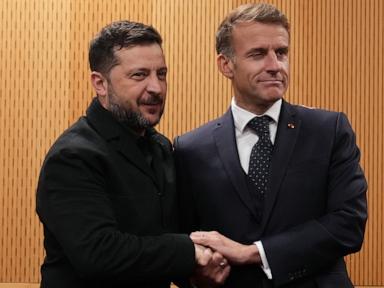
France’s decision to introduce the prospect of deploying military personnel to Ukraine—and the actual dispatch of specialized instructors, technical advisors, and diplomatic security elements—represents a calculated shift from defensive containment to strategic ambiguity. Rather than signaling an immediate entry into conventional ground combat, Paris is executing a multi-variable deterrence operation designed to disrupt Russian operational planning, resolve critical Ukrainian manpower and maintenance bottlenecks, and reassert French leadership within the European security architecture. Russia’s response operates across a calibrated spectrum of asymmetric counter-pressure, nuclear signaling, and targeted kinetic strikes aimed at raising the domestic political cost in Paris without triggering NATO’s Article 5 collective defense mechanism.
The Architecture of French Strategic Ambiguity
For the first two years of the full-scale invasion, Western support relied on deterrence by denial paired with strict self-imposed red lines. By publicly declaring what NATO would not do—specifically, refusing to deploy troops—Western capitals handed Moscow a predictable risk-reward matrix. Russian planners could allocate forces knowing the exact ceiling of Western intervention. Don't miss our earlier coverage on this related article.
President Emmanuel Macron’s reversal of this posture introduces uncertainty back into the Kremlin’s decision-making loop. In classical deterrence theory, particularly Thomas Schelling’s concept of the "threat that leaves something to chance," unpredictability forces an adversary to reserve resources for worst-case contingencies.
The Four Operational Functions of Limited Deployment
To separate political rhetoric from military reality, the deployment of French personnel must be broken down into four distinct functional tiers. None of these tiers currently involves deploying mechanized infantry divisions to the front lines in Donbas or Zaporizhzhia; instead, they target specific friction points in the Ukrainian war effort. To read more about the context here, TIME offers an excellent summary.
In-Country Training and Force Generation
Training Ukrainian recruits in France or Poland creates a massive logistical tail. Moving thousands of troops across borders consumes transport capacity, delays integration into active units, and exposes transit corridors to intelligence monitoring. Embedding French cadres in western Ukraine—specifically around Lviv or Kyiv—compresses the training pipeline. It allows instructors to tailor doctrine directly to the immediate tactical realities of the front, such as drone-saturated battlefields and electronic warfare environments, while freeing up veteran Ukrainian officers who would otherwise be pulled from the line to run basic instruction.Forward Maintenance and Technical Sustainment
Modern Western weapon systems—such as the CAESAR self-propelled howitzer, SAMP/T air defense batteries, and Scalp-EG cruise missiles—require complex maintenance cycles. Currently, damaged hardware must be hauled out of Ukraine to repair hubs in Poland or Romania, taking critical assets offline for weeks. Placing uniformed French technicians and defense contractors inside hardened Ukrainian facilities reduces turnaround times from weeks to days. This directly increases the operational availability rate of existing hardware without requiring the delivery of new platforms.Demining and Engineering Support
Ukraine is the most heavily mined territory in the world, with roughly a quarter of its landmass contaminated by unexploded ordnance and anti-personnel mines. French combat engineers possess specialized route-clearance and explosive ordnance disposal capabilities. Deploying these units to rear areas and liberated territories along the Belarusian border allows Ukraine to redeploy its own combat engineers to active offensive or defensive sectors.Air Defense and Border Security Backfilling
Stationing French air defense specialists or border monitoring units along Ukraine’s northern frontier with Belarus or near critical infrastructure in the west serves a dual purpose. Tactically, it protects vital logistics nodes. Strategically, it creates a "tripwire" effect. Any Russian strike on a facility housing French military personnel carries the immediate risk of killing NATO-member soldiers, forcing Moscow to exercise targeting restraint in those specific zones.
The Geopolitical Drivers Behind Paris’s Shift
Understanding why France—historically the most vocal advocate for diplomatic off-ramps with Moscow—became the most hawkish major European power requires examining three structural shifts in European geopolitics.
The Failure of the Diplomatic Track and Strategic Betrayal
Paris invested significant political capital in maintaining open communication channels with Vladimir Putin prior to and immediately following the February 2022 invasion. The Kremlin’s persistent bad-faith negotiations and disinformation campaigns targeting French interests in the Sahel—specifically the expulsion of French forces from Mali, Burkina Faso, and Niger facilitated by Russian paramilitary groups—eliminated the domestic constituency in Paris for accommodating Moscow. Russia ceased to be viewed as a difficult interlocutor and was reclassified by the French defense establishment as a direct, systemic adversary.
Filling the Transatlantic Vacuum
Fluctuations in U.S. congressional support for Ukraine exposed the fragility of Europe’s reliance on American security guarantees. With the potential for reduced American engagement in European defense, Paris identified an opportunity to operationalize its long-standing doctrine of European strategic autonomy. By taking the initiative on troop deployments, France positioned itself as the indispensable security guarantor on the continent, directly challenging Germany’s more cautious, risk-averse approach.
Domestic Industrial and Economic Calculus
France’s defense industrial base operates on a model that requires sustained export demand and high production runs to remain viable. Transitioning the French economy to a "war economy" footing—doubling or tripling artillery shell and missile production—requires long-term strategic commitment. Framing the conflict in existential terms justifies the multi-year capital expenditure required to reindustrialize French defense manufacturing and secures France’s position as the primary arms supplier to a rearming Europe.
Deconstructing the Russian Response Matrix
Moscow cannot ignore the presence of NATO-nation soldiers in Ukraine without suffering a loss of internal credibility, yet a direct, massive retaliatory strike on French soil would trigger an existential war with the entire Atlantic alliance. Consequently, the Kremlin has structured its response across four asymmetric domains designed to bleed French resolve while staying below the threshold of conventional interstate war.
1. Kinetic Targeting of Foreign Personnel Inside Ukraine
Russia’s immediate military response relies on intelligence-led precision strikes targeting facilities suspected of housing Western advisors, instructors, or mercenaries. By utilizing Iskander-M ballistic missiles and Kinzhal aero-ballistic missiles against training centers and hotels in cities like Kharkiv, Odesa, and Lviv, Moscow seeks to inflict casualties that cannot be easily concealed by Paris. The objective is not to destroy Ukraine’s military capacity through these specific strikes, but to generate body bags that will trigger a domestic political backlash in France.
2. Escalatory Nuclear Signaling
Whenever Paris escalates its rhetoric regarding troop deployments, Moscow responds with non-strategic nuclear exercises. By conducting tactical nuclear drills in the Southern Military District—bordering Ukraine—and involving Belarusian forces, the Kremlin attempts to decouple European public opinion from government policy. This signaling aims to remind French voters that France, while a nuclear-armed state itself, faces catastrophic risks if conventional escalation spirals out of control.
3. Hybrid Warfare and Sub-Threshold Sabotage
Inside France and across Western Europe, Russian intelligence services (specifically the GRU) have intensified sub-threshold operations. These activities include:
- Physical Sabotage: Arson attacks on logistics warehouses, defense manufacturing plants, and rail infrastructure linked to Ukrainian aid.
- Information Operations: Coordinated disinformation campaigns exploiting French domestic fault lines, such as inflation, pension reforms, and immigration, to frame support for Ukraine as a direct cause of domestic economic hardship.
- Cyber Operations: Distributed Denial of Service (DDoS) attacks and intrusion attempts targeting French government ministries, energy grids, and telecommunications networks.
4. Asymmetric Geopolitical Counter-Pressure
Moscow actively leverages its global footprint to impose costs on France outside the European theater. This includes deepening military cooperation with anti-French juntas in West Africa, destabilizing French overseas territories—such as fanning separatist unrest in New Caledonia through information warfare—and disrupting French commercial interests in the Global South.
Escalation Dynamics and System Limitations
The interaction between French strategic ambiguity and Russian asymmetric retaliation creates a volatile feedback loop with distinct structural limitations for both sides.
Constraints on the French Position
Paris faces severe material and political constraints that cap the scale of any deployment:
- Force Size Limitations: The French Army is a high-readiness, expeditionary force, not a mass-mobilization army. It lacks the personnel depth to deploy more than a few thousand specialized troops without severely degrading its global commitments and NATO readiness obligations.
- Alliance Friction: France’s unilateral signaling alienated key allies, including the United States and Germany, who fear being dragged into a direct confrontation with Russia via a bilateral French miscalculation. Without unanimous NATO backing, any French personnel in Ukraine operate without the automatic umbrella of Article 5 protection—a legal distinction that creates immense operational vulnerability.
- Domestic Political Fragility: A fractured French parliament and a polarized electorate leave the executive branch vulnerable to domestic pushback if casualties mount.
Constraints on the Russian Position
Moscow’s ability to deter France is equally bounded by operational realities:
- Intelligence Saturation: Pinpointing small, dispersed teams of French technicians or instructors moving frequently across western Ukraine requires real-time Intelligence, Surveillance, and Reconnaissance (ISR) assets that Russia struggles to maintain deep behind Ukrainian air defense networks.
- Escalation Dominance Trap: If Russia successfully executes a mass-casualty strike against a French military facility in Ukraine, it risks catalyzing the exact outcome it wants to prevent: a unified, emotional surge in European support that results in the deployment of combat air patrols or larger ground contingents from a coalition of willing states (such as Poland and the Baltic nations).
The Strategic Trajectory
The operational reality on the ground will not evolve into a Franco-Russian conventional war, nor will Paris retreat from its posture of strategic ambiguity. Instead, the conflict is settling into a protracted gray-zone attrition phase inside western Ukraine.
France will proceed with the incremental, low-visibility deployment of modular technical and training units—numbered in the hundreds rather than tens of thousands—embedded deeply within Ukrainian command structures and hardened infrastructure. Paris will deliberately maintain opacity regarding their exact locations and rules of engagement to maximize the deterrent effect on Russian targeting.
To counter this without triggering an Article 5 crisis, Moscow will intensify its campaign of covert sabotage within French territory while dedicating high-end ISR and ballistic missile assets to hunting high-value Western targets inside Ukraine. The decisive variable will not be the kinetic exchange on the battlefield, but the resilience of French domestic political will against sustained Russian hybrid warfare and the inevitable occurrence of initial French casualties. To sustain this posture, Paris must pair its forward deployments with aggressive counter-intelligence operations at home, hardened air-defense umbrellas over western Ukrainian training hubs, and explicit bilateral security protocols with Baltic and Nordic allies to ensure that a Russian strike on French personnel triggers an immediate, coordinated European military response rather than diplomatic paralysis.