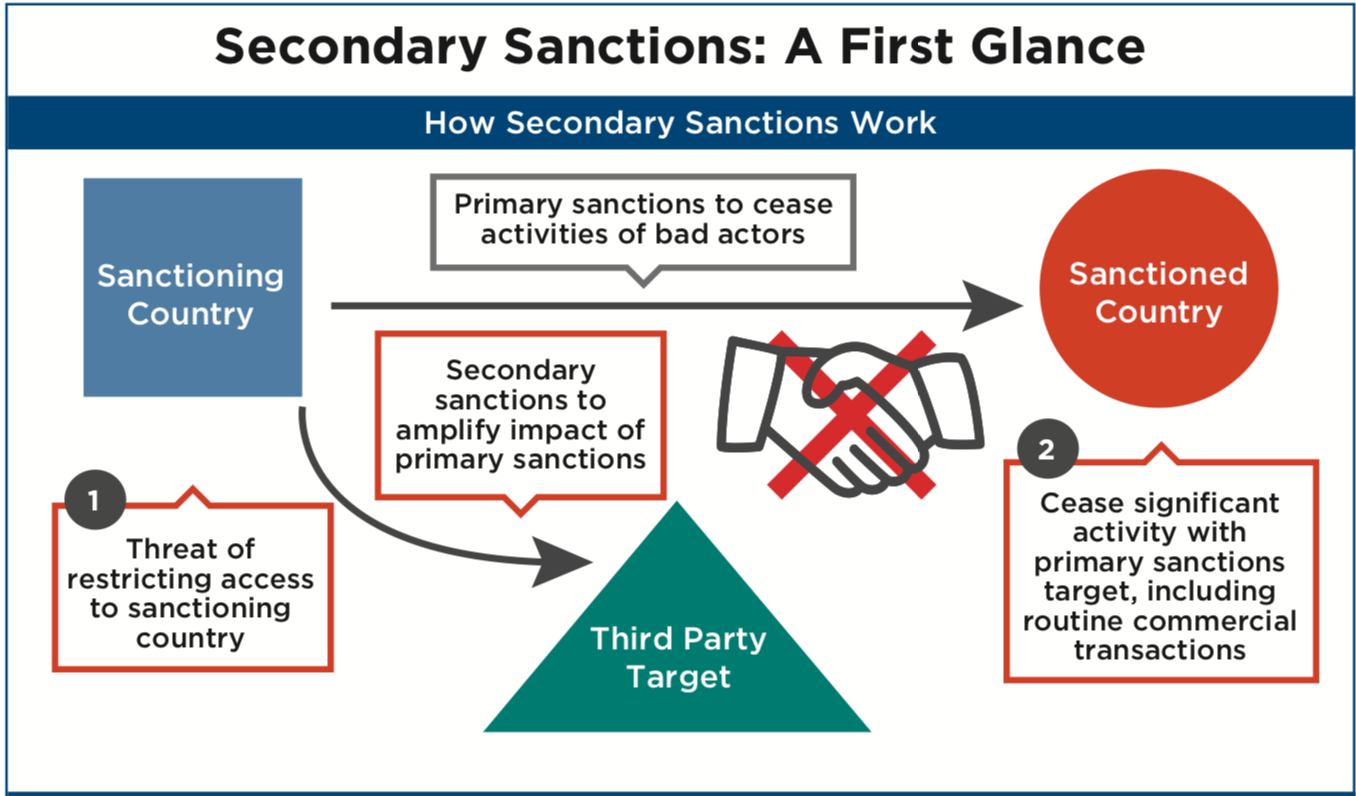
The current escalatory cycle between Israel and Iran has moved beyond the historical "shadow war" into a phase of direct kinetic confrontation where the target selection is no longer merely symbolic. Israeli operational planning now centers on the systematic degradation of Iran’s primary economic engine: its energy sector. This strategy aims to achieve Kinetic Decoupling, a process where an adversary’s ability to fund and supply regional proxies is severed by destroying the physical infrastructure that generates its sovereign wealth. While media reports focus on the "green light" from Washington, the underlying reality is a complex interplay of tactical readiness, global energy elasticity, and the calculated exhaustion of Iranian air defense systems.
The Triad of Iranian Energy Vulnerability
The Iranian energy grid is not a monolithic entity but a three-tiered architecture. Each tier presents a different risk-reward profile for Israeli planners and carries varying degrees of geopolitical blowback.
1. The Upstream Extraction Nodes
The Kharg Island terminal handles approximately 90% of Iran’s crude oil exports. Strategically, this is the most concentrated point of failure. A strike here does not just reduce output; it halts the cash flow required to maintain the IRGC’s internal security apparatus and external operations. The vulnerability is structural: the terminal’s reliance on a single, aging jetty system makes it a "brittle" target. Unlike a distributed power grid, the specialized equipment required to repair offshore loading platforms is subject to international sanctions, meaning a successful strike could result in a multi-year outage.
2. Midstream Refining and Domestic Stability
While crude exports fund the government, domestic refineries like the Abadan or Bandar Abbas plants provide the fuel that keeps the Iranian populace mobile. Targeting these sites shifts the burden of the conflict from the state to the citizenry. The logic here is the Pressure-Internalization Model: by creating fuel shortages, Israel forces the Iranian government to choose between suppressing domestic unrest and managing a foreign war. However, this carries a high risk of "rally 'round the flag" effects, where perceived attacks on civilian life-support systems solidify support for the regime.
3. The Power Generation Loop
Striking natural gas infrastructure—specifically the South Pars field connections—would cripple Iran’s electricity generation. Because the Iranian industrial sector and residential heating are heavily dependent on gas, winter-timed strikes would maximize the operational toll. The strategic downside is the immediate impact on humanitarian optics, which often leads to increased diplomatic pressure on Israel to de-escalate.
The Geopolitical Logic of the Green Light
The requirement for U.S. "approval" is often mischaracterized as a simple permission slip. In reality, it is a Coordination Constraint necessitated by three global variables that Israel cannot manage in isolation.
- Market Elasticity and Brent Crude Pricing: A significant disruption in Iranian supply (roughly 1.5 to 2 million barrels per day) would naturally drive up global oil prices. The U.S. administration’s primary concern is the inflationary pressure this exerts on Western economies. For Israel to secure a green light, it must demonstrate that OPEC+ (specifically Saudi Arabia and the UAE) has the spare capacity and the political will to offset the lost Iranian volume.
- Integrated Air Defense and Logistics: Any strike on Iranian soil requires coordination within the U.S. Central Command (CENTCOM) area of responsibility. This involves "Deconfliction Protocols" to ensure that Israeli aircraft are not misidentified by U.S. or allied assets in the region and that U.S. bases are prepared for the inevitable Iranian retaliatory drone and missile salvos.
- The Escalation Ladder: The U.S. seeks to avoid a "Total War" scenario. Therefore, the green light is likely contingent on a Proportionality Filter. Israel must prove that its targets are "dual-use" (military-economic) rather than purely civilian or nuclear, keeping the conflict within a range that the Iranian regime can absorb without feeling compelled to trigger a full-scale Hezbollah-led invasion of Northern Israel.
Technical Barriers to Execution
Executing a strike on deep-interior energy sites is a feat of extreme logistical and electronic warfare. The mission profile requires solving for three technical bottlenecks.
The Fuel-Payload Tradeoff
The distance from Israeli airbases to central Iran exceeds the unrefueled combat radius of F-35I Adir and F-15I Ra'am aircraft. Israel must utilize mid-air refueling tankers (like the KC-46 or modified Boeing 707s), which are slow-moving and highly visible on radar. The "Payload Penalty" means that the more fuel a jet carries to reach the target, the fewer munitions it can carry to destroy it. This necessitates a high-precision approach where every munition must be a "Single-Shot Kill" (SSK).
Air Defense Saturation
Iran’s defense of its energy hubs relies on a layered "Russian-style" architecture, featuring S-300 batteries and indigenous systems like the Bavar-373. To penetrate this, Israel must deploy a Multi-Domain Suppression of Enemy Air Defenses (SEAD) strategy. This involves:
- Cyber-Kinetic Sequencing: Disabling radar command-and-control nodes via electronic warfare seconds before the physical arrival of missiles.
- Decoy Saturation: Using low-cost drones to force Iranian batteries to deplete their limited supply of interceptor missiles.
- Stand-off Munitions: Utilizing long-range missiles like the Blue Sparrow or Rampage to strike from outside the immediate range of local point-defenses.
The Repair Asymmetry
Israel’s strategy relies on the fact that it is easier to destroy infrastructure than to rebuild it under sanctions. This is the Asymmetric Recovery Gap. A cruise missile costing $1.5 million can destroy a distillation tower that costs $500 million and takes 24 months to manufacture. By targeting long-lead-time components—specifically custom-engineered turbines and high-pressure valves—Israel can ensure that the economic impact of a single night of strikes persists for years.
The Strategic Calculation of Retaliation
Iran’s response to an attack on its energy sector will likely bypass the "tit-for-tat" kinetic exchange and move toward Economic Sabotage. This is the most significant risk in the Israeli plan.
The "Strait of Hormuz Lever" remains Iran’s primary deterrent. If its own energy exports are neutralized, Iran has no economic incentive to keep the Strait open. By mining the waterway or using swarming fast-attack craft, Iran could threaten 20% of the world’s liquefied natural gas (LNG) and oil transit. This would transform a regional conflict into a global economic crisis, potentially alienating Israel’s European and Asian partners.
Furthermore, Iran maintains "Proximal Deterrence" through its regional network. A strike on Iran’s refineries could trigger a retaliatory strike by the Houthi movement on Saudi Aramco facilities or by Hezbollah on Israel’s Leviathan and Karish gas rigs in the Mediterranean. This creates a Interlinked Vulnerability Matrix where an attack on one node in the Middle Eastern energy network risks a systemic collapse of the entire region's output.
Operational Forecast and Strategic Play
The decision-making window is narrowing as Iran approaches "Nuclear Breakout" capability. Israeli planners are operating on the assumption that a kinetic strike on energy infrastructure is a necessary precursor to any future move against nuclear sites, as it weakens the regime's ability to fund a prolonged defense.
The most likely tactical path is a Phase-Gate Escalation:
- Phase I: Targeted strikes on Iranian military-industrial sites that support the drone and missile programs. This serves as a test of Iranian air defense response times.
- Phase II: Precision strikes on secondary energy nodes—specifically those used for domestic consumption rather than export—to signal intent without crashing global markets.
- Phase III: The "Maximum Pressure" strike on Kharg Island and major refineries, timed specifically with a surge in U.S. naval presence to deter a Strait of Hormuz closure.
The strategic play for Israel is not the total destruction of the Iranian state, but the Enforced Bankruptcy of its regional ambitions. By focusing on the energy sector, Israel moves the conflict from a battle of ideologies to a battle of balance sheets. The success of this strategy depends entirely on whether the U.S. is willing to absorb a temporary spike in energy prices in exchange for a permanent shift in the Middle Eastern balance of power. If the U.S. refuses, Israel may be forced into a "Go-It-Alone" posture, which would involve higher-risk flight paths through sovereign airspace and a reliance on covert sabotage over overt kinetic bombardment.