The Geopolitical Function of the G7 Convergence
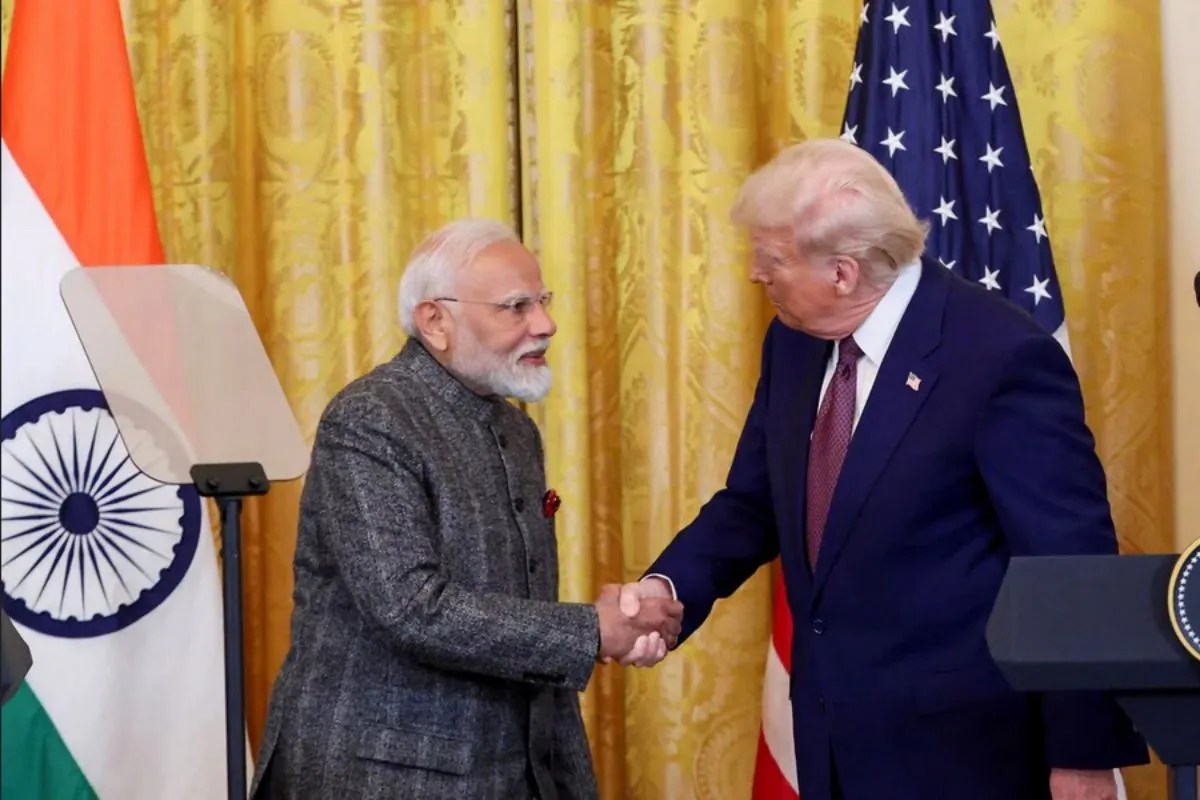
The upcoming bilateral meeting between Indian Prime Minister Narendra Modi and US President Donald Trump on the sidelines of the G7 summit is not merely a diplomatic courtesy; it is a structural necessity driven by overlapping strategic imperatives. While external commentary often focuses on the optics of personal chemistry, a rigorous analysis reveals that the meeting serves as a high-stakes negotiation platform governed by specific transactional variables.
The convergence of both leaders at a third-party venue like the G7 creates a condensed diplomatic timeline. In these environments, bilateral discussions bypass protracted bureaucratic channels to address core structural frictions directly. The agenda for this summit can be categorized into three distinct operational pillars: trade recalibration, security architecture reinforcement, and supply chain decoupling.
Pillar One: The Transactional Matrix of Trade Recalibration
The economic relationship between India and the United States operates under a persistent tension between market access and protectionist policies. President Trump’s administration has consistently prioritized bilateral trade balance metrics, viewing significant trade surpluses held by foreign partners as structural inefficiencies that require correction.
[US Tariff Pressure on Indian Goods] ──> [Compressed Profit Margins for Indian Exporters]
                                                   │
                                                   ▼
[Indian Market Access Restrictions] <── [Retaliatory Policy / Digital Services Tax]
This dynamic creates a specific cost function for Indian policymakers. India’s strategy relies on preserving its generalized system of preferences where possible while defending its domestic manufacturing initiatives, such as the Production Linked Incentive (PLI) schemes.
The Tariff-for-Access Equilibrium
The primary structural friction lies in specific commodity sectors:
- Steel and Aluminum Tariffs: The US application of Section 232 tariffs remains a point of contention. India seeks exemptions or preferential quotas to protect its metallurgical exporters.
- Agricultural Market Access: Washington continues to push for reduced import duties on American dairy, poultry, and almonds. New Delhi resists broad concessions here to protect its massive, politically sensitive agricultural workforce.
- Digital Services and Data Localization: India's regulatory stance on data residency and its historical implementation of equalization levies (digital taxes) conflict directly with the interests of major US technology firms.
The negotiation framework will not aim for a comprehensive Free Trade Agreement (FTA), which is politically unviable in the current climate. Instead, the realistic objective is a limited trade package. This requires a calculated trade-off: India may offer targeted tariff reductions on specific US agricultural or technological goods in exchange for predictable enforcement mechanisms regarding US export controls on dual-use technologies.
Pillar Two: Security Architecture and Regional Deterrence
Beyond trade, the India-US alignment is anchored by the geometry of the Indo-Pacific security architecture. The Quadrilateral Security Dialogue (Quad) serves as the primary institutional vehicle, but the bilateral relationship requires continuous calibration to maintain operational readiness.
The strategic objective for both nations is the management of regional asymmetric expansionism. However, the operational methodologies of New Delhi and Washington diverge based on geographic realities. The US views the theater primarily through a maritime lens, focusing on freedom of navigation in the South China Sea and the Taiwan Strait. India, sharing a contested land border, must prioritize continental security while gradually expanding its blue-water naval capabilities in the Indian Ocean.
Defense Industrial Cooperation Barriers
The transition from a buyer-seller relationship to a co-development paradigm faces significant bureaucratic bottlenecks. The fundamental mechanism limiting deeper integration is the US regulatory framework, specifically International Traffic in Arms Regulations (ITAR) and Export Administration Regulations (EAR).
To bypass these systemic constraints, the summit must review the progress of the Initiative on Critical and Emerging Technology (iCET). The utility of iCET lies in its ability to foster direct collaboration between defense startups, academic institutions, and private enterprises outside standard procurement channels.
The primary test of this mechanism is the operationalization of the General Electric GE-F414 engine co-production agreement. The successful transfer of jet engine technology serves as a benchmark for whether the US can treat India as a de facto treaty ally regarding technology sharing, despite India's insistence on strategic autonomy.
Pillar Three: Supply Chain Decoupling and Technology Networks
The vulnerabilities exposed by global supply chain concentrations have forced a structural shift toward "friend-shoring." Both administrations share the objective of reducing dependence on single-source manufacturing hubs, particularly in critical sectors like semiconductors, pharmaceuticals, and telecommunications.
Global Supply Chain Vulnerability
  ├── Semiconductor Assembly (High capital expenditure, requires tech transfer)
  ├── Pharmaceutical Active Ingredients (Regulatory alignment needed)
  ├── Telecommunications Clean Networks (Hardware standard enforcement)
This creates a competitive opportunity for India to position itself as the primary alternative manufacturing node. However, capital reallocation from global corporations is not automatic; it depends on India's ability to lower its internal logistical costs and streamline regulatory compliance.
Critical Mineral and Semiconductor Infrastructure
The discussion will likely focus on securing the upstream supply chain for clean energy and advanced computing. India's recent induction into the Mineral Security Partnership (MSP) provides the institutional framework, but the G7 meeting offers the opportunity to secure specific capital commitments.
The bottleneck here is capital efficiency. US technology firms possess the intellectual property and capital, while India offers the engineering scale and domestic market volume. The summit must address how to subsidize the initial high capital expenditure of semiconductor fabrication units (fabs) through joint funding mechanisms or sovereign guarantees, ensuring that supply chain resilience overrides short-term market inefficiencies.
Strategic Distinctions: Known Facts vs. Hypotheses
An accurate assessment of this summit requires isolating verified diplomatic tracks from speculative outcomes.
| Vector | Verified Fact | Operational Hypothesis |
|---|---|---|
| G7 Agenda Attendance | India is invited as an outreach partner, ensuring direct multilateral access. | India will formally align with G7 communiqués regarding global economic governance. |
| Defense Procurement | The MQ-9B SeaGuardian drone acquisition process is active. | Immediate finalization of secondary defense contracts will occur during the brief sideline window. |
| Geopolitical Stance | India maintains its strategic autonomy, including independent energy trade relationships. | The US administration will impose secondary sanctions regarding India's third-party energy procurement. |
The distinction between these categories is critical. The hypothesis that the US will aggressively penalize India for its independent foreign policy choices ignores the broader systemic calculus: Washington requires New Delhi as a counterweight in Asia, meaning strategic tolerance for minor policy deviations remains high.
Structural Vulnerabilities in the Alliance
No bilateral strategy operates without significant downside risks. The primary structural vulnerability in the India-US relationship is the mismatch in expectations regarding reciprocity.
The first limitation is the domestic political economy of both nations. The Trump administration's "America First" doctrine inherently conflicts with India's "Atmanirbhar Bharat" (Self-Reliant India) initiative. Both policies seek to repatriate manufacturing and protect domestic labor markets, meaning that any concession granted by either leader will face intense domestic scrutiny.
The second limitation is the divergence in institutional memory. The US state apparatus operates on codified alliances with explicit mutual defense clauses. India's strategic culture rejects formal military alliances, preferring flexible, issue-based coalitions. This creates a friction point where US defense planners may miscalculate Indian participation in potential regional conflicts, while Indian strategists may overstate the predictability of US logistical and intelligence support during a crisis.
Optimal Policy Execution
To maximize the strategic yield of the G7 bilateral meeting, Indian negotiators must avoid generalized diplomatic rhetoric and execute a highly specific, transactional playbook.
First, decouple the trade track from the security track. Do not allow disputes over agricultural tariffs or digital services taxes to stall progress on defense technology transfers. Treat trade frictions as isolated commercial disputes requiring discrete, quid-pro-quo settlements, while positioning the defense partnership as a long-term, non-negotiable strategic anchor.
Second, leverage the iCET framework to secure binding commitments on semiconductor supply chain diversification. Rather than requesting broad economic assistance, present specific, shovel-ready industrial zones dedicated to US technology firms, backed by state-level regulatory fast-tracks in India. This directly addresses the US objective of secure supply chains while advancing India's domestic industrial capacity.
Finally, establish a permanent, bilateral working group dedicated exclusively to navigating ITAR compliance for co-developed technologies. This prevents breakthroughs achieved at the leadership level from dissolving into bureaucratic inertia within the US Department of Defense and Department of State, ensuring that the political capital expended at the G7 translates into measurable, operational capability.