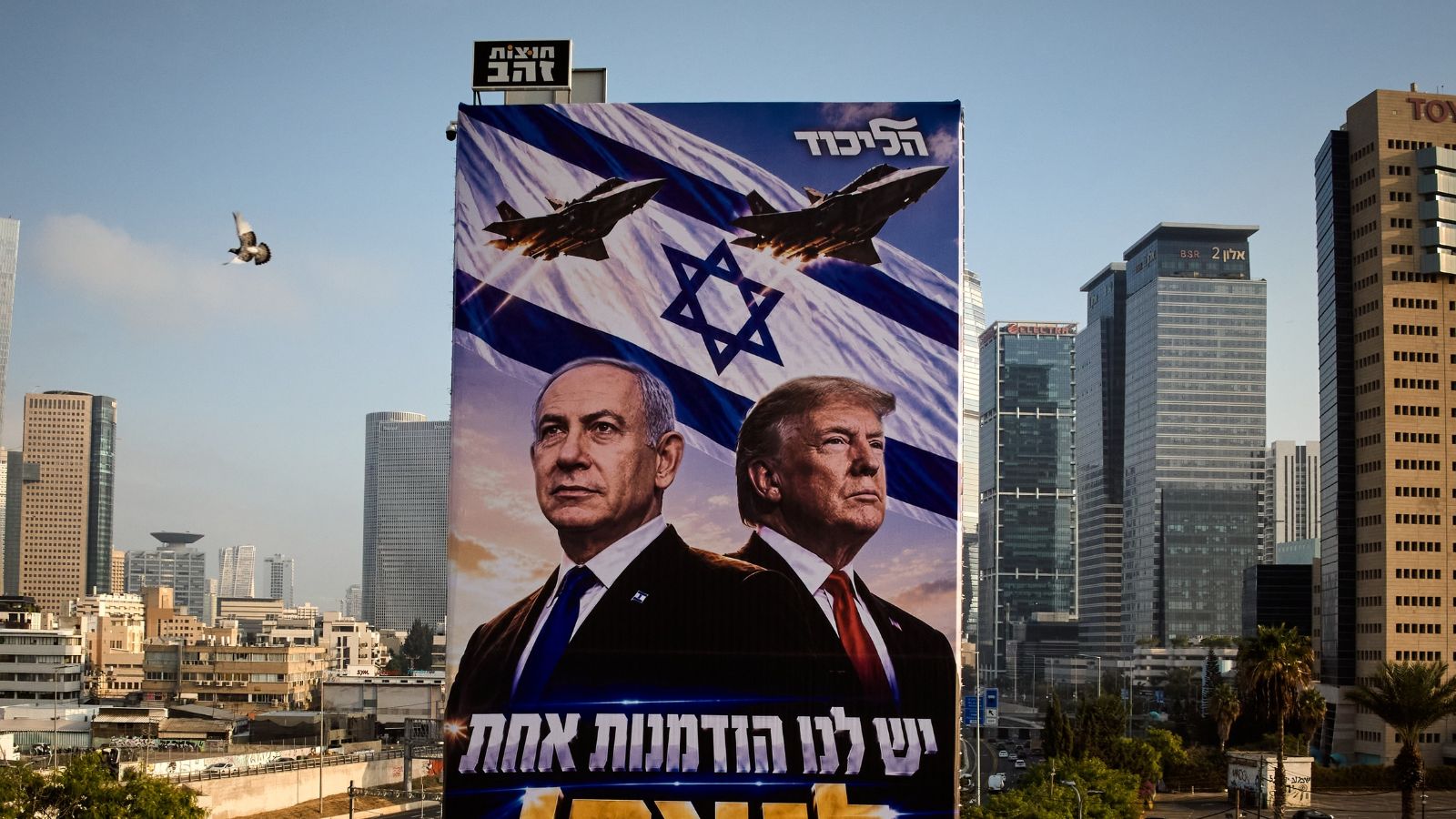
Diplomatic negotiations between Washington and Tehran operate as an asymmetric bargaining problem where the cost of waiting exceeds the political friction of an imperfect agreement. When Qatar’s Prime Minister warns against waiting for a "perfect moment" while President Donald Trump confirms active talks are "doing well," both statements point to a specific structural reality in international relations: protracted
The Structural Logic of Imperfect Timing
In high-stakes bilateral negotiations, waiting for optimal domestic or international conditions is a fallacy. The variables governing US-Iran relations—nuclear breakout timelines, regional proxy mobilization, oil market volatility, and domestic electoral cycles—move on asynchronous tracks. Aligning all four simultaneously is mathematically improbable.
When a mediator asserts that parties cannot wait for the perfect moment, they are identifying a decaying payoff matrix. In game-theoretic terms, the value of a diplomatic settlement diminishes over time due to three compounding mechanisms:
- Technical Irreversibility: Knowledge gained through advanced centrifuge operation and fissile material enrichment cannot be unlearned. Even if physical stockpiles are exported or diluted, the institutional knowledge permanently shortens future breakout timelines, reducing the concessions Washington can realistically extract.
- Sunk Political Capital: Every month of public hostility forces leaders in both capitals to harden their rhetorical baselines. Hardening these baselines increases the domestic audience costs of making compromises later.
- Escalation Entropy: In a theater crowded with non-state actors, maritime chokepoints, and forward-deployed military assets, the probability of an unintended tactical clash rises linearly with time. A single miscalculation by a local commander can destroy years of backchannel architecture.
Waiting for a cleaner political window does not preserve the status quo; it actively erodes the baseline from which any future agreement must be negotiated.
Deconstructing the Trump Confirmation Signal
President Trump’s statement that talks are "doing well" serves a distinct operational function separate from the literal status of technical working groups. In executive-led diplomacy, premature optimism is rarely an accidental leak. It functions as a market-shaping and coalition-disciplining tool.
First, confirming progress alters the risk calculus of third-party spoilers. Regional actors whose strategic relevance depends on perpetual US-Iran hostility—or domestic factions within Tehran and Washington seeking to sabotage talks through legislative or covert action—face a higher bar when the US executive publicly attaches personal credibility to the process. Opposing a secretive backchannel is operationally simple; opposing an active presidential initiative requires direct political confrontation.
Second, this framing establishes narrative control over the baseline. By characterizing early or mid-stage talks positively, the administration signals to energy markets and regional allies that immediate military disruption is not the primary trajectory. This suppresses risk premiums in global crude pricing, which directly supports domestic economic objectives in the United States while reducing the economic desperation that drives Tehran toward asymmetric retaliation.
Third, positive public framing creates asymmetric pressure on the counterparty. Once Washington states publicly that negotiations are progressing well, Tehran faces a binary choice: validate the momentum through reciprocal restraint, or walk away and absorb international blame for collapsing a viable peace track. This shifts the diplomatic burden onto Iran’s Supreme National Security Council without requiring Washington to make premature substantive concessions.
Qatar’s Position as a Structural Intermediary
Doha’s public intervention is not neutral commentary; it is the maintenance of a core state asset. Small states situated between larger hegemonic rivals survive by converting diplomatic utility into security guarantees. Qatar’s mediation role between Washington and Tehran rests on three specific structural advantages that neither party can replicate bilaterally:
- Communication Redundancy: Without formal diplomatic relations between the US and Iran since 1980, direct crisis communication relies on Swiss protecting powers or ad-hoc backchannels. Doha provides an always-on, high-trust conduit capable of transmitting nuanced proposals and rapid de-escalation warnings within hours rather than days.
- Financial Escrow Infrastructure: Any incremental US-Iran understanding involves calibrated sanctions relief or the controlled release of frozen Iranian assets. Qatar possesses the sovereign banking infrastructure and regulatory compliance credibility with the US Treasury to hold, monitor, and disburse restricted funds for humanitarian or approved trade channels.
- Asymmetric Leverage Balance: Unlike European intermediaries, whose alignment with US sanctions regimes limits their credibility in Tehran, or Russian and Chinese interlocutors, whose strategic competition with Washington limits their trust in the White House, Doha maintains functional security ties with the US (hosting Al Udeid Air Base) alongside shared economic interests with Iran (jointly managing the North Dome/South Pars gas field).
Qatar’s warning against waiting for a perfect moment reflects Doha’s acute exposure to failure. A collapse in talks places Qatar’s critical offshore gas infrastructure and maritime trade routes directly inside the blast radius of a regional conflict.
The Four Variables Governing Deal Viability
To evaluate whether current diplomatic momentum can survive contact with technical reality, analysts must strip away rhetoric and track four concrete variables. A durable agreement requires simultaneous movement across all four dimensions; failure in any single variable collapses the architecture.
1. The Verification-to-Breakout Ratio
Any nuclear restriction must lengthen Iran’s breakout time—the period required to produce enough weapons-grade fissile material for a single nuclear device—beyond the time required for international inspectors to detect a violation and for Washington to organize a decisive response. If enrichment caps, centrifuge dismantling, and International Atomic Energy Agency (IAEA) continuous monitoring protocols do not restore a clear detection-to-response buffer, the agreement fails its primary security objective for the United States.
2. Sanctions Relief Velocity vs. Reversibility
Tehran’s primary requirement is rapid, tangible economic relief, specifically access to hard currency reserves and unrestricted oil export revenues. Washington’s primary requirement is
3. Regional Proxy Restraint Mechanisms
A bilateral agreement that freezes nuclear development while leaving regional proxy networks unconstrained will fail politically in Washington and among regional allies. Conversely, Tehran views its regional network as its primary conventional deterrent and will not dismantle it through a diplomatic document. Operational viability requires a de-facto behavioral floor: unwritten or tacit commitments regarding ballistic missile transfers, maritime harassment in the Red Sea and Strait of Hormuz, and attacks on US personnel in Iraq and Syria.
4. Domestic Political Durability
Executive agreements lack the legal permanence of ratified treaties. Both capitals recognize that leadership transitions, legislative opposition, or shifts in internal factional power can invalidate commitments. To compensate for low institutional trust, the structure of any deal must rely on front-loaded, verifiable, step-for-step reciprocity rather than long-term promises. Neither side will deliver its core concession upfront.
Failure Modes and Analytical Blind Spots
Conventional coverage of US-Iran talks routinely misinterprets tactical friction as strategic collapse, or conversely, mistakes procedural meetings for substantive breakthroughs. Three specific blind spots distort public analysis:
- Confusing Process with Convergence: Confirming that talks are occurring and progressing smoothly indicates that both sides see utility in continued engagement. It does not prove that their minimum acceptable terms overlap. Parties frequently sustain talks simply to buy time—Tehran to advance technical capabilities or weather economic pressure, Washington to delay regional escalation past critical domestic or global milestones.
- Underestimating Factional Veto Power: Neither the US President nor the Iranian President operates without severe internal constraints. In Washington, congressional sanctions architecture restricts the executive branch’s ability to offer permanent statutory relief. In Tehran, the Islamic Revolutionary Guard Corps (IRGC) and the Office of the Supreme Leader hold ultimate veto power over nuclear and regional security concessions. An agreement negotiated by diplomatic envoys that fails to account for these domestic veto players will stall at implementation.
- Ignoring External Spoiler Incentives: Negotiations do not occur in a vacuum. Third-party states with existential security concerns regarding Iran’s nuclear threshold retain independent military and covert capabilities. If third-party actors judge that a US-Iran deal concedes too much nuclear latency to Tehran, they may execute unilateral kinetic or cyber operations designed specifically to force Iran into a retaliatory posture that destroys the diplomatic track.
Tactical Execution Framework for Diplomatic Stabilization
Given the structural constraints outlined above, waiting for a comprehensive, grand-bargain treaty is an unviable strategy. The operational path forward requires a phased, transactional stabilization framework executed through intermediary channels.
First, negotiators must decouple immediate crisis containment from final-status resolution. Rather than attempting to resolve the entirety of Iran’s nuclear program, regional posture, and missile development in a single document, the parties should lock in an interim freeze: capping enrichment at current thresholds, expanding IAEA camera and inspector access at declared sites, and halting the installation of advanced centrifuge cascades in exchange for targeted access to immobilized Iranian funds in regional banks for non-sanctioned trade.
Second, Washington and Tehran should formalize a dedicated maritime and regional de-confliction protocol managed through Doha. Establishing clear red lines regarding attacks on commercial shipping and coalition bases—paired with rapid backchannel verification—prevents tactical incidents from hijacking strategic negotiations.
Third, both sides must structure subsequent phases around symmetric, modular tranches. Every measurable technical rollback by Tehran—such as down-blending high-enriched uranium stockpiles—must trigger an automatic, pre-cleared financial disbursement through Qatari escrow accounts within a fixed 14-day window. Automating the exchange removes discretionary bottlenecks and builds operational trust through repeated execution rather than rhetoric.
The decisive move is to abandon the pursuit of a comprehensive settlement and immediately codify a short-cycle, verifiable freeze-for-liquidity exchange before technical nuclear advancements and regional friction permanently close the bargaining window.