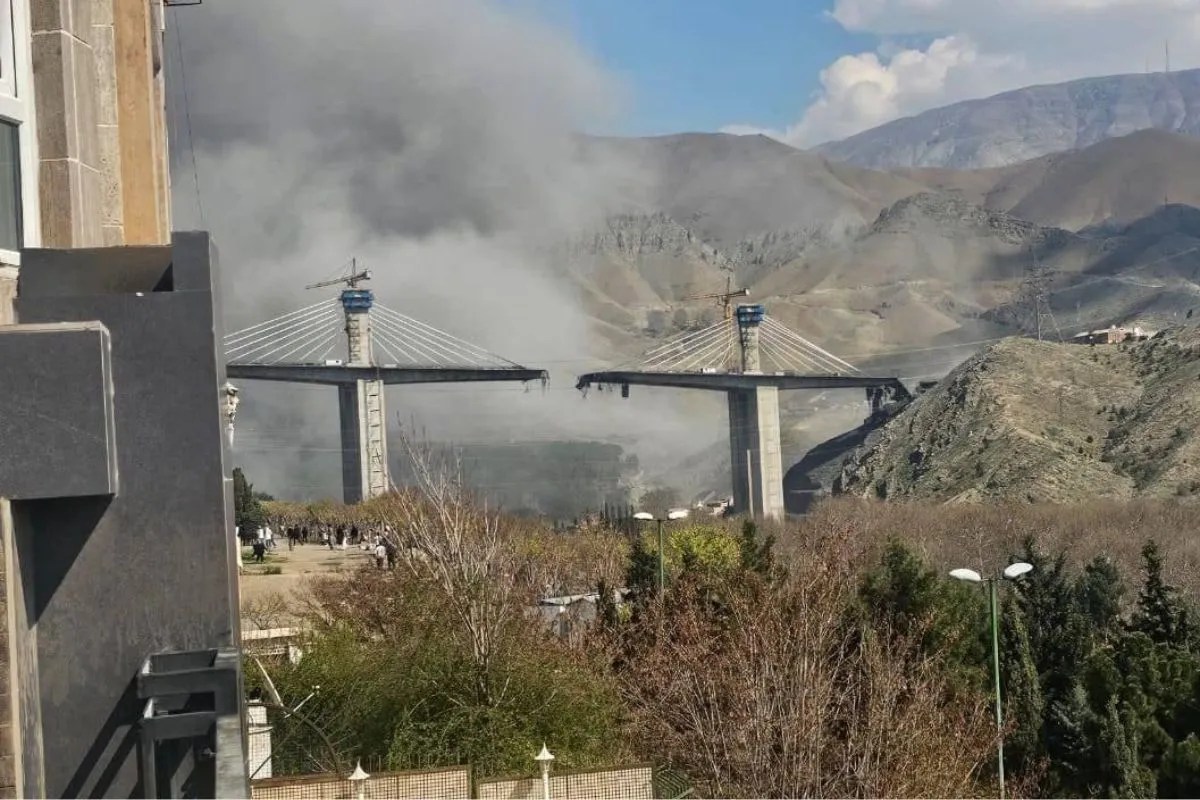
The physical destruction of the Deir ez-Zor suspension bridge represents a terminal shift in the logistical calculus of Eastern Syria. While media reports focus on the kinetic event of the strike, the true impact lies in the permanent decoupling of the northern and southern banks of the Euphrates River, an area that serves as the primary corridor for trans-border military and economic movement between Iraq and the Levant. This is not merely the loss of a historical landmark; it is the surgical removal of a high-capacity logistics node that forces all regional movement into predictable, high-risk alternatives.
The Structural Mechanics of Regional Logistics
To understand the weight of this event, one must view the Deir ez-Zor bridge through the lens of Structural Interdependency. The bridge functioned as the single most efficient point of transit for heavy tonnage across the Euphrates. Its destruction triggers a cascade of logistical failures across three specific vectors:
- Mass-Flow Restriction: Without a fixed-link bridge capable of supporting heavy vehicles, the volume of fuel, wheat, and military hardware moving through the province drops by an estimated 70% in the immediate term.
- Predictability of Movement: Traffic is now diverted to a limited number of pontoon crossings and small-scale ferry operations. These alternatives are vulnerable to seasonal water level fluctuations and are significantly easier to monitor and target via aerial surveillance.
- The Economic Chokepoint: Deir ez-Zor serves as the administrative heart of Syria’s oil-rich eastern region. Severing the bridge effectively bifurcates the local economy, preventing the integration of resources between the US-backed SDF-controlled north and the Syrian government-controlled south.
Kinetic Precision and Structural Vulnerability
The collapse of a suspension bridge of this magnitude requires specific targeting of Load-Bearing Singularities. Unlike concrete beam bridges, which can often remain partially functional after a hit, a suspension bridge relies on a continuous tension system.
The strike targeted the primary pylon or the main cable anchorage points. When these specific components are compromised, the entire deck loses its tensile support and succumbs to gravitational collapse. From a tactical standpoint, this indicates the use of high-precision, deep-penetration munitions designed to maximize structural failure with minimal payload waste.
This level of precision serves a dual purpose. It ensures the bridge cannot be repaired with field-expedient methods, such as temporary steel plating. Restoring a suspension bridge requires specialized engineering teams and heavy machinery that are currently unavailable in a high-conflict zone. Therefore, the destruction is a permanent denial of access for the duration of the current conflict.
The Strategic Logic of Denial of Service
The US-Israeli strikes in this sector are rarely isolated incidents; they are part of a broader strategy of Atmospheric Attrition. By removing the most efficient transit route, the attacking forces increase the "friction" of their adversary's operations.
- Supply Chain Elongation: Moving a convoy that previously took 20 minutes to cross the river may now take several hours or days as vehicles queue for ferries or detour hundreds of kilometers to the nearest intact crossing.
- Asset Exposure: Slower transit times and reliance on temporary crossings leave military assets exposed in "kill zones" for longer periods.
- Intelligence Primacy: When movement is funneled through a single remaining path, intelligence agencies can concentrate their ISR (Intelligence, Surveillance, and Reconnaissance) assets on that specific point, creating a total transparency of enemy maneuvers.
This is a textbook application of Topological Warfare. You do not need to destroy an entire army if you can remove the specific geometric points (bridges, tunnels, mountain passes) that allow that army to function as a cohesive unit.
The Humanitarian-Military Paradox
The destruction of the Deir ez-Zor bridge highlights the blurred lines in modern gray-zone warfare. The bridge was a dual-use asset. While it carried civilian food supplies and medical transport, it was also the primary artery for Iranian-backed militias moving hardware from the Al-Bukamal border crossing toward the interior of Syria.
The "Cost of Replacement" for this infrastructure is prohibitive. In a post-conflict scenario, the reconstruction of a bridge of this scale in a landlocked, sanctioned nation like Syria will take a decade and billions in capital. This creates a Long-Tail Deterrent. The message sent to regional actors is that the cost of utilizing civilian infrastructure for military logistics is the permanent loss of that infrastructure’s utility for the civilian population.
Tactical Realignment and the Pontoon Fallacy
In the wake of the strike, there is often a reliance on pontoon bridges as a substitute. However, these are fundamentally flawed replacements for a high-capacity suspension bridge.
- Weight Limits: Pontoons generally cannot support the simultaneous passage of multiple heavy armored units or large-scale fuel tankers.
- Environmental Sensitivity: The Euphrates is prone to rapid flow changes. High-velocity water can sweep away temporary structures, making the supply line unreliable.
- Operational Signature: A pontoon bridge is a massive heat and visual signature that cannot be camouflaged, making it an easy target for follow-up strikes.
The shift to these temporary measures signals a transition from "Stabilized Logistics" to "Survivalist Logistics."
Geo-Spatial Impact on the Iranian Land Bridge
The Deir ez-Zor bridge was a critical component of the so-called "Land Bridge" connecting Tehran to Beirut. By removing this link, the operational continuity of this corridor is shattered.
The strategy focuses on Segmented Containment. Rather than trying to seal a 600-mile border, the attacking forces identify the "Must-Pass" nodes. Deir ez-Zor was the most significant Must-Pass node in Eastern Syria. Its removal forces the Iranian logistical network to rely on the desert roads of the Badia, which are plagued by ISIS remnants and lack the structural capacity for heavy logistical throughput.
Final Strategic Forecast
The removal of the Deir ez-Zor bridge dictates the following shifts in the regional theater:
The Syrian government and its allies will be forced to decentralize their storage depots, as they can no longer move large quantities of material across the river in a single push. This decentralization makes their logistics more resilient to single strikes but significantly less efficient and more expensive to maintain.
External powers will likely increase the frequency of strikes on the remaining ferry and pontoon sites to enforce a total "Riverine Blockade." This will eventually force a decision point for the forces on the ground: either abandon the western bank of the Euphrates or commit to a high-risk, low-reward aerial resupply strategy that is likely beyond their current technical capability.
The destruction of the bridge is the definitive end of high-volume, reliable transit in Eastern Syria. Any actor attempting to maintain a presence in this region must now account for a permanent 400% increase in logistical lead times and a near-total loss of heavy equipment mobility across the Euphrates axis.