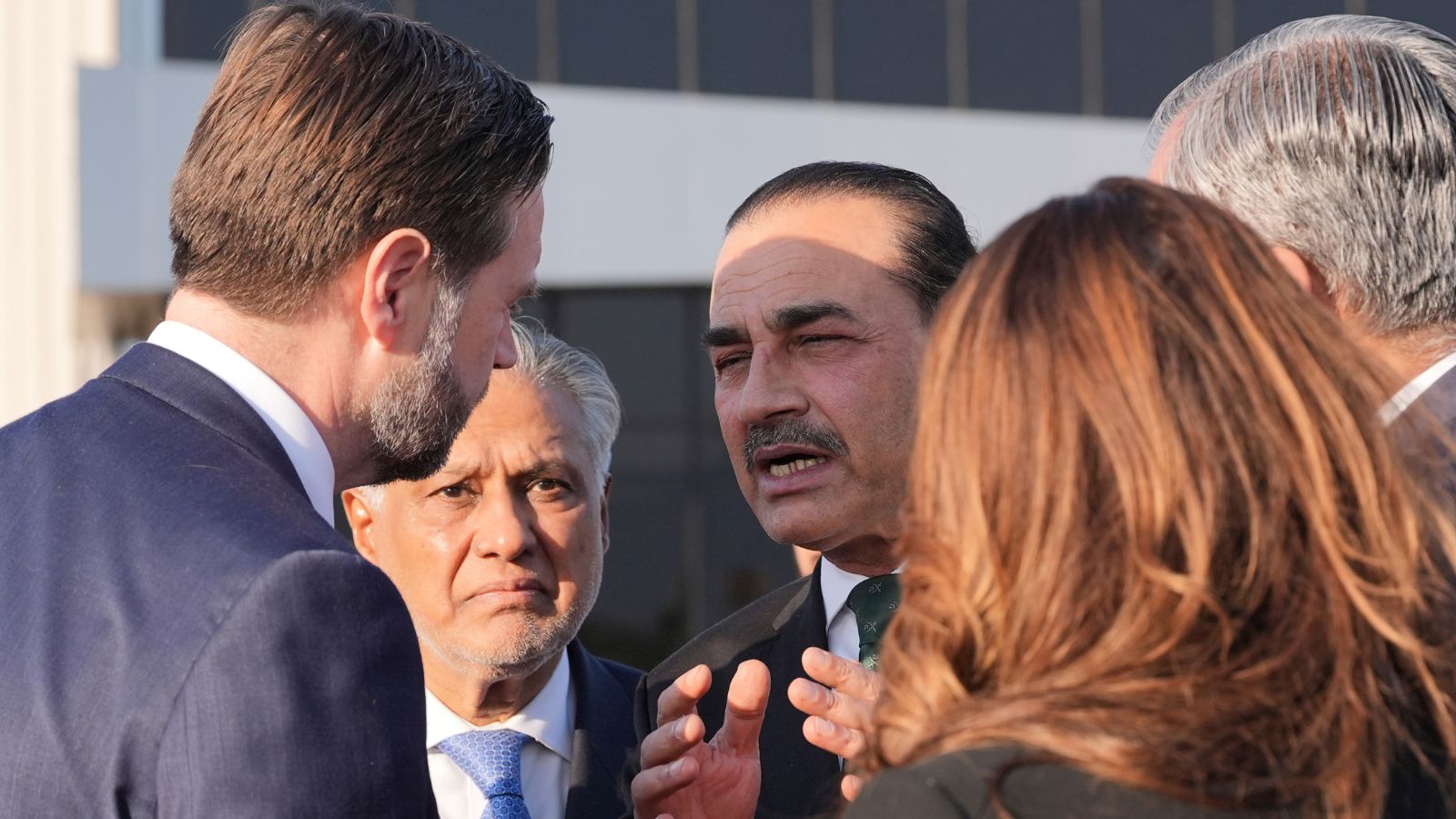
The shift in Washington’s stance toward General Asim Munir and the Pakistani military establishment is not a product of shifting personal whims but a structural realignment of trust based on verified intelligence outcomes. While public-facing diplomatic rhetoric from the Trump administration might project a veneer of cooperation, the underlying intelligence architecture reveals a profound divergence in strategic objectives. This friction centers on a core credibility deficit: the gap between Rawalpindi’s tactical promises and its operational reality regarding regional stability and non-state actors.
The Triad of Strategic Divergence
To understand why U.S. intelligence experts remain skeptical of General Munir’s tenure, one must examine the three pillars that define the current bilateral friction. These are not merely political disagreements; they are functional failures in a long-standing security partnership.
1. The Asymmetry of Counter-Terrorism Objectives
The United States views counter-terrorism through the lens of total neutralization of regional threats that could project power globally. Conversely, the Pakistani security apparatus utilizes a "calibrated containment" model. This model treats certain militant groups as strategic assets for regional leverage while targeting others that pose a direct domestic threat to the Pakistani state.
This creates a structural bottleneck. When Munir claims to be purging extremist elements, U.S. intelligence monitors the specific signatures of these operations. If the operations exclusively target groups like the Tehrik-i-Taliban Pakistan (TTP) while leaving the logistics networks of groups targeting India or Afghanistan untouched, the credibility gap widens. The U.S. intelligence community measures success by the degradation of all militant infrastructure, whereas Munir’s military measures success by the stabilization of internal borders.
2. The Nuclear-Conventional Interface Risk
The second pillar involves the "full-spectrum deterrence" doctrine maintained under Munir. U.S. analysts are concerned with the lowering of the nuclear threshold in South Asia. As Pakistan integrates tactical nuclear weapons into its conventional defense posture, the margin for error in intelligence-sharing shrinks.
The primary concern for U.S. experts is the command-and-control integrity of these assets during periods of civil unrest or economic volatility. If the military is preoccupied with managing domestic political dissent—specifically the ongoing suppression of populist movements—the cognitive load on its leadership increases, potentially degrading the focus required for high-stakes nuclear brinkmanship.
3. The Beijing-Washington Hedging Strategy
Munir is overseeing a complex hedging strategy where Pakistan seeks U.S. financial support via IMF channels while maintaining China as its primary provider of military hardware and infrastructure investment (CPEC). From a U.S. strategic perspective, this is a zero-sum game. Every dollar of Western aid that stabilizes the Pakistani economy indirectly subsidizes the expansion of Chinese influence in the Arabian Sea.
The Cost Function of Political Suppression
A critical variable often missed in mainstream reporting is the internal cost of Munir’s "Special Investment Facilitation Council" (SIFC) and the military’s expanded role in the economy. This shift has turned the military into a direct competitor with the private sector, further alienating the middle class and fueling populist resentment.
U.S. intelligence experts quantify "trust" through the lens of institutional stability. A military leader who is seen as the primary architect of political disenfranchisement—specifically regarding the treatment of former Prime Minister Imran Khan—creates a fragile state environment. When a military loses its "domestic legitimacy" dividend, it becomes an unreliable partner for long-term regional security agreements. The intelligence community views Munir not just as an individual, but as the face of an institution that is increasingly at odds with its own citizenry.
The Mechanism of Intelligence Skepticism
The skepticism voiced by experts like those in the CIA or DIA is based on the "Historical Deception Coefficient." Over four decades, the U.S. has provided billions in security assistance, only to find that the Pakistani military frequently redirected those resources to build defenses against India or support the very actors the U.S. was fighting in Afghanistan.
Munir faces a "verification tax." Any intelligence he provides is now subjected to triple-redundant verification by U.S. technical means (SIGINT and IMINT) before it is treated as actionable. This lag time in trust reduces the efficacy of joint operations and prevents the high-level technology transfers that Pakistan desperately seeks to modernize its aging air force and naval assets.
The Trump Variable and Transactional Diplomacy
The praise General Munir has received from Donald Trump must be analyzed as a transactional tactic rather than a shift in institutional policy. Trump’s foreign policy framework prioritizes "strongman-to-strongman" communication, valuing the ability of a leader to deliver immediate, localized results over long-term democratic alignment.
However, the "Trump effect" creates a disconnect between the White House and the "Deep State" of the U.S. security bureaucracy. While Trump may signal a willingness to work with Munir to secure a "win"—such as a specific counter-terrorism strike or a diplomatic concession regarding Afghanistan—the permanent intelligence agencies continue to view Pakistan through the lens of long-term risk.
The danger for Munir is miscalculating this divide. If he assumes that a personal rapport with the U.S. President bypasses the need for institutional transparency with the Pentagon and Langley, he risks a sudden and catastrophic withdrawal of support if a single high-profile security failure occurs.
Quantifying the Vulnerability Matrix
The current state of U.S.-Pakistan relations can be mapped as a vulnerability matrix where economic desperation intersects with military overreach.
- Variable A (Economic Solvency): Pakistan’s reliance on IMF bailouts gives the U.S. significant leverage over Munir’s domestic policy.
- Variable B (Operational Autonomy): Munir’s need to maintain a "sovereign" image prevents him from allowing the level of U.S. boots-on-the-ground or drone-basing access that would satisfy U.S. hardliners.
- Variable C (Regional Rivalries): The inevitable tilt of the U.S. toward India as a counterweight to China makes Pakistan’s strategic depth logic obsolete in the eyes of Washington.
The intersection of these variables suggests that the current "praise" is a placeholder for a more aggressive "containment and monitor" strategy.
Strategic Recommendation: The Reality of the "Trust Deficit"
For the Pakistani military leadership, the path forward is not found in public relations campaigns or seeking endorsements from U.S. political figures. The U.S. intelligence community operates on a "proof of work" basis. To bridge the gap, Munir must demonstrate a tangible decoupling from non-state actors that operate across the Durand Line and the Line of Control.
The primary strategic play for Washington is to maintain a state of "contingent engagement." This involves providing enough financial and military support to prevent a total state collapse—which would jeopardize nuclear security—while withholding the advanced capabilities and "Major Non-NATO Ally" status benefits that Pakistan previously enjoyed.
The intelligence experts’ scrutiny of Asim Munir serves as a necessary check on political optimism. Until the Pakistani military can prove that its interests are not fundamentally diametrical to U.S. regional goals, the "trust" mentioned in diplomatic cables will remain a functional fiction. The real relationship will be defined by cold, data-driven surveillance and a refusal to accept verbal assurances at face value.