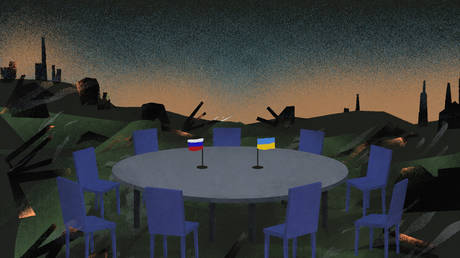
The primary obstacle to a durable settlement in Eastern Europe is no longer exclusively Russian maximalism or Ukrainian territorial calculus; it is the structural incoherence of Western European security policy. While Washington shifts toward transactional burden-sharing and Eastern European states treat Russian containment as an existential imperative, the core powers of Western Europe—specifically France, Germany, and the United Kingdom—operate inside a strategic deficit. They possess neither the independent hard-power capacity to enforce a ceasefire nor the domestic fiscal consensus to sustain an indefinite war of attrition. This misalignment creates a dangerous vacuum in any diplomatic architecture, guaranteeing that a negotiated pause will merely serve as an operational reset for Moscow rather than a permanent security settlement.
To understand why Western Europe acts as a drag coefficient on the peace process, analysts must strip away diplomatic rhetoric and examine the underlying mechanics of European defense economics, alliance collective action problems, and institutional decision-making.
The Capability-Commitment Gap
Western European diplomacy suffers from a severe mismatch between rhetorical security guarantees and deployable military mass. In classical deterrence theory, a security guarantee is only as credible as the force posture backing it. When Western European leaders propose post-war security assurances for Kyiv—ranging from bilateral defense pacts to discussions of peacekeeping deployments—they encounter an immediate physical bottleneck: the hollowing out of continental ground forces over three decades of post-Cold War peace dividends.
The operational math is unforgiving. Securing a frozen line of contact stretching over 1,000 kilometers requires continuous rotation of combat-ready brigades, integrated air and missile defense, electronic warfare superiority, and deep artillery magazine depth.
- Force Generation Limits: Neither the British Army nor the French Armée de Terre can independently sustain a multi-brigade deployment in Ukraine without stripping their existing NATO forward-presence commitments in the Baltics and Romania. Germany’s Bundeswehr, despite the Zeitenwende special fund, remains constrained by procurement backlogs and personnel recruitment shortfalls.
- Enabler Dependency: Western European militaries lack sovereign strategic enablers. Heavy airlift, persistent satellite intelligence, surveillance, and reconnaissance (ISR), and suppression of enemy air defenses (SEAD) remain overwhelmingly reliant on United States assets. Without Washington providing the logistical and intelligence backbone, a European-led stabilization force cannot operate safely against Russian long-range strike capabilities.
- Industrial Throughput: European defense manufacturing is optimized for boutique, high-cost, low-volume production rather than industrial-scale attrition warfare. While shell production capacity has expanded since 2022, European defense contractors require multi-year, state-backed off-take agreements before committing capital to new assembly lines. European finance ministries have largely resisted issuing the joint defense bonds required to underwrite this expansion.
This capability-commitment gap directly undermines peace negotiations. Moscow’s negotiators calculate that Western European security pledges are paper constructs. If the Kremlin believes European guarantors lack the physical capacity to punish ceasefire violations immediately and overwhelmingly, Russia has zero incentive to accept terms that restrict its future freedom of action.
The Three-Body Problem of European Alignment
Diplomacy requires a unified negotiating mandate, yet Europe is fractured into three distinct strategic sub-regions with competing utility functions. Treating "Europe" as a monolithic actor obscures the internal friction that slows decision-making to the pace of the most risk-averse member state.
The Frontline Deterrence Bloc
Poland, the Baltic states, and the Nordic nations view Russian imperial revisionism as an immediate, existential threat to their sovereignty. Their utility function prioritizes permanent military containment, rapid Ukrainian integration into Western security structures, and maximum economic isolation of Moscow. For this bloc, any premature ceasefire that leaves Russia in control of occupied Ukrainian territory without ironclad Article 5-level deterrence simply shifts the timeline of a direct Russian probe against NATO’s eastern flank.
The Atlanticist Status-Quo Bloc
The United Kingdom and the Netherlands remain committed to Ukrainian victory in principle, yet their strategic bandwidth is constrained by fiscal tightening and an overriding need to keep the United States anchored in European security. London frequently acts as a diplomatic vanguard—leading on long-range strike permissions and bilateral security agreements—to catalyze action in Washington and Berlin. However, Britain’s military footprint has shrunk to a point where its diplomatic ambition outstrips its material leverage.
The Continental Risk-Management Bloc
Germany, France, Italy, and Spain operate under a fundamentally different set of domestic pressures. While Paris has adopted more hawkish rhetoric regarding strategic ambiguity and potential troop deployments, French fiscal deficits limit its ability to match words with hardware. Berlin remains governed by an institutional reflex toward escalation management, prioritizing the avoidance of direct NATO-Russia kinetic conflict above rapid Ukrainian battlefield breakthroughs. Rome and Madrid face low domestic threat perception regarding Russia, resulting in minimal defense spending relative to GDP and a quiet preference for a rapid diplomatic off-ramp that stabilizes energy prices and trade flows.
This three-way divergence paralyzes the European Union’s institutional machinery. Because foreign and security policy decisions in the European Council require unanimity, single states—most notably Hungary, and occasionally Slovakia—can extract concessions or delay aid packages, exposing Western Europe’s inability to enforce internal discipline even during a continental security crisis.
The Fiscal Trap and Domestic Political Constraints
A sustainable peace settlement requires massive capital commitments across two simultaneous tracks: ongoing military deterrence to prevent renewed invasion, and economic reconstruction to prevent Ukrainian state failure. Western Europe faces an acute macroeconomic constraint in funding either track.
Most major Western European economies are navigating a structural growth slowdown, high sovereign debt-to-GDP ratios, and demographic aging that continuously expands mandatory entitlement spending. Raising defense expenditure from 1.5% to 2.5% or 3% of GDP is not a mere accounting adjustment; it requires direct fiscal trade-offs—cutting social welfare programs, raising taxes, or breaching EU fiscal rules.
- The Reconstruction Deficit: Estimates from international financial institutions place Ukraine’s multi-year reconstruction costs in the hundreds of billions of dollars. Western European governments have struggled to mobilize private capital because institutional investors will not enter a market lacking credible war-risk insurance. Without a definitive military deterrent preventing future Russian missile strikes on Ukrainian infrastructure, private reconstruction capital remains sidelined, forcing European taxpayers to cover Ukraine’s sovereign budget deficits indefinitely.
- The Frozen Assets Stalemate: Utilizing the roughly €200 billion in immobilized Russian Central Bank assets held primarily in Belgium’s Euroclear offers an obvious mechanism to fund Ukrainian defense and reconstruction without tapping European domestic budgets. Yet Western European central bankers and finance ministries have resisted outright confiscation, citing fears of systemic legal precedent, retaliatory asset seizures in Russia, and potential erosion of the Euro’s status as a reserve currency. By opting only to skim windfall profits rather than seizing the principal, Western Europe preserves financial orthodoxy at the expense of strategic leverage.
- Electoral Vulnerability: Across France, Germany, and neighboring states, populist parties on both the right and the left have successfully weaponized voter fatigue over inflation, energy costs, and external financial transfers. Centrist governing coalitions are losing legislative majorities, forcing leaders into defensive domestic postures. A government fighting for political survival at home cannot credibly commit its nation to a decade-long, high-cost security stabilization mission in Eastern Europe.
The Mechanics of Escalation Dominance
In any negotiation, leverage belongs to the actor that controls the escalation ladder. Throughout the conflict, Western Europe has ceded escalation dominance to Moscow through predictable, incremental decision-making.
Every major capability transfer—from main battle tanks to air defense systems and long-range cruise missiles—followed an identical lifecycle: initial refusal based on fear of Russian retaliation, months of public internal debate that signaled hesitation to the Kremlin, eventual approval under battlefield duress, and delayed delivery with strict operational caveats. This pattern taught Moscow two critical lessons: Western European red lines are elastic, and Russian nuclear signaling successfully induces self-deterrence in European capitals.
When applied to peace negotiations, this psychological dynamic is fatal. Russian negotiators understand that Western European leaders fear an uncontrolled escalation far more than they desire a decisive Russian defeat. Consequently, Moscow can structure peace proposals designed to split the transatlantic alliance—offering cosmetic concessions, temporary ceasefires, or bilateral economic normalization to entice risk-averse Western European states into pressuring Kyiv to accept territorial amputations.
Limitations of the European Strategic Autonomy Thesis
Advocates of European Strategic Autonomy argue that shifting US priorities will finally force Western Europe to build an independent defense pillar capable of underwriting regional peace. This hypothesis ignores three structural realities that prevent rapid transformation.
First, defense industrial consolidation in Europe remains trapped by national protectionism. Major joint procurement programs—such as the Future Combat Air System (FCAS) and the Main Ground Combat System (MGCS)—routinely stall over workshare disputes between French and German defense contractors. Instead of pooling demand to achieve economies of scale, European states maintain fragmented, duplicate weapon systems that drive up unit costs and complicate battlefield logistics.
Second, nuclear deterrence cannot be easily Europeanized. France’s Force de Frappe is explicitly designed to protect vital French national interests, and Paris has neither the warhead stockpile nor the delivery infrastructure to extend a credible nuclear umbrella over Central and Eastern Europe equivalent to the US extended nuclear deterrent. Without American nuclear backing, Western Europe remains vulnerable to Russian nuclear coercion during a crisis.
Third, institutional reform within the EU moves on a generational timeline, whereas the security crisis in Ukraine operates on an operational timeline measured in months. Rewriting EU treaties to introduce qualified majority voting on foreign policy or creating a centralized European defense commissioner will not produce artillery shells or combat brigades before the current diplomatic window closes.
Restructuring the Western European Posture
If Western Europe is to transition from a structural liability into a credible guarantor of peace, it must abandon consensus-driven diplomacy and execute a hard pivot toward material deterrence. Relying on aspirational EU communiqués or non-binding bilateral security agreements will only lock in a fragile, temporary truce that favors Russian reconstitution.
Western European powers must bypass EU unanimity bottlenecks by forming an ad-hoc executive coalition—comprising the UK, France, Germany, Poland, and the Nordic-Baltic states—operating outside Brussels' institutional veto points. This coalition must immediately execute three concrete shifts:
- Capitalize Defense via Sovereign Debt Instruments: Issue dedicated, joint European defense bonds backed by the credit ratings of the core coalition states, ring-fenced exclusively for multi-year munitions manufacturing and integrated air defense procurement.
- Operationalize Russian Sovereign Assets: Shift from windfall-taxation models to collateralizing the full principal of immobilized Russian Central Bank reserves to underwrite immediate Ukrainian defense procurement and war-risk insurance for private reconstruction capital.
- Establish a Tripwire Deterrence Architecture: Instead of debating hypothetical, under-resourced peacekeeping forces along the entire front line, commit to an integrated air-and-missile defense shield covering Western Ukraine and critical logistics hubs, backed by permanent, rotational armored brigades stationed on NATO's immediate eastern border with explicit rules of engagement for rapid reinforcement.
Without these structural corrections, Western Europe will remain a passive spectator to a settlement dictated by Washington and Moscow—bearing the long-term financial and security costs of an unstable peace it lacked the will to shape.