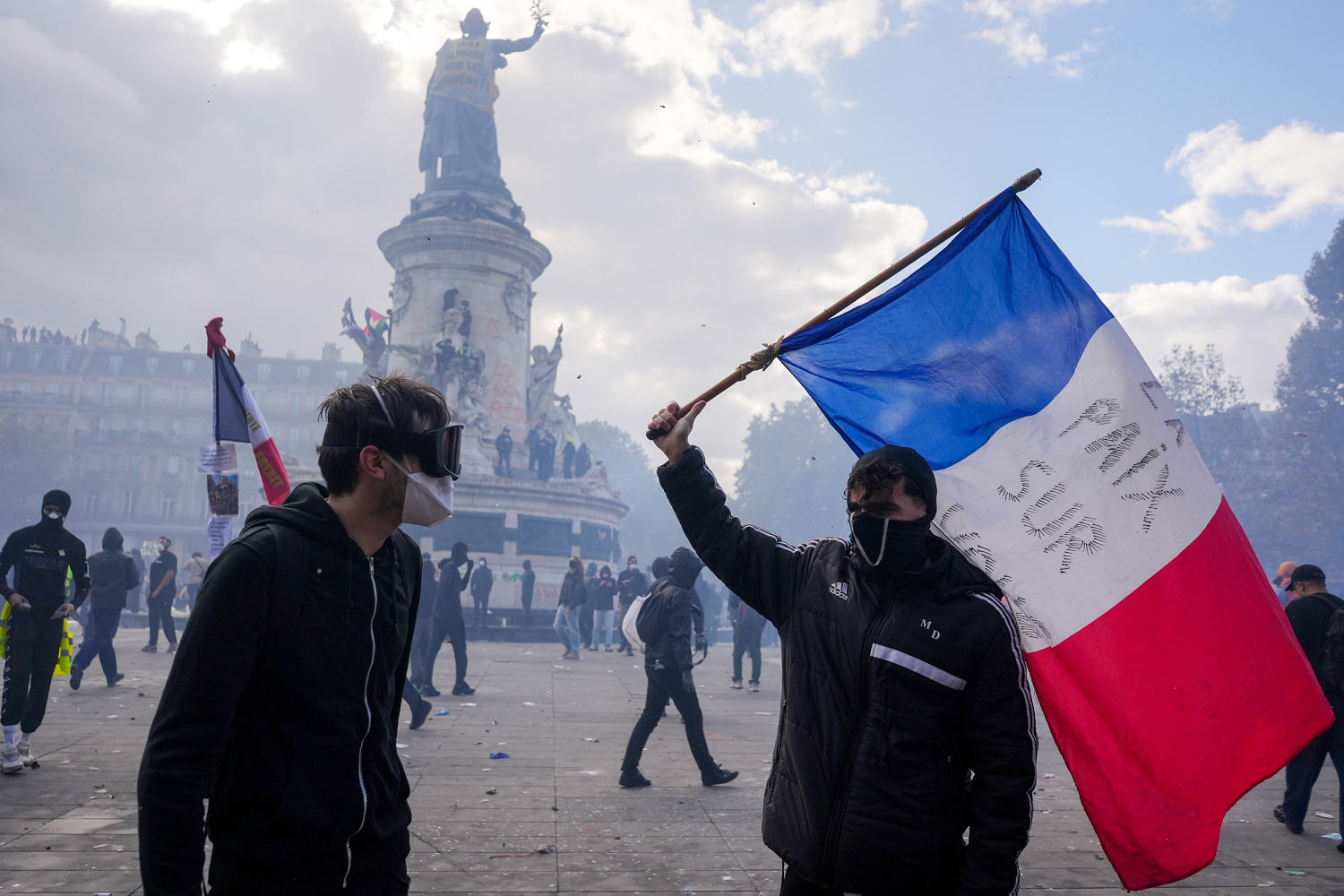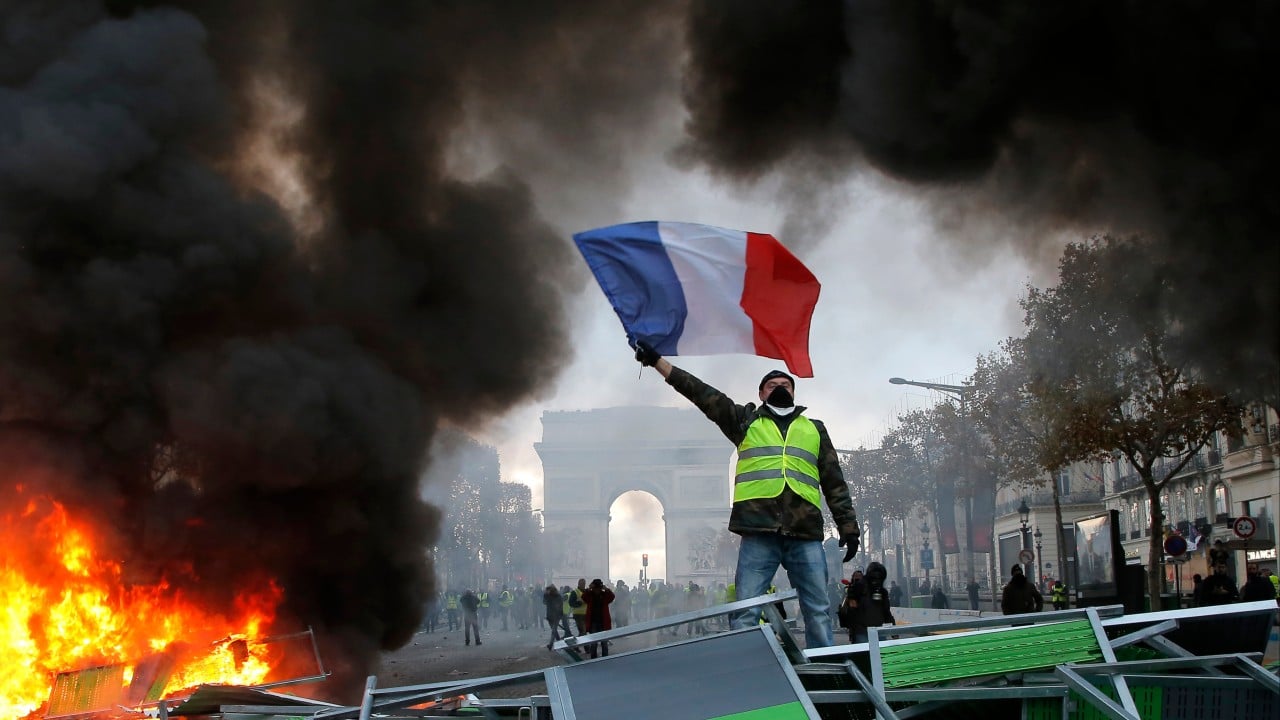
Mass protests in France are not occasional tantrums over policy shifts; they are the primary operating mechanism of a political system where street pressure regularly substitutes for representative compromise. Whenever Paris or regional capitals fill with union banners, blocked roundabouts, or clouds of tear gas, foreign observers tend to treat the spectacle as romantic folklore or chaotic dysfunction. That reading misses the cold structural logic underneath. In France, street mobilization functions as a permanent bargaining table, reshaping budgets, labor rules, and electoral fortunes long after the canisters stop smoking.
Spend enough decades watching European capitals, and you stop falling for lazy clichés about Gallic temperament. Every country has loud discontents and angry crowds. What sets France apart is institutional design and historical memory. The Fifth Republic concentrates enormous executive authority in the presidency and the central state, often pushing major reforms through with minimal legislative negotiation. When citizens feel locked out of closed-door decrees, the boulevard becomes the quickest lever available to force a reversal or a concession.
Why Street Action Works When Ballots Feel Too Slow
Electoral cycles in France happen on a fixed calendar, yet economic pressure hits households every week. A commuter watching fuel prices climb, a public-sector worker whose real pay has fallen behind inflation, or a high school student facing overcrowded classrooms and rigid admissions bottlenecks does not want to wait years for a ballot box to deliver relief. Protests compress time. A single well-timed transport walkout or port blockade can freeze supply chains, rattle bond markets, and drag ministers back to the negotiating table within days.
Consider a hypothetical scenario involving a mid-sized provincial logistics hub. Suppose regional haulers block highway access over a fuel levy, while unionized rail crews throttle freight lines in solidarity. Even if only a fraction of the workforce participates, the choke points multiply the economic shock far beyond the headcount in the street. That leverage is why French mass protests carry weight that rallies in many other democracies lack: disruption in France is frequently targeted at arteries of circulation rather than just symbolic plazas.
There is a catch, of course, and it is one that protest organizers often gloss over. Street power can veto unpopular moves, yet it rarely builds durable fiscal math. France already carries some of the highest public spending and taxation relative to economic output among advanced economies, leaving governments caught between restless voters on one side and deficit targets on the other. Pushing back every spending squeeze or structural tweak keeps short-term social peace fragile while deferring hard arithmetic.
The Tear Gas Paradox and Escalation Math
Tear gas in Paris has become an international shorthand for French unrest, almost a visual signature alongside Haussmann facades and tricolor flags. Yet heavy policing and chemical dispersal rarely settle the underlying dispute. Instead, aggressive crowd control often turns a broad social grievance into a two-front battle over civil liberties and state force.
A crowd that arrives angry about wages or pensions leaves angry about batons, choking smoke, and broken trust.
On the ground, the dynamics are messy and rarely uniform. Peaceful marchers, union stewards, high school demonstrators, and small pockets of violent agitators frequently share the same avenues. When security forces deploy tear gas or water cannon broadly, moderate families and first-time protesters get swept into the same cloud as hardened street fighters. Accusations of excessive force follow quickly, hardening resentment against authorities and making compromises harder for politicians to sell.
At the same time, officials face a genuine operational bind. When fringe rioters smash storefronts, set fires, or target public buildings, doing nothing looks like abdication of state order. Overreacting, by contrast, fuels martyrs and viral footage that stretches unrest across weeks. Neither side controls the escalation spiral once tensions flare, which is why French mass protests so often veer from disciplined marches into tense standoffs.
Beyond Paris and Classic Labor Unions
Another mistake outsiders make is assuming every French mobilization looks like a traditional union parade marching from Place de la République to Nation. Union membership in France is actually low compared with several northern European neighbors, even though unions retain huge mobilizing reach during key days of action. Alongside organized labor, looser networks—from suburban high schoolers blocking school gates to motorists donning yellow vests over rural commuting costs—can ignite rapidly without waiting for union headquarters.
Geography matters just as much as class or age. Dense urban centers offer mass visibility and public transit chokepoints, while smaller towns and rural corridors feel the squeeze of long commutes, thinning services, and rising household bills. When urban workers, students, and outlying residents overlap—even temporarily—the political pressure spikes sharply because the discontent stops looking like a narrow sector complaint.
- Public-sector pay and purchasing power: Millions of civil servants, teachers, and hospital workers feel squeezed when base pay scales lag behind living costs.
- Education and youth bottlenecks: Crowded classrooms, staffing gaps, and stressful university placement systems spark fast, contagious school blockades.
- Cost-of-living and mobility strain: Fuel, groceries, housing, and daily travel expenses hit lower- and middle-income households hardest.
- Institutional frustration: Voters across the spectrum increasingly doubt that traditional parties deliver meaningful change between elections.
What Markets and Policymakers Misread
Investors and analysts often treat French protests like weather: bad on the day of the march, clear skies by next week. That view underestimates how street fatigue shapes political realignment. Prolonged friction erodes centrist coalitions, weakens governing stamina, and gives sharper edges to political extremes eager to channel raw frustration into votes.
Still, writing France off as ungovernable is equally lazy. French institutions have absorbed waves of strikes, blockades, and street clashes for generations without collapsing, and the country retains deep industrial, scientific, and cultural strengths. The real danger lies in chronic gridlock—where every reform sparks a crisis, every concession widens the fiscal hole, and French mass protests become a recurring substitute for real national consensus. Watch less the smoke in the streets and more the budget numbers left standing after the crowds go home.