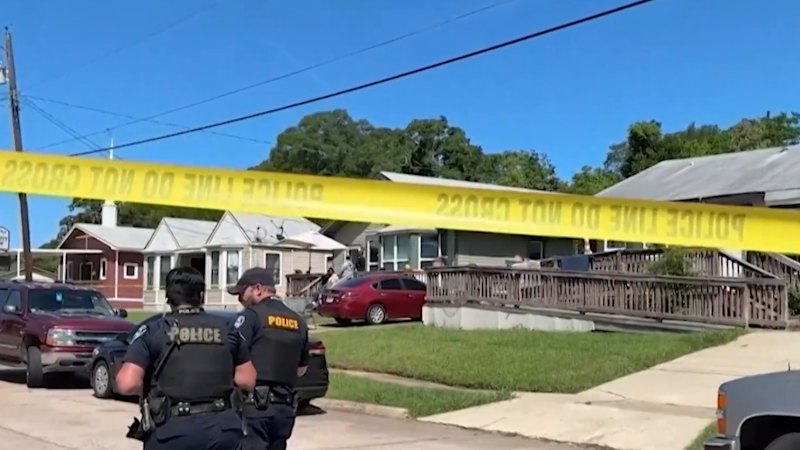
The fatal shooting of eight minors in Louisiana represents more than a localized tragedy; it serves as a critical data point in a deteriorating security environment characterized by high-velocity urban kineticism and the failure of existing intervention systems. To understand this event, one must move beyond the emotional surface of the reporting and analyze the structural precursors that facilitate high-fatality incidents involving youth. This analysis deconstructs the event through three primary lenses: the escalation of lethality in juvenile hardware, the geographic concentration of systemic vulnerability, and the operational failure of deterrence-based law enforcement models.
The Kinematics of Lethality and Hardware Proliferation
Louisiana’s specific mortality rate for minors is not a product of increased intent alone, but a direct result of the shift in the mechanical lethality available to adolescent actors. The "lethality function" of a shooting event is determined by the intersection of fire volume, accuracy degradation under stress, and the number of targets in a confined space.
- Volume of Fire Density: The transition from low-capacity revolvers or semi-automatic handguns to platforms featuring extended magazines has fundamentally altered the survival probability for bystanders. In incidents involving multiple youth fatalities, the "spray-and-pray" tactic—often a byproduct of psychological stress and lack of training—results in a high volume of stray rounds that find unintended targets in residential environments.
- The Modification Factor: The emergence of illegal conversion devices, such as "switches," converts standard semi-automatic handguns into fully automatic machine pistols. This technological shift removes the barrier of trigger reset, allowing a shooter to empty a 30-round magazine in seconds. In high-density housing or social gatherings, this creates a kill zone that makes it statistically impossible for multiple individuals to seek cover effectively.
- Hardware Accessibility: Louisiana’s regulatory environment creates a "leaky" supply chain where firearms move rapidly from legal purchase to the illicit secondary market through "straw purchases" or vehicle burglaries. This rapid transition ensures that the average age of a firearm user continues to trend downward while the firepower remains at a military grade.
The Geography of Vulnerability and Risk Clusters
The shooting of eight children occurs within a specific socio-economic topology. We can categorize this through a Tri-Partite Vulnerability Framework.
Spatial Compression
Victims in these scenarios are rarely targeted individually in isolated settings. They are caught in "compressed spaces"—small residential footprints, community parks, or shared porches—where the lack of physical barriers or bullet-resistant infrastructure increases the lethality of a single engagement. In Louisiana's urban centers, the historical lack of investment in "defensible space" architecture means that public and semi-public areas are highly permeable to violent incursions.
Resource Desiccation
There is a direct correlation between the withdrawal of state-funded protective services and the rise in reactive violence. When "credible messengers" (community interventionists) lose funding, the informal social contract that prevents minor disputes from escalating into fatal encounters dissolves. The eight deaths in Louisiana highlight a vacuum in the pre-escalation phase of conflict. Violence here is not a sudden eruption but the terminal stage of a long, unmonitored grievance cycle.
The Concentric Risk Model
Risk in these environments radiates outward from a central point of conflict. If two individuals engage in a dispute, the "risk radius" in high-lethality environments now extends to anyone within a 100-yard radius due to the ballistics of modern handguns. Children, who exist in high-density social networks, are disproportionately represented in this expanded risk radius.
The Failure of the Deterrence-Based Response Model
Current law enforcement strategies in the region rely heavily on "General Deterrence"—the idea that the threat of prison will prevent the act. This model fails to account for the Adolescent Discount Rate, a psychological phenomenon where individuals prioritize immediate peer status and survival over future legal consequences.
The failure points are as follows:
- Temporal Displacement: Law enforcement presence is often reactive, arriving minutes after the lethal event. In a high-velocity shooting where eight people are hit, the entire engagement typically lasts less than 60 seconds. Presence-based deterrence only works if the patrol is actively on the specific block at the moment of the draw.
- Intelligence Asymmetry: Most youth violence is preceded by digital escalation on social media platforms. Law enforcement agencies in Louisiana often lack the specialized cyber-intelligence units required to monitor these hyperlocal, ephemeral conflicts before they turn kinetic.
- The Trust Gap: In communities where the state is seen as an extractive force rather than a protective one, the "no snitch" cultural mandate is a rational response to the fear of retaliation. When the state cannot guarantee the safety of a witness, the flow of intelligence dries up, leaving the police to rely on forensic clean-up rather than prevention.
The Economic Impact of Cumulative Trauma
The loss of eight lives is a catastrophic human event, but its economic implications are equally devastating for the state's long-term viability. We must quantify the "Life-Cycle Cost of Violence" to understand the full scope of the Louisiana incident.
When eight minors are killed, the state loses approximately 320 years of potential labor productivity (assuming an average remaining lifespan of 40 years per child). Beyond the direct loss of GDP contribution, the "Secondary Trauma Tax" affects the surrounding community:
- Educational Regression: Violent events in a neighborhood lead to immediate drops in standardized testing scores and attendance for surviving students, hindering the future workforce.
- Property Devaluation: High-profile shooting events cause a permanent "stigma discount" on local real estate, preventing the accumulation of generational wealth for residents.
- Healthcare Burden: For every fatal shooting, there are typically three non-fatal injuries requiring long-term trauma care, physical therapy, and mental health support, much of which is subsidized by the state’s already strained Medicaid system.
Strategic Reconfiguration of State Response
The current approach to juvenile mortality in Louisiana is unsustainable and reactive. To mitigate the risk of another high-fatality event, the state must pivot toward an Integrated Kinetic Prevention Strategy.
The first pillar is Real-Time Digital Interdiction. Agencies must deploy AI-driven sentiment analysis tools to monitor localized social media clusters. Identifying the "boiling point" of a digital feud allows for the deployment of non-police mediators before weapons are drawn. This moves the intervention point from the street to the screen.
The second pillar is Ballistic Supply Chain Distruption. Rather than focusing on individual gun owners, the state must use data analytics to identify "high-volume illicit distributors"—the individuals responsible for moving dozens of weapons from legal channels into the hands of minors. Treating gun violence as a supply chain problem rather than a behavioral problem allows for higher-leverage law enforcement actions.
The third pillar is the Hardening of Social Infrastructure. Investing in "Environmental Design for Crime Prevention" (CPTED) is necessary. This includes improving sightlines in public parks, installing high-intensity lighting that cannot be easily tampered with, and creating "safe zones" with physical ballistic shielding in high-risk neighborhoods.
The Louisiana incident is a symptom of a system that has optimized for punishment rather than the physical security of its most vulnerable assets. Until the state addresses the mechanics of lethality and the geography of risk with the same rigor it applies to industrial or economic development, the cycle of adolescent mortality will remain a fixed feature of the regional environment.