The Operational Breakdown of Institutional Friction
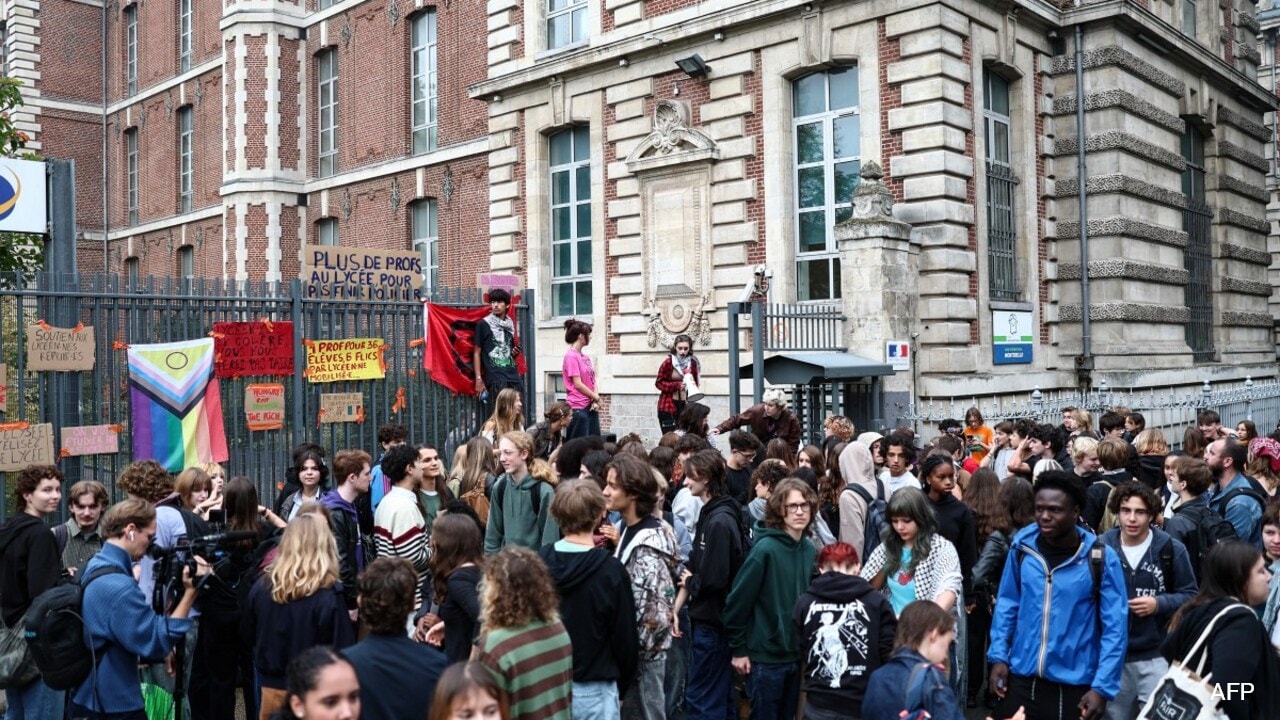
When secondary students across France orchestrate coordinated demonstrations regarding pedagogical schedules, human resource deficits, and thermal management within state facilities, observers frequently mischaracterize the events as transient teenage friction. This interpretation ignores the structural realities of public sector administration. A school is not merely a localized learning environment; it is a high-throughput public service delivery system operating under strict resource constraints.
When operational inputs—such as teaching personnel, infrastructural integrity, and temporal pacing—fail to match baseline safety and pedagogical thresholds, the system experiences cascading failures. The demonstrations observed in French secondary institutions are the visible symptoms of systemic capacity constraints meeting rigid bureaucratic inertia. Deconstructing these disruptions requires an examination of the three primary friction points driving the unrest: instructional hour allocation, human capital deficits, and thermodynamic inefficiency in state buildings.
The Temporal Deficit: Analyzing School Timings and Cognitive Load
The operational structure of the French secondary school day has historically prioritized high-density instruction blocks, often running from early morning through late afternoon with minimal interstitial buffers. This schedule creates intense cognitive friction for adolescents, whose circadian rhythms and sustained attention capacities are misaligned with twelve-hour institutional days.
When educational authorities adjust calendars or compress curricula to meet national standards, the adjustment directly impacts student cognitive endurance. The core issue is not simply the length of the day, but the efficiency of the utilization. Classrooms packed beyond standard capacity formulas transform extended hours into exercises in endurance rather than acquisition.
[National Curriculum Mandates]
       │
       ▼
[Rigid Timetable Compression] ──> [Cognitive Fatigue Threshold Exceeded] ──> [Systemic Resistance]
       │
       ▼
[Infrastructural Bottlenecks]
From an administrative standpoint, altering the school schedule requires balancing state-mandated instructional hours with labor agreements governing staff working conditions. When these two variables conflict, institutions often default to rigid timetables that ignore localized infrastructural limitations. Students experiencing these friction points recognize the systemic inefficiency long before administrative dashboards register a drop in institutional performance metrics.
Human Capital Allocation: Quantifying the Staff Shortage
The most volatile variable in the contemporary French educational model is the availability of qualified instructional personnel. Teaching shortages are frequently treated by policymakers as cyclical recruitment challenges, but structural attrition points to deeper systemic misalignment. Compensation packages failing to track against metropolitan cost-of-living increases, combined with administrative burdens and declining classroom autonomy, have compressed the labor supply pipeline.
The mechanism of failure during a staff shortage is direct. When a professor is absent due to illness, parental leave, or unfilled departmental vacancies, institutional resilience relies on replacement protocols. In a resource-constrained environment, these protocols break down immediately.
- Primary Impact: Classes are canceled or merged into oversized study halls, diluting the educational product.
- Secondary Impact: Remaining faculty absorb extra instructional hours, accelerating burnout rates across the facility.
- Tertiary Impact: Supervision ratios collapse, creating liability risks and safety vulnerabilities in common areas.
Students protesting these conditions are reacting to a tangible degradation of the service they are mandated to attend. A classroom without a specialized instructor is functionally non-operational, yet attendance remains legally compulsory. This contradiction forms the core logical grievance of the labor-related protests.
Thermodynamic Inefficiency: The Thermal Performance of State Facilities
Physical infrastructure represents the third pillar of institutional dysfunction. A significant proportion of public educational buildings in France were constructed during post-war modernization phases, long before modern energy efficiency standards or climate adaptation protocols were established. These facilities typically feature single-glazed fenestration, minimal insulation, and obsolete heating, ventilation, and air conditioning systems.
During seasonal transitions or extreme weather events, these buildings fail to maintain acceptable internal thermal bands. Classrooms lacking active climate control mechanisms or adequate ventilation convert into heat traps.
Physiological research demonstrates that ambient temperatures exceeding baseline comfort levels directly impair cognitive function, working memory capacity, and behavioral regulation. When classroom temperatures rise unmitigated, the physical environment actively obstructs the learning process. Allocating capital expenditure for retrofitting heritage educational buildings competes with national budgetary priorities, leaving regional authorities to manage deferred maintenance profiles that have reached terminal thresholds.
The Cascading Failure Loop
The convergence of compressed schedules, chronic staffing deficits, and thermally compromised classrooms creates a classic institutional failure loop.
[Staff Shortages] ──> [Oversized Merged Classes] ──> [Thermal Overload in Rooms] ──> [Behavioral Friction]
When staff shortages force the consolidation of multiple classes into single rooms, the occupant density per square meter spikes immediately. In facilities with poor ventilation and radiant heat retention, this density increase causes internal temperatures to rise rapidly. The physical discomfort accelerates behavioral friction, which in turn triggers administrative clampdowns, escalating student resistance into collective action.
Administrators attempting to suppress these protests through disciplinary frameworks misidentify the vector. Punitive measures address the symptom of the protest rather than the operational failure of the institution.
Strategic Assessment and Future Systemic Adjustments
Resolving the structural vulnerabilities exposed by these demonstrations requires a departure from short-term administrative triage. Public sector managers must decouple educational output metrics from rigid historical baselines and evaluate schools through the lens of modern asset management.
- Capital Prioritization: Fiscal outlays must be redirected toward thermal envelope retrofits in aging school stock, treating climate control as an educational prerequisite rather than a luxury.
- Labor Restructuring: Recruitment models require regionalized compensation adjustments to attract and retain teaching professionals in high-cost metropolitan sectors.
- Temporal Flexibility: Curricular mandates must grant local leadership the operational autonomy to adjust daily schedules based on facility capacity and staffing availability, preventing the bottlenecking of student populations during resource shortages.
Until public institutions align infrastructural capacity with human capital realities, educational facilities will remain exposed to operational disruption. The protests are a rational market response to a failing service delivery model. The solution demands structural overhaul, not administrative containment.