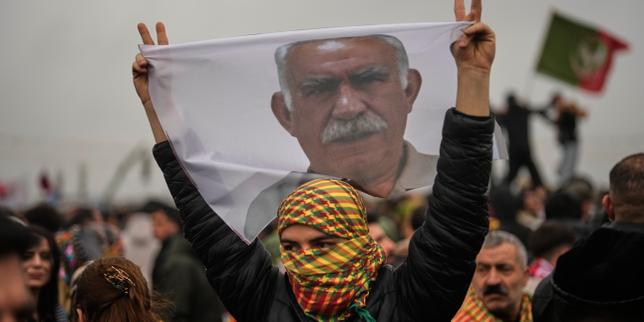
Legislative shifts regarding armed insurgencies require a rigorous separation of political posturing from structural mechanics. Turkey's recent legislative framework addressing the reintegration of Kurdistan Workers Party combatants represents a critical juncture in a decades-long security conflict, yet the unresolved status of imprisoned leader Abdullah Ocalan introduces a severe governance variable that threatens implementation.
To understand this dynamic, one must examine the legal architecture of the reintegration policy, the operational bottlenecks inherent in demobilization, and the systemic friction caused by political centralization.
The Anatomy of the Reintegration Framework
Public discourse often mischaracterizes amnesties and reintegration laws as sudden concessions. In practice, state-sponsored reintegration operates as a calculated risk-mitigation strategy designed to shift combatants from asymmetric warfare to monitored civic compliance.
The Turkish legislative initiative establishes a tiered categorization of combatants based on three distinct operational variables:
- Command Hierarchy Position: Low-tier foot soldiers versus high-command strategists face sharply divergent legal thresholds for immunity or sentence reduction.
- Participation in Lethal Operations: Individuals with documented involvement in attacks against state infrastructure or personnel are subjected to strict judicial screening rather than blanket pardons.
- Actionable Intelligence Yield: The speed and utility of tactical information provided regarding hidden assets, logistical routes, and external network nodes directly influence judicial leniency.
This creates a transactional pipeline. The state exchanges judicial relief for a reduction in active asymmetric threats, while combatants exchange operational freedom for legal security. However, the efficiency of this pipeline is entirely dependent on trust and enforcement credibility. When state institutions display high volatility in judicial application, compliance rates drop because combatants calculate that the risk of state defection outweighs the benefits of surrender.
The Ocalan Variable and Institutional Friction
The exclusion or unresolved status of Abdullah Ocalan from a clear operational framework acts as a structural bottleneck. Ocalan exercises significant ideological and structural control over the movement's decentralized factions. In political economy terms, he functions as a single-point-of-failure node within the network topology.
Leaving his status ambiguous creates a coordination failure:
- Fragmented Command Compliance: Decentralized regional units may reject local reintegration terms if they perceive that their central figurehead has been politically neutralized without concessions.
- Signaling Asymmetry: The state intends to signal strength and magnanimity simultaneously, but this creates conflicting signals. A legal framework offering reintegration to foot soldiers while maintaining total isolation on leadership paralyzes the top-down communication required to induce mass demobilization.
- Opposition Mobilization: Domestic political opposition frames any structural accommodation of leadership figures as a threat to national sovereignty, forcing the ruling apparatus into defensive policy execution that slows down judicial processing times.
Systemic Risks and Implementation Bottlenecks
The primary failure mode of historical disarmament, demobilization, and reintegration programs is the friction between legislative intent and bureaucratic execution. Even if a law passes parliamentary review, the administrative apparatus tasked with implementation often introduces severe delays.
Local judiciary bodies, security directorates, and intelligence agencies frequently operate with competing mandates. Security services prioritize risk aversion and prolonged surveillance, whereas administrative bodies prioritize throughput and case closure. This friction manifests as administrative drag, where former combatants sit in legal limbo for extended periods, raising the probability of secondary radicalization or relapse into underground networks.
Furthermore, economic integration remains structurally underfunded. Reintegration without viable economic substitution mechanisms guarantees high recidivism rates. If the state fails to provide legal employment pathways, former combatants return to illicit economies because their acquired skill sets are optimized for asymmetric operations and security arbitrage rather than formal labor markets.
Strategic Execution Blueprint
To transition from legislative text to sustainable security stabilization, the administrative apparatus must shift focus from broad political declarations to granular operational execution.
The state must establish dedicated fast-track tribunals specifically insulated from daily political volatility to process reintegration applications within strict, auditable timelines. Concurrently, security agencies must align their risk-assessment metrics with judicial guidelines to eliminate the administrative drag that stalls demobilization. Finally, economic subsidization must be tied directly to verified employment milestones rather than lump-sum stipends, anchoring former combatants into transparent financial systems where state oversight is continuous and structural defection carries an immediate economic penalty.