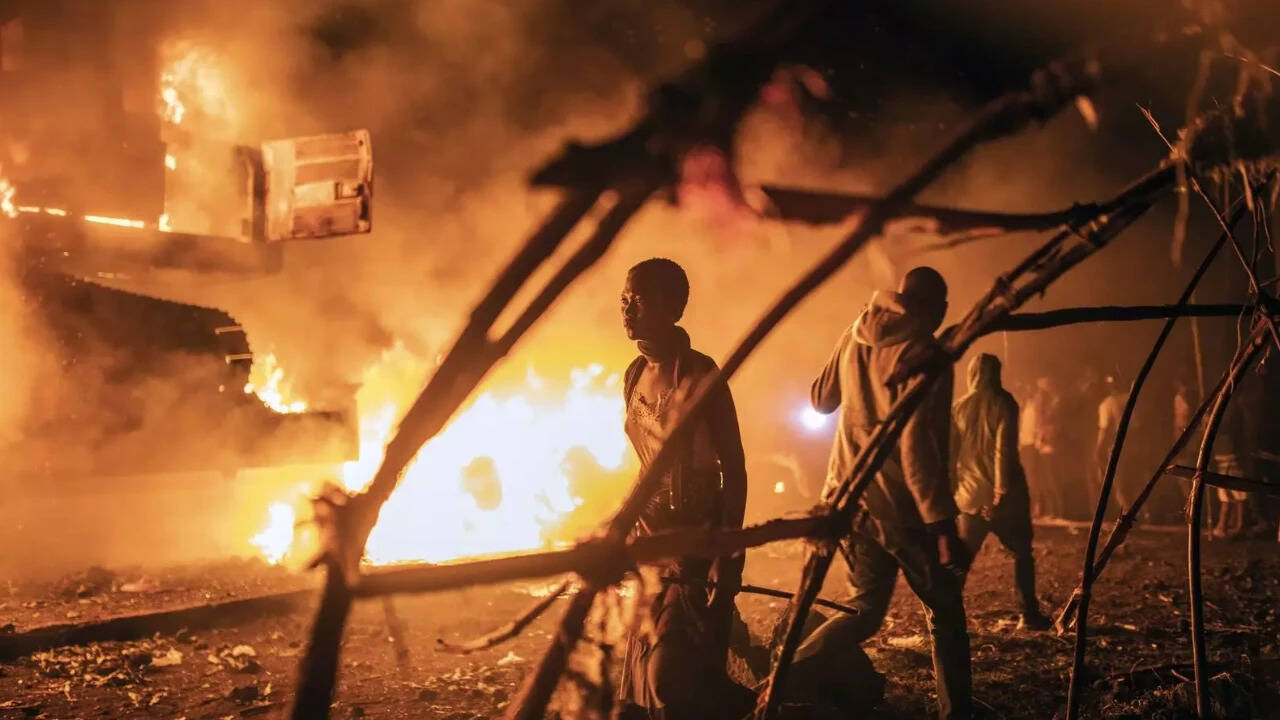
Domestic homicides involving firearms and incendiary concealment represent catastrophic failures across public safety, emergency dispatch, and localized risk mitigation networks. When a residential structure becomes both a crime scene and a thermal containment zone, the analytical challenge shifts from basic reporting to dissecting the systemic breakdowns that allowed escalation to lethality.
To evaluate these events without sensationalism, analysts must examine the underlying mechanics of domestic volatility, the limitations of standard intervention models, and the physical variables that complicate post-incident forensic recovery.
The Kinetic Escalation Model
Violence within domestic environments rarely materializes spontaneously. It follows a predictable trajectory of behavioral compression, resource isolation, and escalation toward irreversible actions.
Behavioral Compression Phase
In the initial stages of severe domestic friction, the aggressor systematically reduces the victim's external support systems. Communication channels narrow, social networks atrophy, and geographical mobility is restricted. From a structural perspective, this phase removes external friction against aggressive behavior. Without third-party observation or intervention, the psychological cost of escalation drops toward zero.
Access Amplification
The introduction of a firearm fundamentally alters the lethality threshold of any domestic dispute. Empirical data compiled across public safety research consistently indicates that the presence of a gun in a domestic violence environment multiplies the risk of homicide significantly compared to disputes restricted to physical force or non-lethal weapons. The transition from verbal conflict to kinetic discharge requires minimal physical exertion, rendering emotional impulse control the sole remaining barrier to fatality. When that barrier fails, the physiological consequences are immediate and absolute.
Incendiary Concealment Dynamics
The secondary deployment of fire following a domestic homicide introduces distinct operational objectives for the perpetrator. In forensic analysis, arson following a violent crime generally serves one of two functions: the destruction of physical evidence or the symbolic eradication of the domestic space.
[Domestic Volatility]
       │
       ▼
[Resource Isolation] ──> [Firearm Introduction] ──> [Lethal Event]
                                                          │
                                                          ▼
                                                  [Thermal Destruction]
Thermally induced structural collapse destroys ballistic trajectories, gunpowder residue patterns, and trace biological evidence. However, contemporary forensic methodologies utilize accelerant detection canines, chemical spectrometry, and structural engineering assessments to bypass surface-level destruction. The thermal signature of a fire often preserves critical skeletal and dental markers necessary for identification, even when soft tissue is compromised.
Systemic Intervention Bottlenecks
Public safety agencies operate under reactive frameworks that struggle to interrupt acute domestic crises before they reach a terminal phase. Understanding why intervention fails requires dissecting the operational constraints faced by emergency responders.
The Reporting Latency Gap
The interval between the onset of high-risk behavior and the initiation of emergency communication creates a dangerous operational void. Victims of severe domestic control frequently delay reporting due to direct threats, psychological conditioning, or the calculation that law enforcement intervention will produce short-term separation followed by long-term retaliation.
When emergency services are finally summoned, the information provided to dispatchers is often incomplete or fragmented. Callers under extreme stress struggle to articulate precise threat vectors, tactical layouts of the residence, or the specific inventory of weapons inside the home.
Dispatch Triage Limitations
Emergency dispatchers must process high volumes of variable data under strict time constraints. A domestic disturbance call is frequently categorized based on audio cues rather than historical risk profiling. If an aggressor terminates a call prematurely or subdues the caller, the priority level assigned to the response unit may not reflect the actual lethality potential.
This creates a structural mismatch between the severity of the unfolding event and the tactical posture of the responding units. Standard patrol responses are optimized for dispute mediation, not for breaching fortified or active-threat environments where firearms and fire hazards intersect.
Forensic Recovery and Structural Integrity
When a residence suffers simultaneous kinetic trauma and extensive thermal damage, standard crime scene investigation protocols must adapt to hazardous conditions. The integration of structural engineers, forensic pathologists, and fire investigators is required to reconstruct the timeline of events.
Thermal Effects on Ballistic Evidence
Extreme heat alters the physical properties of metals, alloys, and biological tissue. Projectiles recovered from a burned structure frequently exhibit deformation caused by thermal expansion rather than impact with dense material. Investigators must rely on internal barrel rifling matches, toolmark comparisons on uncompromised casing rims, and chemical residue analysis within wall cavities to establish firearm provenance.
Vulnerability of Dependent Populations
Incidents involving dependent populations, such as minors, introduce acute moral and operational complexities into forensic analysis. Minors lack the physical autonomy to escape volatile environments and possess zero operational agency to alter domestic risk factors. Consequently, risk assessment frameworks must treat dependent occupants not as secondary participants in a dispute, but as primary indicators of systemic vulnerability.
When a domestic threat environment includes children, traditional mediation protocols are entirely inadequate. The presence of structural dependents demands an immediate transition from dispute resolution to protective extraction.
Strategic Operational Redirection
To mitigate the recurrence of fatal domestic incidents involving firearms and structure fires, institutional risk assessment must evolve from a reactive posture to a predictive framework.
Law enforcement agencies and social service networks must integrate cross-jurisdictional data to flag properties where historical friction points intersect with firearm ownership registries and mental health crisis calls. Predictive indicators—such as sudden financial distress, escalating isolation tactics, and repeated abandonment of communication protocols—must trigger centralized intervention teams rather than isolated patrol units.
First response protocols must incorporate specialized thermal-scene management training. When dispatch logs indicate both potential weaponry and fire hazards, tactical containment must take precedence over traditional search-and-rescue entry to prevent unnecessary loss of responder life while maximizing the preservation of forensic evidence essential for legal accountability.