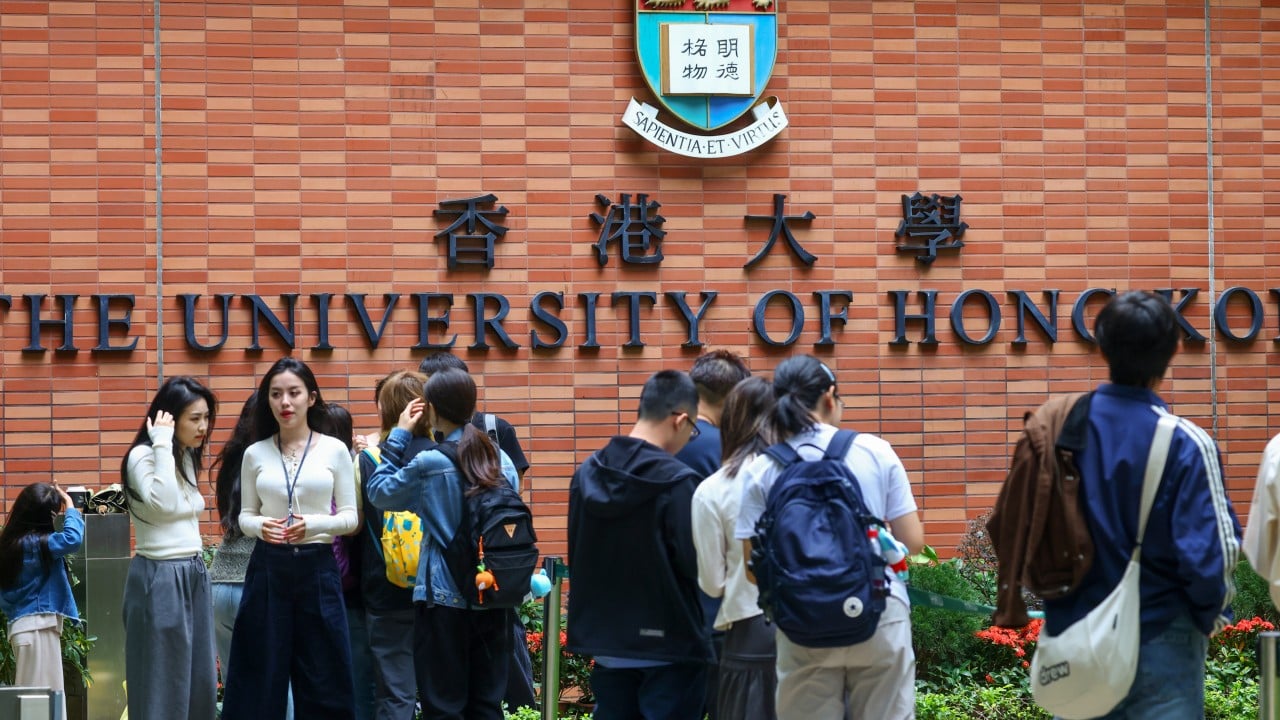
The quiet expansion of non-DSE admissions across Hong Kong universities has triggered a fierce public debate over academic quotas, transforming elite campuses into battlegrounds where local students face unprecedented competition for scarce undergraduate seats. Official policy shifts, most notably the government's decision to raise the non-local student enrollment ceiling to forty percent and subsequently push self-financing caps even higher, have altered the long-standing equilibrium of higher education. For decades, the Joint University Programmes Admissions System served as the primary gateway for local youth emerging from the Hong Kong Diploma of Secondary Education track. That predictable architecture is now under severe strain.
Behind the soaring statistics lies a complex operational reality driven by financial necessity and regional integration. Publicly funded institutions face mounting pressures to diversify their revenue streams and elevate their global rankings. Attracting high-scoring candidates from mainland China through the national college entrance examination, alongside international holders of the International Baccalaureate or Cambridge credentials, offers a direct route to achieving these institutional goals. Yet, this strategy creates a zero-sum squeeze. Every seat claimed by a non-JUPAS applicant represents a contraction of the absolute space available to local teenagers who spent their formative years drilling for a single high-stakes local examination.
Consider a hypothetical example to illustrate the mechanics of this shift. If a premier institution maintains a fixed first-year cohort size while expanding its non-local intake from twenty percent to forty percent, the contraction of localized slots forces cutoffs upward. Local applicants find themselves pitted against an international talent pool backed by different curricula, varied grading curves, and substantial financial backing. Critics demanding rigid quotas argue that public funds and publicly subsidized infrastructure should prioritize the tax-paying constituency that built the system. Universities counter that insulation from global competition breeds academic stagnation.
The friction extends well beyond raw numbers into the cultural fabric of campus life. Lecture halls designed for a localized student body now host multilingual cohorts with divergent academic socialization. Administrative offices report significant strain on student housing, tutorial support, and pastoral care services. Expanding the student body without a corresponding, rapid expansion of physical dormitories creates severe bottlenecks in urban districts where rental costs remain notoriously prohibitive.
Calls for defensive quotas overlook the structural financial dependencies steering university senates toward aggressive international recruitment. Operating budgets rely heavily on tuition revenue diversification, particularly as government subventions face tightening fiscal parameters. Restricting non-local entries would instantly starve these institutions of the capital required to fund world-class research facilities and recruit top-tier global faculty.
The tension points to a deeper identity crisis within Hong Kong higher education. Institutions want the global prestige of international cosmopolitan hubs while retaining their traditional social contract with local families. Satisfying both imperatives simultaneously is mathematically impossible within current spatial and financial boundaries.
The compromise moving forward will likely depend on how effectively authorities can expand physical capacity through urban redevelopment schemes without pricing local students out of the equation entirely. Until those infrastructure projects materialize, every admissions cycle will amplify the anxiety etched onto the faces of local teenagers staring down an increasingly crowded finish line.