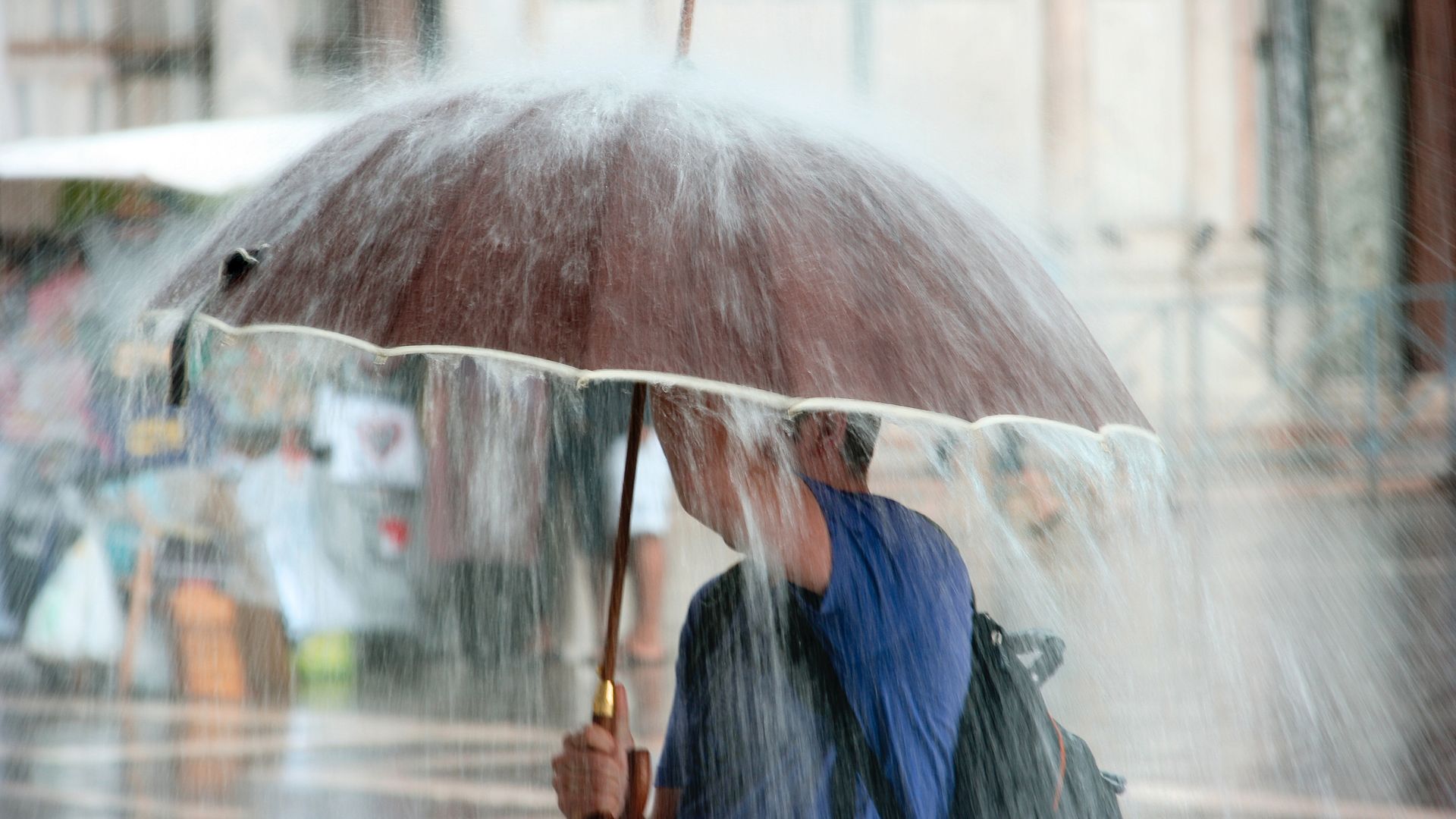
The UK is currently bracing for a sharp atmospheric shift as a "displaced polar vortex" sends temperatures plummeting and introduces a volatile mix of heavy rain and snow. While standard news bulletins focus on umbrella sales and transit delays, the real story lies in the increasing inability of British infrastructure to handle predictable seasonal shifts. We are looking at a scenario where 20mm to 40mm of rain will saturate ground already weakened by a wet winter, followed immediately by a freeze that threatens to turn the national transport network into a static gallery of stranded commuters.
This is not just "bad weather." It is a stress test for a nation that has consistently underinvested in the resilience of its physical assets. When the jet stream buckles and allows cold air to spill south, it exposes the thin margins on which our daily lives operate.
The Physics of the Freeze-Thaw Trap
The immediate threat comes from the transition of precipitation types. As the moisture-rich air from the Atlantic hits the cold block currently sitting over the North Sea, the rain won't just fall; it will transform. The process of latent heat exchange means that as rain turns to sleet and then snow, the energy transfer can actually accelerate the cooling of the local environment.
For the average citizen, this means the roads they drove on at 3:00 PM will be fundamentally different by 6:00 PM. The danger isn't the snow itself—it's the "flash freeze" that occurs when heavy rain is immediately followed by sub-zero temperatures. This creates a layer of black ice beneath any subsequent snowfall, a literal trap that salt and grit struggle to penetrate.
Our drainage systems are calibrated for a climate that no longer exists. Most of the UK’s Victorian-era sewers and mid-century road runoff pipes are designed for steady, predictable rainfall. They are not built for the "rain-to-ice" whip-saw effect. When water cannot drain because the outlets are blocked by slush or frozen solid, it backs up into the sub-base of the roads. When that trapped water freezes, it expands with enough force to crack asphalt, leading to the pothole epidemic that plagues the country every spring.
The Fragile Illusion of Energy Security
We are entering a period where the demand for heating will spike exactly when renewable yields might be at their most inconsistent. This is the "Dunkelflaute"—the dark doldrums. If the cold snap is accompanied by the high-pressure systems typically associated with Arctic air, wind speeds drop.
Suddenly, the turbines that provide a significant chunk of our "green" energy go quiet.
The National Grid then has to scramble to spin up gas-fired plants or rely on interconnectors from Europe, which may be facing their own weather-driven supply crunches. The price of electricity on the day-ahead market will likely soar, but the human cost is higher. For those in fuel poverty, a three-day "wintry spell" isn't a picturesque change of scenery; it is a financial emergency.
Why Grit Is Not a Magic Bullet
There is a common misconception that spreading salt on the road solves the problem. It doesn't. Rock salt works by lowering the freezing point of water, but it loses its effectiveness significantly once temperatures drop below -7°C. Furthermore, salt requires the mechanical action of car tires to turn it into a brine. On quiet rural roads or during a total traffic standstill, the salt just sits there, ineffective, while the ice forms around it.
The UK’s strategic salt reserve is often touted as a sign of preparedness. However, having the salt is useless if the logistics of distribution are hampered by the very weather the salt is meant to mitigate. We have seen time and again that the "last mile" of delivery is the weak link.
The Transport Stasis
Rail networks are particularly vulnerable to the heavy rain and snow combination. The UK uses a mix of overhead lines and "third rail" systems. The third rail, which sits on the ground to provide power to trains, is notorious for icing over. Once a thin film of ice covers that rail, the train’s pick-up shoes cannot draw power. The train stops.
The Overhead Line Threat
Overhead lines face a different enemy: galloping. This is the phenomenon where high winds and ice buildup cause the cables to oscillate violently. This can rip the pantograph—the arm that connects the train to the wire—right off the roof.
Modern rolling stock is also surprisingly sensitive. The sophisticated sensors and electronic systems that make modern trains efficient are often the first things to fail when moisture gets into places it shouldn't, or when sub-zero temperatures cause metal components to contract at different rates. We have traded the rugged, mechanical reliability of the past for a fragile, high-tech efficiency that buckles under pressure.
The Economic Shadow of a Cold Week
The Treasury often underestimates the "friction" cost of wintry conditions. When people cannot get to work, or when logistics chains are delayed by even 12 hours, the impact ripples through the GDP. We are talking about billions in lost productivity.
Small businesses are hit hardest. A local shop that loses three days of footfall because the pavement outside is a skating rink rarely recovers those sales. Supply chains for "just-in-time" grocery delivery are also pushed to the brink. If the heavy rain leads to localized flooding before the snow hits, warehouse access becomes a nightmare.
Beyond the Weather Warning
The Met Office issues Yellow and Amber warnings with frequency, but these have become background noise for many. The real issue is that our built environment is not "weatherproofed" in any meaningful sense.
Consider the insulation gap. The UK has some of the oldest and least energy-efficient housing stock in Europe. When a polar plume hits, these houses lose heat faster than a radiator can pump it in. This forces the boiler to work at maximum capacity for extended periods, leading to mechanical failures exactly when heating engineers are too busy to respond.
We need to stop treating these events as "freak" occurrences. They are a feature of our geography, not a bug. True resilience would look like:
- Mandatory SuDS (Sustainable Drainage Systems) in all new developments to manage runoff before it freezes.
- Hardening of the rail network through the installation of heated points and ice-resistant third rails on all major commuter lines.
- A national retrofit program that treats home insulation as a matter of national security, rather than a lifestyle choice.
The coming days will follow a familiar pattern: breathless news coverage of "Snowmaggedon," images of stranded cars on the M6, and politicians praising the "resilience" of the British public. But resilience shouldn't mean "putting up with failure." It should mean building a system that doesn't fail in the first place.
As the rain turns to sleet tonight, the question isn't whether you have enough milk in the fridge. The question is why a G7 nation still treats a standard winter storm like an unforeseen tactical invasion.
Check your local flood risk maps and ensure your external pipes are lagged before the temperature drops tonight.