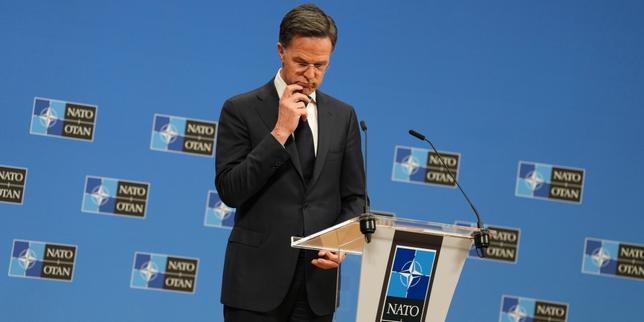
The North Atlantic Treaty Organization (NATO) currently operates under a paradox of peak military integration and acute political instability. While the alliance has expanded its footprint and modernized its posture in response to the invasion of Ukraine, its foundational guarantee—Article 5—is being re-evaluated through the lens of a "Transactional Security Model." This shift, catalyzed by the possibility of a second Trump administration, replaces the historical doctrine of collective defense with a performance-based subscription service. The risk to European stability is not merely the withdrawal of U.S. troops, but the collapse of the "Extended Deterrence" framework that has prevented major power conflict since 1949.
The Mechanistic Breakdown of NATO Deterrence
Deterrence is a psychological function derived from the product of capability and credibility. If either variable approaches zero, the entire value of the deterrent fails. The current threat of U.S. withdrawal or conditional defense attacks the credibility variable specifically.
- The Credibility Gap: Article 5 relies on the "Three C's": Capability, Communication, and Credibility. When a primary security provider signals that defense is contingent on historical budget allocations (the 2% GDP threshold), the automaticity of the response vanishes.
- The decoupling effect: European states must now weigh the probability of U.S. isolationism against the immediate cost of sovereign rearmament. This creates a "Security Dilemma" where rapid rearmament might provoke adversaries before a sufficient deterrent is established.
The 2 Percent Threshold as a Distorted Metric
The 2014 Wales Summit pledge, requiring members to spend 2% of their GDP on defense, has transitioned from a guideline to a binary "pay-to-play" ultimatum. However, using GDP as the sole metric for alliance value ignores the qualitative contributions of member states.
The Input-Output Disconnect
Focusing on spending (inputs) fails to measure combat readiness or interoperability (outputs). A nation can meet the 2% requirement through bloated pension schemes or inefficient procurement processes without adding a single mechanized brigade to the NATO pool. The "Cost Function" of European defense is currently inefficient due to fragmented supply chains and redundant systems across 32 nations.
The Asymmetric Value of Geography
The U.S. provides the nuclear umbrella and high-end enablers (satellite intelligence, heavy airlift, refueling), but European members provide the "Strategic Depth" and forward presence. The Baltic states, while spending well above 2%, provide the geographic tripwire that prevents a fait accompli seizure of territory. If the U.S. treats these nations as balance sheet liabilities, it ignores their role as the physical buffer for Western interests.
The Strategic Autonomy Deficit
The "threat of withdrawal" exposes Europe's inability to conduct high-intensity conflict without U.S. support. This deficit is structured across three critical pillars of modern warfare.
- Command and Control (C2) and Intelligence: The U.S. provides the vast majority of NATO’s Intelligence, Surveillance, and Reconnaissance (ISR). Without American space-based assets and AWACS coordination, European forces would be functionally blind in a peer-to-peer conflict.
- Logistics and Sustainment: European armies lack the "Strategic Lift" capacity to move significant forces across the continent rapidly. The reliance on U.S. heavy-lift aircraft and pre-positioned stocks creates a bottleneck that limits European response times to weeks rather than hours.
- The Nuclear Escalation Ladder: The removal of the U.S. nuclear guarantee leaves the UK and France as the sole providers. Their combined arsenals are a fraction of the Russian stockpile, creating an "Escalation Gap" that an adversary could exploit during a conventional crisis.
The Economic Consequences of a Security Vacuum
The withdrawal of U.S. security guarantees would initiate an immediate "Risk Premium" on European debt and equity markets. Security is the invisible infrastructure of trade; without it, the cost of capital rises.
Capital Flight and Defense Inflation
As European nations scramble to build "Strategic Autonomy," they face a massive reallocation of capital from social spending and green transitions to defense procurement. This shift creates a "Crowding Out" effect in the economy. Furthermore, because European defense industries cannot currently meet the surge in demand, most of this capital flows back to U.S. defense contractors (Lockheed Martin, RTX, Boeing), creating a perverse economic cycle where Europe pays the U.S. to mitigate the risk of U.S. abandonment.
The Fragmentation of the Single Market
If the centralized NATO command dissolves, individual European nations may seek bilateral security deals with the U.S. or other powers. This "Bilateralism" undermines the European Union's collective bargaining power and could lead to a fragmented security architecture where Poland, Germany, and France pursue divergent strategic interests.
Quantifying the Russian Calculation
The Kremlin’s strategy hinges on "Reflexive Control"—shaping the perception of the adversary so they make decisions favorable to Russian interests. The threat of U.S. withdrawal validates the Russian hypothesis that the West is a declining, incoherent bloc.
- Testing the Perimeter: A weakened NATO encourages "Gray Zone" operations—cyberattacks, GPS jamming, and hybrid warfare—below the threshold of Article 5. If the U.S. response is uncertain, the cost of these provocations for Russia drops to near zero.
- The Shattered Border: Without the U.S. presence in Poland and the Baltics, the "Suwalki Gap" (the land corridor connecting Belarus to Kaliningrad) becomes the most vulnerable point in Western security. A localized seizure of this corridor would force a fractured NATO to choose between a full-scale war or accepting a new territorial reality.
The Industrial Base Bottleneck
Even if European nations suddenly tripled their defense budgets, the industrial capacity to produce munitions, tanks, and air defense systems does not exist at scale. The "Lead Time" for high-end military hardware is measured in years, not months.
- 155mm Artillery Gap: Despite recent increases, European production still lags behind the consumption rates seen in high-intensity conflict.
- Technological Sovereignity: Europe is currently dependent on the U.S. for F-35 components and advanced semiconductors. A transactional U.S. administration could use this dependency as leverage to dictate European trade policy, effectively turning security into a protection racket.
The Strategic Pivot: Building a European Pillar
To mitigate the risk of a U.S. exit, Europe must move beyond "Strategic Autonomy" as a rhetorical device and implement a "Continental Defense Architecture." This requires a fundamental shift from national procurement to a unified defense market.
Standardizing the Arsenal
Europe currently operates over 20 different types of fighter jets and 15 different types of main battle tanks, compared to the U.S., which maintains three and one, respectively. This lack of "Standardization" creates a massive logistical burden. Consolidating production lines would achieve "Economies of Scale" and reduce the per-unit cost of defense.
The Franco-German Engine
The success of a post-U.S. NATO depends entirely on the alignment of Paris and Berlin. France must offer its "Force de Frappe" (nuclear deterrent) as a European asset, and Germany must overcome its historical reluctance to assume a leadership role in kinetic military operations. Failure to harmonize these two powers results in a paralyzed continent.
Integrating the Non-EU Allies
The UK and Turkey represent the most significant military capabilities in the European theater outside of the U.S. Any viable defense framework must include a "Structural Partnership" with London and Ankara. The UK’s naval power and Turkey’s massive standing army and drone capabilities are the necessary counterweights to Russian conventional superiority.
The New Security Equilibrium
The era of "Free-Riding" on U.S. defense is over, regardless of the outcome of any single election. The shift toward a multi-polar world and the U.S. focus on the Indo-Pacific necessitates a "Rebalancing" of the Atlantic alliance. The danger is not the change itself, but the velocity and volatility with which it occurs.
A sudden, uncoordinated U.S. withdrawal would trigger a "Security Vacuum" that would likely be filled by Russian opportunism and internal European fracture. Conversely, a structured "Europeanization" of NATO—where Europe takes the lead on conventional defense while the U.S. remains the ultimate nuclear guarantor—provides a path to a more resilient alliance.
The immediate strategic imperative for European capitals is to front-load defense investments and institutionalize "PESCO" (Permanent Structured Cooperation) to create a military capability that is "De-coupled but Interoperable." The goal is to reach a state where the U.S. presence is a "Strategic Choice" rather than an "Existential Necessity." By making the U.S. exit militarily survivable, Europe paradoxically makes the alliance more politically attractive to a transactional U.S. administration by proving it is a high-value partner rather than a low-yield liability.