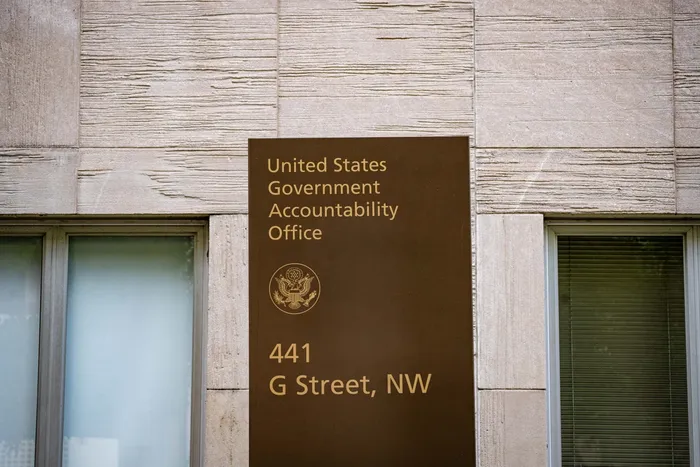
The United States federal government documented $186 billion in improper payments during the 2025 fiscal year, a figure that represents a systemic failure of administrative verification and a massive secondary cost to the American taxpayer. This sum is not merely a tally of "fraud"—a common misconception—but rather a composite of overpayments, underpayments, and payments made to ineligible recipients or for undocumented services. To address this leakage, one must move beyond the shock value of the headline and analyze the underlying mechanics: the tension between "pay and chase" recovery models and the structural rigidity of legacy eligibility systems.
The Taxonomy of Improper Payments
To quantify the $186 billion figure, the Government Accountability Office (GAO) and individual agency inspectors general distinguish between several distinct failure modes. Understanding these distinctions is necessary for any strategic mitigation. For a different look, consider: this related article.
- Administrative Documentation Deficiencies: The largest share of improper payments stems from a lack of required documentation. This occurs when an agency pays a claim—such as a Medicare reimbursement—but the medical record lacks a specific signature or date required by statute. The payment may have been for a legitimate service, but it is legally "improper" due to compliance failure.
- Eligibility Verification Failures: These occur when a recipient’s socio-economic status changes (e.g., income increases above a threshold) but the agency’s data lag prevents real-time adjustment.
- Authentication Fraud: This is the deliberate exploitation of system vulnerabilities, where bad actors use stolen identities or shell corporations to siphon funds. While this garners the most media attention, it often represents a smaller percentage of the total than bureaucratic friction.
- Mathematical and Clerical Errors: Simple miscalculations by either the claimant or the government staff, though these are increasingly mitigated by automated accounting software.
The Cost Function of Federal Disbursement
The persistence of these payments is not an accident of incompetence but a byproduct of the federal government’s primary operational objective: Disbursement Velocity. In programs like the Earned Income Tax Credit (EITC) or Medicaid, the political and social cost of delaying a payment to a legitimate recipient is often weighed more heavily than the fiscal cost of an improper payment.
This creates a "Cost Function of Accuracy" where:
$C_{total} = C_{improper} + C_{verification}$ Further reporting on this trend has been provided by Financial Times.
As the government increases the rigor of $C_{verification}$ (the cost of vetting), the time-to-payment increases, potentially harming vulnerable populations. The $186 billion figure suggests that the current equilibrium is heavily skewed toward velocity at the expense of fiscal integrity.
High-Risk Program Concentrations
The $186 billion is not distributed evenly across the federal landscape. It is concentrated in a handful of high-volume, high-complexity programs. Medicare and Medicaid consistently account for the lion's share of improper payments due to the sheer volume of transactions and the complexity of medical coding.
In the Medicaid program, improper payments often arise from state-level mismanagement of eligibility files. Because Medicaid is a joint federal-state venture, the data silos between state capitals and Washington D.C. create "blind spots." When a recipient moves across state lines or changes jobs, the system often takes months to update, leading to months of ineligible capitation payments to insurance providers.
The Internal Revenue Service (IRS) faces a different challenge with the EITC. Here, the complexity of the tax code leads to unintentional errors by taxpayers, which the IRS's current audit capacity cannot address in real-time. The "tax gap"—the difference between what is owed and what is collected—functions as a mirror image to the improper payment problem.
The Technological Debt Bottleneck
The primary mechanism for reducing the $186 billion leakage is data interoperability. However, the federal government operates on a patchwork of COBOL-based legacy systems and modern cloud environments that do not communicate effectively.
Strategic mitigation requires "Pre-payment Verification," a shift away from the traditional "Pay and Chase" model. In a Pay and Chase system, the government issues the check first and attempts to recover funds later through audits. The recovery rate for Pay and Chase is notoriously low—often cents on the dollar—because the funds are frequently spent or moved before the audit triggers.
Pre-payment verification requires real-time access to:
- Death Master Files: To prevent payments to deceased individuals.
- Do Not Pay (DNP) Databases: Centralized lists of debarred contractors and individuals.
- Real-Time Payroll Data: To verify income eligibility for social safety net programs.
The bottleneck is not the availability of this data, but the latency in accessing it. When an agency’s system takes 48 hours to ping a database, but the statutory requirement is to issue a payment within 24 hours, the agency is forced to bypass the check.
The Moral Hazard of Non-Recovery
When improper payments reach a threshold where they are viewed as a "cost of doing business," a moral hazard emerges. Contractors and healthcare providers may become less diligent in their documentation, knowing that the statistical likelihood of an audit is low.
Furthermore, the "1% Error Rate" fallacy masks the scale of the problem. In a multi-trillion dollar budget, a "low" 1% error rate still results in tens of billions of dollars in losses. The $186 billion figure for 2025 indicates that in several major programs, the error rate has climbed significantly higher, signaling a degradation of internal controls.
Institutional Resistance to Reform
Legislative attempts to curb improper payments, such as the Payment Integrity Information Act (PIIA), provide the framework for reporting but often lack the "teeth" for enforcement. Agencies are required to report their error rates, but there are few professional or budgetary consequences for failing to reduce them.
This creates a misalignment of incentives. For an agency head, the priority is fulfilling the mission—getting the benefits to the people. Admitting to high error rates is a political liability, yet dedicating a significant portion of a fixed budget to "integrity operations" reduces the funds available for the core mission. This is the Integrity Paradox: the more an agency looks for improper payments, the more it finds, which can lead to negative headlines and potential budget cuts, effectively punishing transparency.
Strategic Realignment of Federal Integrity
To bend the curve of the $186 billion leakage, the federal strategy must shift from retrospective auditing to predictive modeling and architectural reform.
- API-First Eligibility: Mandating that all benefit programs integrate with a centralized, real-time eligibility API. This removes the "data lag" that accounts for a plurality of eligibility errors.
- AI-Driven Pattern Recognition: Moving beyond rule-based flags to machine learning models that can identify anomalous billing patterns in Medicare/Medicaid before the payment is disbursed. This is particularly effective against organized fraud syndicates that use "burn-and-turn" billing schemes.
- Statutory Harmonization: Congress must simplify the eligibility criteria for the most "error-prone" programs. Complexity is the greatest ally of improper payments; a simplified tax code or a streamlined Medicaid application process reduces the surface area for errors.
The $186 billion figure is a symptom of a government that has scaled its spending capabilities faster than its oversight infrastructure. The solution is not merely "more auditors," but a fundamental re-engineering of the federal payment architecture to prioritize verification at the point of entry. Until the cost of an improper payment is weighed more heavily than the administrative friction of preventing it, the leakage will remain a structural feature of the American fiscal landscape.
The immediate tactical move for oversight bodies is the implementation of "Closed-Loop Reporting," where every identified improper payment must be traced back to a specific system vulnerability, with a mandatory "patch" or process change required within the subsequent fiscal cycle. This shifts the focus from accounting to systems engineering.