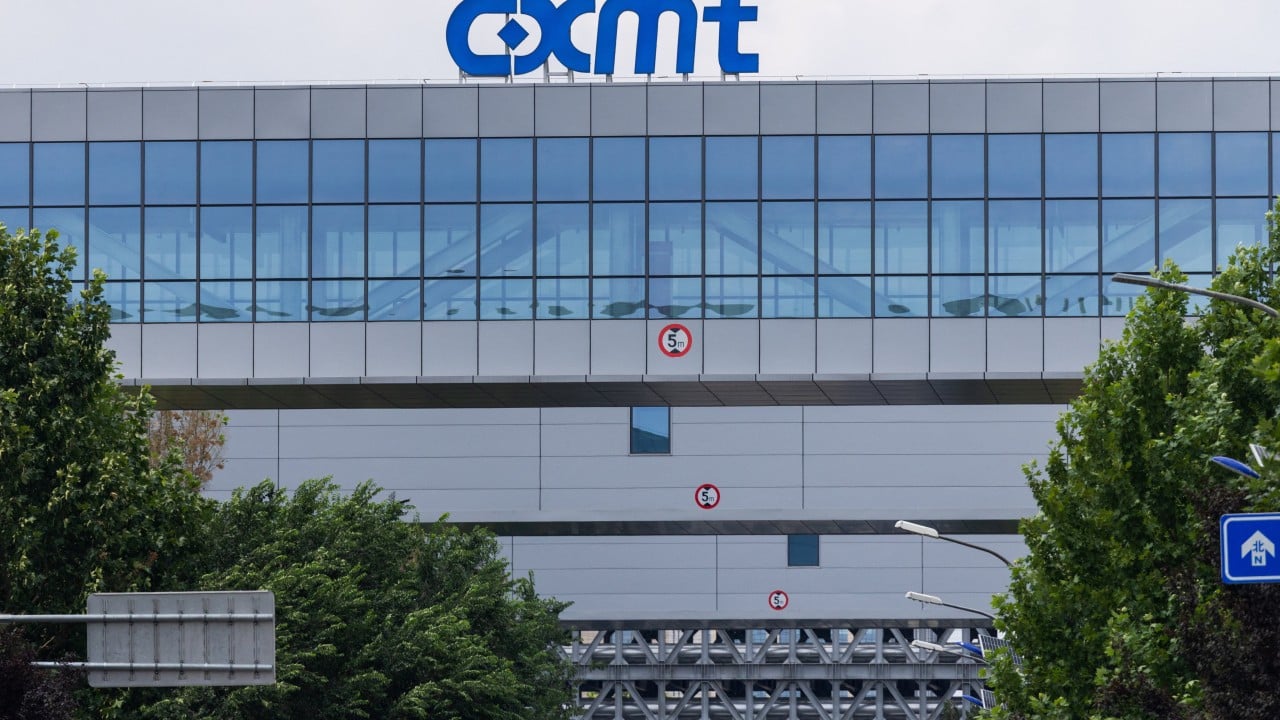
Financial milestones in cyclical semiconductor manufacturing rarely emerge from organic market optimization alone, pointing instead to the structural collision of state-directed capital allocation, global supply chain bottlenecks, and generational technology upgrades. ChangXin Memory Technologies scaling its first-half revenue to 150.31 billion yuan—a year-on-year surge of over 870 percent—illustrates how aggressive industrial policy interacts with macro demand shocks. Deconstructing this performance requires separating headline growth figures from underlying cost structures, capacity utilization metrics, and the pricing dynamics of the global dynamic random-access memory market.
The primary driver behind this expansion is not simply increased output, but the convergence of an artificial intelligence-induced memory super-cycle and capacity cannibalization among incumbent suppliers. Major market leaders including Samsung Electronics, SK Hynix, and Micron diverted substantial capital expenditure and fab capacity toward high-bandwidth memory to satisfy artificial intelligence server demand. This structural shift created a severe supply deficit in commodity and standard high-performance memory lines like DDR4, DDR5, and low-power variants. ChangXin Memory Technologies positioned its expanding wafer output precisely into this pricing vacuum, capturing high average selling prices while scaling volume.
The Three Structural Levers of the Turnaround
Financial transition from multi-year operating losses to net profits exceeding tens of billions of yuan relies on three distinct operational mechanics.
First, inventory monetization played an immediate role. During the prior cyclical downturn, the company accumulated billions of yuan worth of dynamic random-access memory inventory produced at scale. When market prices escalated sharply due to supply constraints, clearing this inventory at elevated spot and contract prices yielded immediate margin expansion without incurring proportional marginal production costs.
Second, the cost absorption curve shifted favorably. Semiconductor manufacturing features exceptionally high fixed-asset depreciation and research overhead. During initial phase expansions, depreciation per unit severely penalized gross margins. As production lines reached higher utilization rates and output scaled toward hundreds of thousands of wafers per month, fixed depreciation costs distributed across a massive revenue base, unlocking operational leverage.
Third, product mix evolution altered the gross margin profile. Transitioning from legacy DDR4 nodes toward advanced DDR5 and low-power consumer variations increased revenue per bit. Qualification across major domestic device manufacturers including smartphone producers and cloud infrastructure providers secured stable baseline demand, insulating factory floors from idle capacity risks.
The Limits of State-Backed Scale and Technology Migration
Despite exceptional top-line metrics, assessing long-term viability requires examining structural hurdles that capital injection alone cannot instantaneously resolve. Semiconductor fabrication operates on strict lithographic boundaries. While ChangXin Memory Technologies successfully compressed its generation-skipping research and development path—evolving rapidly through early process platforms toward advanced nodes—maintaining parity with global competitors requires continuous equipment acquisition under tightening export restrictions.
The transition toward fifth-generation high-bandwidth memory and sub-nanometer nodes demands extreme precision in lithography, advanced packaging, and thermal management. Incumbent global competitors retain deep patent portfolios and entrenched relationships within the high-performance computing ecosystem. When cyclical pricing pressures eventually normalize, profitability will depend entirely on structural cost efficiency rather than inflationary market tailwinds.
Strategic Implications for Global Market Equilibrium
The rapid elevation of domestic memory manufacturing introduces systemic changes to pricing power in the broader electronics supply chain. Historically, the memory triopoly exercised rigid supply discipline to manage down-cycles and protect margins. The addition of substantial wafer capacity from Chinese fabrication plants structurally alters this oligopolistic control.
As production scales toward hundreds of thousands of wafers monthly, supply shocks become less effective at maintaining artificially inflated pricing floors. Consumer electronics and automotive supply chains gain alternative procurement channels, reducing vulnerability to geopolitical trade friction or localized factory disruptions.
Forward Operating Horizon
Future valuation and operational stability will hinge on executing the transition into high-value vector categories without degrading operating margins. Management must successfully ramp advanced packaging capabilities and secure non-domestic enterprise validation to prove that profitability persists beyond domestic substitution mandates. Capital expenditure must pivot efficiently from raw volume expansion to yield optimization and proprietary architecture design, ensuring that scale translates into durable competitive advantage when the current memory super-cycle reaches its natural inflection point.