Geriatric morbidity is governed by mechanical failure, primarily manifested through structural kinetic collapse during ambulation. Traditional clinical interventions focus on passive stabilization strategies, attempting to eliminate environmental variables rather than upgrading the human biological system's capacity to process kinetic stress. A counterintuitive operational framework has emerged within specialized physical conditioning: the application of parkour methodologies to aging cohorts. This discipline, structurally defined as the optimization of spatial traversal efficiency, provides a rigorous blueprint for upgrading motor control, impact attenuation, and reactive balance.
Evaluating this intervention requires stripping away the urban acrobatic aesthetic and isolating the core mechanical variables. Geriatric motor degradation is fundamentally an issue of power output decay, proprioceptive latency, and structural fragility. By analyzing how modified kinetic training alters these variables, we can construct a predictable model for injury mitigation. For a different look, read: this related article.
The Kinematic Cost Function of Aging
Human ambulation is an ongoing exercise in controlled falling. Each step forward requires a deliberate shift of the center of mass outside the base of support, followed by a dynamic recapture of that mass. In younger populations, this process operates with minimal cognitive overhead due to high neuromuscular reserve. As biological aging progresses, three distinct parameters degrade the system's efficiency:
- Neuromuscular Latency: The temporal delay between vestibular or visual detection of a perturbation and the compensatory muscular contraction.
- Rate of Force Development: The capacity of skeletal muscle to deploy explosive torque to arrest an uncontrolled descent.
- Kinetic Energy Dissipation: The structural capability of soft tissue and joints to absorb high-impact loads without osseous or ligamentous failure.
Standard physical therapy protocols address these deficits via isolated resistance training and static balance drills, such as single-leg stands on stable surfaces. While these interventions improve baseline strength, they fail to replicate the stochastic, multidirectional environmental stressors that cause real-world clinical trauma. They optimize for closed-loop stability while living environments demand open-loop kinetic adaptability. Similar insight on the subject has been shared by National Institutes of Health.
The Three Pillars of Applied Kinetic Adaptation
Adapting structural movement disciplines for older demographics requires a rigorous reduction of velocity and an intensification of cognitive-motor coupling. The methodology breaks down into three distinct physiological vectors: controlled load absorption, directional scaling, and spatial hazard calculation.
Vector One: Impact Attenuation and Dissipation Mechanics
When kinetic energy exceeds structural threshold limits, tissue failure occurs. The primary clinical objective in preventing severe trauma is not merely preventing the initial loss of balance—an impossible statistical goal over a lifetime—but managing the energy transfer when ground contact is inevitable.
Traditional fall-prevention models instruct seniors to avoid falling or to rely on passive protective gear like hip pads. Parkour-derived interventions invert this logic by training active energy dispersion. Practitioners learn to convert linear downward momentum into rotational momentum through controlled rolling mechanics, or to distribute peak impact forces across multi-joint kinematic chains rather than focal impact points like the proximal femur or the radial head.
The physics governing this approach rely on impulse-momentum theorems. By extending the duration of the impact phase ($t$), the peak force ($F$) experienced by fragile skeletal structures is proportionally reduced according to the equation $F \Delta t = m \Delta v$. Training older adults to flex through the ankle, knee, and hip joints sequentially—rather than maintaining rigid posture during a perturbation—extends the deceleration vector, keeping peak impact forces below the fracture threshold of osteoporotic bone.
Vector Two: Progressive Load Scaling and Proprioceptive Calibration
The human nervous system updates its internal map of physical capability through continuous exposure to calibrated resistance. Movement training programs designed for older adults frequently suffer from low ceilings of adaptation; they treat the participant as a fragile asset to be preserved rather than an adaptive biological system capable of remodeling under stress.
The principle of scaling resolves this limitation. In structural movement conditioning, every complex environmental negotiation is broken down into constituent sub-movements. Negotiating a vertical drop or an uneven surface is scaled from static, low-amplitude height differentials up to functional thresholds. This progressive overload enhances proprioceptive acuity—the internal feedback loop involving muscle spindles, Golgi tendon organs, and joint receptors.
When older adults repeatedly practice stepping off low platforms with precise foot placement, they shorten their reactive latency period. The central nervous system develops rapid-fire motor unit recruitment patterns, ensuring that an unexpected slip on an irregular sidewalk triggers an immediate, unconscious compensatory step rather than a catastrophic fall.
Vector Three: Environmental Hazard Parsing
Kinetic defense is fundamentally an informational problem. Most domestic and community-based injuries occur because the cognitive processing unit fails to register environmental friction coefficients or spatial anomalies prior to weight-bearing commitment.
Conditioning models adapted from obstacle traversal emphasize active environmental scanning. Practitioners are trained to categorize terrain density, predict friction variations on slick surfaces, and identify micro-topographical shifts before traversal. This cognitive habit shifts the subject from passive navigation to active situational awareness, radically reducing the probability of misjudged spatial calculations.
Systemic Limitations and Failure Modes
No intervention is universally effective, and intellectual honesty requires detailing the boundaries of this kinetic strategy.
First, structural movement conditioning is contraindicated for cohorts with advanced neurodegenerative pathologies, severe unmanaged vestibular disorders, or acute inflammatory joint disease. The mechanical demands of controlled loading require baseline tissue integrity that cannot be synthetically generated if systemic degradation has crossed a critical clinical threshold.
Second, the scalability of these programs is bottlenecked by human capital constraints. Delivering effective, safe kinetic training to older adults requires expert coaches who understand both geriatric physiology and advanced biomechanics. Deploying unqualified instructors into this domain transforms a high-value intervention into a high-risk liability.
Third, cultural friction remains a significant barrier. The psychological inertia of aging populations—reinforced by risk-averse medical advisories that prescribe excessive physical sedentariness—creates resistance against programs that require individuals to get on the floor, navigate low obstacles, and experience controlled discomfort.
Strategic Deployment Protocol
To operationalize these insights outside controlled clinical trials, community health frameworks must abandon passive containment models. The objective is the systematic transition of older populations from fragility maintenance to kinetic resilience optimization.
Health systems and municipal wellness programs should integrate structured spatial navigation modules into standard preventative care pipelines. Initial deployment must prioritize supervised, low-amplitude environmental challenges using modular playground architecture or specialized indoor resistance setups. Progression must be governed by objective kinematic metrics: time to recovery following a controlled displacement, rate of force development during chair-rise transfers, and self-reported spatial confidence scores.
By shifting the strategic focus from preventing movement to mastering the mechanics of interaction with physical space, aging cohorts can systematically reclaim their structural autonomy and reduce the incidence of catastrophic mechanical failure.
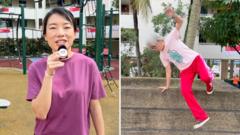
Seniors learn how to fall safely through parkour
This short visual demonstration highlights how older adults practice controlled movement patterns and impact mitigation techniques derived from parkour training under professional supervision.
http://googleusercontent.com/youtube_content/1
:max_bytes(150000):strip_icc()/AprilbyKunbi-ac7999afd721433e9c73e191cd311248.jpeg)