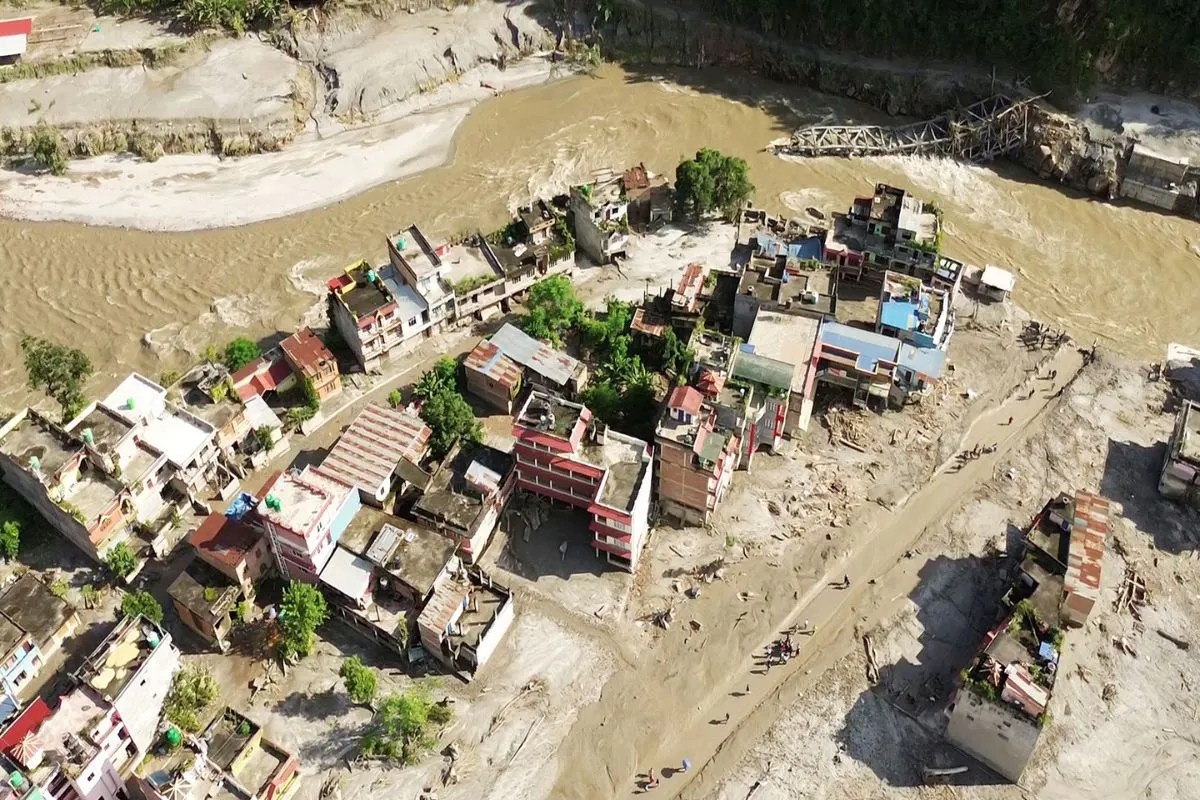
Monsoon precipitation systems in the Himalayas operate under strict thermodynamic and geological constraints. When extreme rainfall events saturate steep topography, the primary failure mechanism shifts from simple water accumulation to mass-wasting events, specifically debris flows and rapid riverine bank erosion. The recent disaster in the Gorkha district, which compromised over thirty-five residential structures and critical suspension bridges, demonstrates the vulnerability of rural infrastructure built within active alluvial fans and narrow valley floors. Understanding the recurrence and destructive capacity of these events requires examining the underlying hydrological vectors, the structural thresholds of local engineering, and the systemic failure points in regional emergency response frameworks.
Precipitation intensity in the middle hills of Nepal is governed by moisture-laden air masses driven northward from the Bay of Bengal, which encounter high-relief terrain and trigger Orographic lift. When sustained rainfall rates exceed infiltration capacity, overland flow accelerates down saturated slopes. In Gorkha, the steep gradients transform surface runoff into high-energy hydraulic vectors capable of mobilizing massive bedloads of sediment, boulders, and organic debris. This debris torrent acts as a scouring agent, widening river channels, undercutting valley walls, and destroying lateral infrastructure such as footbridges and rural access roads that lack deep-seated foundation stabilization.
Infrastructure resilience in this region is constrained by economic and geographical factors that dictate construction typologies. Traditional stone-and-mud masonry structures, prevalent in rural Gorkha, exhibit low tensile strength and high vulnerability to hydrodynamic pressure and foundation scouring. When swollen tributaries breach their banks, the lateral force exerted against structural walls exceeds the internal friction and weight of masonry units, leading to catastrophic collapse rather than gradual structural displacement. Similarly, suspension bridges—vital lifelines for isolated hill communities—face two distinct failure modes during peak monsoon discharges: direct kinetic impact from floating timber debris and the loss of anchor stability caused by localized slope failures at the bridge abutments.
The advisory issued for residents to seek higher ground highlights the reactive nature of current disaster management protocols. Evacuation timing in narrow Himalayan valleys is constrained by the short concentration time of watersheds, where the lag between intense rainfall and flash flooding can be measured in minutes rather than hours. Without real-time telemetry, automated river-gauge warning systems, and pre-engineered evacuation routes, population safety relies entirely on visual observation and manual communication. This creates a high-latency response loop, leaving communities exposed during nocturnal precipitation events when visual detection of rising water levels is impossible.
Mitigating future catastrophic losses in regions like Gorkha demands a transition from post-disaster humanitarian distribution to proactive structural risk management. Engineering interventions must incorporate setback zones that prohibit permanent construction within active dynamic floodplains and debris-flow paths. Infrastructure reinforcement requires moving away from conventional shallow-foundation river training walls toward deep-piled gabion structures and bio-engineering techniques that utilize deep-root vegetation to stabilize vulnerable riverbanks. Integrating decentralized, community-managed early warning systems equipped with satellite-linked rain gauges will reduce response latency and improve survival probability during high-intensity monsoon anomalies.