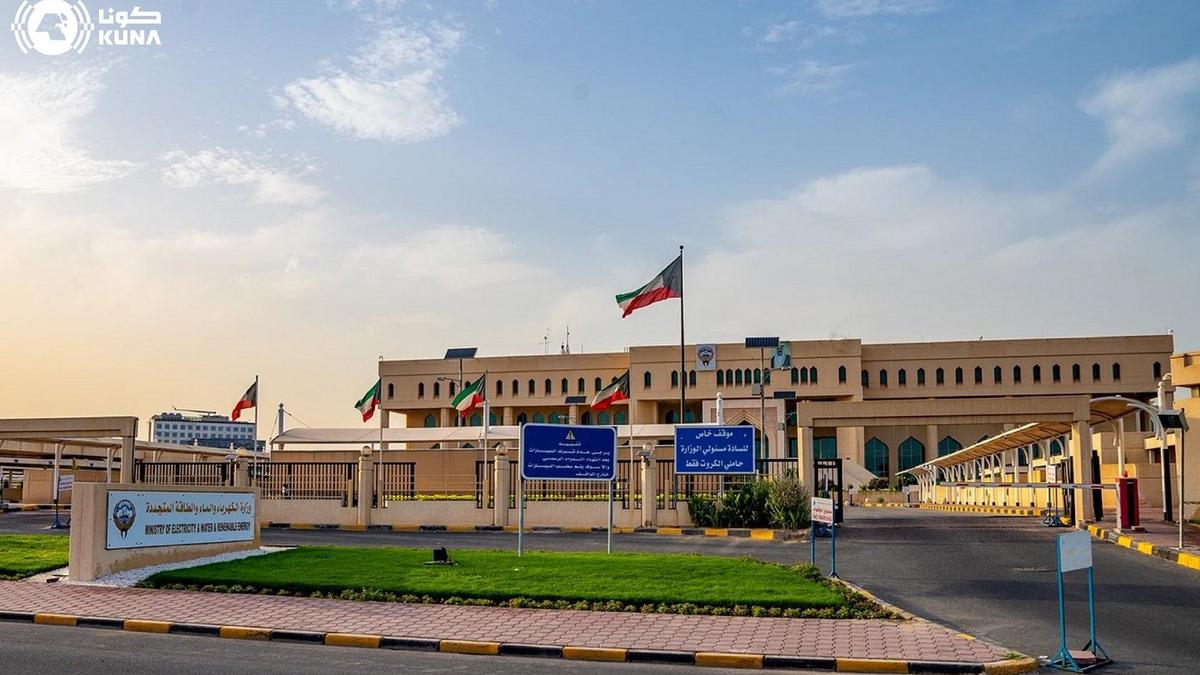
The kinetic engagement of Kuwait’s critical infrastructure reveals a fundamental fragility in the Gulf’s "water-energy nexus," where the loss of power generation is inextricably linked to the immediate failure of potable water supplies. This incident is not merely a regional security breach; it is a demonstration of how asymmetric warfare targets the specific thermodynamic dependencies of a desert economy. In Kuwait, where 90% of water demand is met through energy-intensive desalination, any physical compromise of the turbine halls or Multi-Stage Flash (MSF) distillers initiates a cascading system failure that bypasses traditional military defenses.
The Dual-System Bottleneck
Kuwait’s utility infrastructure operates as a co-generation model. The primary facility clusters, such as Doha, Shuaiba, and Az-Zour, do not function as isolated electricity plants or water factories. They are integrated thermal loops. The structural logic of these plants dictates that high-pressure steam first drives electricity-generating turbines before the residual heat is diverted to boil seawater.
When an external strike disrupts the power cycle, the water cycle terminates simultaneously. This creates a compounding crisis:
- Kinetic Damage to Steam Headers: A strike on the central steam distribution network renders the entire plant inoperable. Without the high-pressure steam generated by the boilers, the MSF units lose their thermal energy source, halting water production for millions.
- Electric Substation Neutralization: Even if the boilers and distillers remain intact, the destruction of the step-up transformers prevents the export of power to the national grid. This causes an immediate "black start" requirement for the rest of the country, a complex process that is notoriously difficult under the threat of sustained bombardment.
- The Cooling Water Loop: Desalination plants require massive intakes of seawater for cooling and processing. A strike on the intake pumping stations—the most exposed part of the facility—suffocates the plant's ability to regulate temperature, leading to emergency shutdowns to prevent catastrophic equipment melt-down.
Quantification of the Desalination Deficit
Kuwait’s strategic water reserve is a finite variable determined by the ratio of storage capacity to daily consumption. In a standard operational environment, Kuwait maintains a reserve that can last between 7 to 14 days under strict rationing. An attack on the primary plants immediately shifts the state from a surplus producer to a deficit consumer.
The math of a utility blackout in this context is brutal. If the Az-Zour North or South complexes are offline, the state loses roughly 40% of its total installed capacity. Because reverse osmosis (RO) membranes—the alternative to thermal desalination—require high-grade electricity to maintain the pressure required to push water through semi-permeable barriers, a grid failure also shuts down the "modern" half of the water infrastructure.
The dependency is absolute. There is no fallback to natural aquifers, as Kuwait’s groundwater is largely brackish or contaminated by historical oil spills. The failure of the plants is the failure of the biological viability of the urban centers.
Asymmetric Targeting and the Cost of Repair
The logistics of repairing specialized utility infrastructure in a conflict zone represent a significant friction point for the Kuwaiti government. Unlike standard commercial buildings, the components within a desalination plant—specifically the titanium tubing in heat exchangers and the specialized alloy turbine blades—have lead times measured in months, not days.
- Custom Tooling Requirements: Most components are custom-engineered for the specific salinity and temperature of the Persian Gulf. They cannot be "swapped" from international stockpiles.
- Technical Personnel Scarcity: The specialized engineers required to recalibrate a damaged MSF unit are often third-party contractors. In the wake of a kinetic attack, the insurance premiums and physical risks often lead to an exodus of the very expertise needed for recovery.
- Contamination Risks: Kinetic strikes often result in the leakage of hydraulic fluids, fuels, and chemical treatments (such as anti-scalants) into the immediate environment. If these chemicals enter the seawater intake areas, they can ruin the delicate membranes of any remaining Reverse Osmosis units, creating a secondary "chemical" attack on the infrastructure.
Geopolitical Leverage via Infrastructure Hostage-Taking
The decision to target Kuwaiti utility plants reflects a shift in regional doctrine from "counter-force" (targeting the military) to "counter-value" (targeting the things a society needs to survive). By holding the water supply hostage, an aggressor exerts maximum political pressure on the Kuwaiti government with a relatively low expenditure of munitions.
This creates a permanent state of "Grey Zone" pressure. Even if the damage is repaired, the psychological and economic cost of the vulnerability remains. Investors price in the risk of a "water-zero" event, and the government is forced to divert billions from economic diversification into redundant, hardened, and underground utility assets.
The Strategic Pivot to Decentralization
The current vulnerability is a byproduct of centralized, massive-scale engineering. To mitigate the impact of future kinetic events, Kuwait’s utility strategy must shift toward a distributed architecture. This involves a move away from "Mega-Plants" toward smaller, modular Reverse Osmosis units powered by localized solar arrays.
- Redundancy through Granularity: Ten small plants are harder to neutralize than one giant facility.
- Solar Integration: By decoupling water production from the national gas-fired grid, the state ensures that even during a total blackout, localized water production remains functional during daylight hours.
- Hardened Storage: Expanding the "Strategic Water Forest"—a series of underground reservoirs—is the only way to extend the 7-day survival window to a 30-day window, providing the necessary buffer for diplomatic or military resolution.
The attack on Kuwait’s power and water plants is a definitive signal that the era of centralized utility security in the Gulf has ended. The structural integrity of the state now depends on the speed at which it can decouple its water supply from its vulnerable, high-visibility thermal power hubs. The immediate priority is not just repair, but the rapid deployment of containerized, mobile desalination units to create a decentralized "survival grid" that can operate independently of the primary targets.



