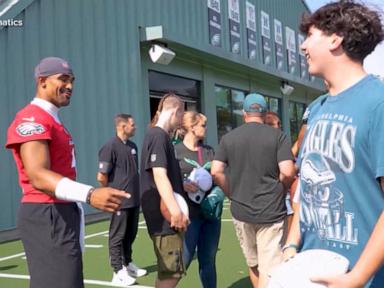
Corporate philanthropic initiatives are frequently evaluated through qualitative narratives rather than systematic operational frameworks. When organizations such as the Philadelphia Eagles and Fanatics collaborate with foundations like Make-A-Wish, public discourse typically focuses on the emotional resonance of the event. However, examining these engagements through a structural lens reveals distinct mechanics of brand alignment, logistics management, and stakeholder integration. Corporate social responsibility programs function effectively only when they are treated as integrated operational units rather than peripheral public relations exercises. This analysis deconstructs the architecture of sports-retail philanthropic partnerships, evaluating the cost functions, logistical variables, and long-term brand equity implications of large-scale wish-granting operations.
The Operational Architecture of Wish-Granting Partnerships
Executing a multi-stakeholder philanthropic initiative requires a division of labor that leverages the core competencies of each participating entity. In collaborations involving a professional sports franchise and a major sports apparel retailer, resource allocation follows a predictable functional split.
The sports franchise provides intellectual property, access to high-performance facilities, and athlete engagement. These assets carry zero marginal cost of reproduction for the franchise but possess high perceived value for the recipient. The retail partner contributes supply chain capabilities, merchandise inventory, and financial underwriting. The wish-granting foundation supplies administrative vetting, psychological screening, and regulatory compliance infrastructure.
[Retail Partner: Inventory & Logistics]
       │
       ├──> [Shared Program Execution] <── [Sports Franchise: IP & Access]
       │
[Make-A-Wish Foundation: Vetting & Compliance]
This tripartite model minimizes redundancy. Instead of building independent philanthropic infrastructure, the corporate entities outsource beneficiary management to an established non-profit, while the foundation leverages corporate balance sheets to scale experiences that would otherwise exceed its operational budget. The efficiency of this arrangement depends on clear communication protocols and aligned timelines. Misalignment between a team's active athletic schedule and a retailer's supply chain distribution cycles represents the primary operational bottleneck in these collaborations.
Resource Allocation and the Economics of Engagement
Corporate philanthropy is constrained by budget allocation models and return-on-investment metrics, even when the primary objective is altruistic. To understand the sustainability of initiatives involving custom merchandise distribution and VIP stadium access, one must analyze the cost function.
The total cost of a collaborative wish-granting event ($C_{total}$) can be expressed as the sum of direct variable costs and indirect opportunity costs:
$$C_{total} = C_{materials} + C_{logistics} + C_{labor} + C_{opportunity}$$
- $C_{materials}$: The manufacturing and wholesale cost of customized apparel, memorabilia, and equipment provided to participants. Retail partners absorb this through pre-allocated community relations budgets.
- $C_{logistics}$: Transportation, security, and facility utilization expenses. Professional sports stadiums possess high fixed operating costs; hosting external groups requires shifting internal security and operations personnel.
- $C_{labor}$: The allocation of human capital, including public relations teams, player participation hours, and administrative oversight.
- $C_{opportunity}$: The temporary displacement of commercial activities, such as stadium tours or retail space utilization during peak commercial hours.
The marginal cost of adding participants to an established event framework is relatively low, exhibiting economies of scale up to the threshold where facility capacity or player availability constrains the experience. Consequently, organizations maximize impact by batching experiences into high-density events rather than distributing them across continuous, low-volume touchpoints.
Brand Equity Transmission and Stakeholder Alignment
Philanthropic partnerships alter public perception by transferring brand attributes between disparate entities. The mechanism of this transfer relies on associative memory networks in consumer psychology. When a retail brand with transactional associations aligns with a non-profit dedicated to human welfare, consumers update their schema of the corporate entity.
However, this transfer carries inherent risks if the strategic fit lacks authenticity. Effective alignment demands three structural conditions:
- Audience Overlap: The demographic profile of the sports franchise's fan base must intersect meaningfully with the retail partner's customer segments, ensuring that the brand equity generated translates into market retention.
- Operational Continuity: The philanthropic activity must reflect the daily business operations of the partners. For a sports merchandise retailer, integrating product customization into the wish experience demonstrates functional capability rather than superficial charity.
- Measurement Rigor: Organizations must track engagement metrics beyond immediate media impressions, evaluating long-term employee retention, customer lifetime value changes, and community trust indexes.
When these conditions are met, the partnership generates compound returns. Employees of both the franchise and the retail corporation experience enhanced organizational pride, which correlates with reduced turnover and higher productivity in operational roles.
Strategic Execution and Systemic Limitations
Despite the structured benefits of sports-retail philanthropic ventures, systemic limitations persist. Wish-granting initiatives are inherently episodic. They create acute positive spikes in brand sentiment but fail to establish continuous community development unless paired with year-round educational or economic programs.
Furthermore, over-reliance on high-profile athlete participation introduces vulnerability. Athletic schedules are volatile, subject to injury, performance slumps, and unexpected roster changes. Program designs that depend exclusively on active player availability risk disruption when athletic priorities conflict with community relations commitments. Robust programs decouple the core experience from individual athlete presence, ensuring that the brand infrastructure and retail engagement remain resilient regardless of personnel turnover.
Future iterations of these programs must transition from reactive event-based sponsorship to integrated community development pipelines. Organizations should embed retail-supported vocational training, youth athletic infrastructure investment, and continuous non-profit funding into their core business models, treating social impact as a permanent operational variable rather than a seasonal campaign.


