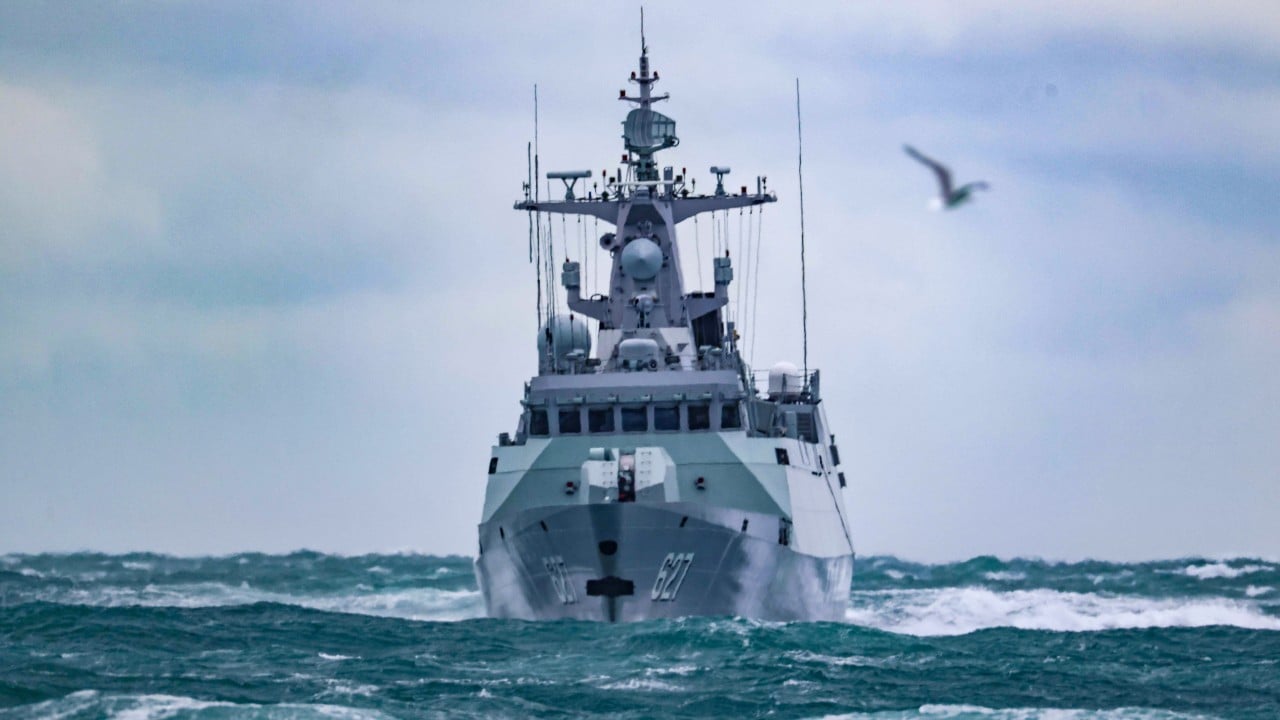
Joint anti-submarine patrols between the People's Liberation Army Navy and the Vietnam People's Navy look like a tactical breakthrough on paper, yet they function primarily as calibrated political signals rather than integrated warfighting operations. When surface combatants equipped for anti-submarine warfare operate side by side in contested littoral waters, observers often conflate co-location with shared tactical readiness. Treating a diplomatic or maritime-governance patrol as proof of combined subsurface mastery misreads both naval acoustic physics and bilateral strategic incentives.
To evaluate what these patrols actually accomplish, analysts must separate four moving parts: the acoustic realities of South China Sea waters, the asymmetric capabilities and doctrinal incentives of Beijing and Hanoi, the mechanics of coordinated patrol signaling, and the operational friction that separates basic deconfliction from real anti-submarine warfare.
Deconstructing Standard Patrol Coverage and Its Analytical Blind Spots
Conventional reporting on joint naval patrols tends to follow a predictable script. A headline announces that anti-submarine vessels from two navies conducted a joint patrol, the body text lists the general sea area and routine maneuvers such as communications checks or formation steaming, and the conclusion frames the event as either a sign of warming ties or a shift in regional balance.
That framing misses three structural distinctions that determine whether a patrol matters beyond news cycles:
- Presence versus detection: Sailing anti-submarine ships through an area demonstrates surface reach and political intent, not that submarines are being localized, tracked, or held at risk.
- Coordinated patrol versus combined warfare: Steaming in designated sectors or running basic communications drills is procedural coordination, whereas joint anti-submarine warfare requires shared tactical pictures, compatible sensors, and rehearsed prosecution doctrine.
- Bilateral détente versus structural rivalry: Short-term diplomatic stabilization between Beijing and Hanoi coexists with deep, unresolved sovereignty disputes and competing maritime claims, meaning cooperation in one operational channel rarely erases friction elsewhere.
A rigorous assessment starts from the physical environment itself. Without accounting for how sound behaves under water in tropical, heavily trafficked marginal seas, surface vessel deployments can easily be overinterpreted.
The Acoustic Physics of South China Sea Anti-Submarine Warfare
Anti-submarine warfare is governed by oceanography and acoustics first, and hull counts second. Unlike open-ocean basins where deep sound channels can carry low-frequency acoustic energy across long distances under predictable conditions, tropical marginal seas such as the South China Sea and adjacent gulfs present severe environmental complexity.
Layering, Bathymetry, and Reverberation
Water temperature, salinity, and pressure vary sharply with depth and season in tropical waters. Strong surface heating and freshwater runoff create pronounced vertical sound-speed gradients, including sharp thermoclines and ducting layers that bend acoustic rays upward or downward rather than letting them propagate cleanly across a wide search zone.
Shallow continental shelves and irregular seabed topography compound the problem. Sound waves bounce off the sea floor and sea surface, generating bottom reverberation, multipath distortion, and shadow zones where a submarine's radiated noise can be masked or refracted away from a surface ship's sonar array.
Active Versus Passive Detection Trade-Offs
Surface combatants rely on a mix of hull-mounted sonar, towed arrays, shipboard helicopters, and data links to detect and classify submarines, each carrying distinct operational trade-offs:
- Passive sonar listens covertly for machinery vibration, flow noise, and cavitation without advertising the searcher's position, but its effectiveness drops sharply when diesel-electric submarines run quietly on battery power or when ambient shipping and biological noise are high.
- Active sonar transmits acoustic pulses to obtain range and bearing even against quiet targets, yet it alerts nearby submarines that they are being hunted and suffers from clutter and reverberation in shallow or complex bathymetry.
- Aircraft and helicopters extend search coverage beyond a single ship's sensor horizon and deploy sonobuoys or dipping sonar, but weather, endurance limits, and deck coordination constrain sustained coverage.
Because acoustic detection probability is probabilistic and highly sensitive to local water conditions, two surface ships patrolling an assigned corridor do not create an impenetrable subsurface barrier. Establishing a reliable track on a quiet submarine requires persistent sensor geometry, environmental modeling, and time—conditions that brief, scripted surface patrols rarely replicate.
Asymmetric Incentives Behind Beijing and Hanoi's Joint Patrols
Joint naval activity between China and Vietnam reflects asymmetric positions in both maritime geography and strategic bargaining. Rather than converging on identical long-term goals, each side uses joint patrols to manage risk on its own terms.
Beijing's Operational and Diplomatic Calculus
For China, the South China Sea sits at the center of regional power projection, sea-lane security, and contested territorial and maritime claims. Using anti-submarine surface combatants in bilateral patrols serves several practical functions:
- Normalizing presence: Operating modern warships alongside a neighbor's navy normalizes routine patrols in waters where sovereignty and jurisdiction are disputed.
- Testing maritime governance mechanisms: Structured patrols give Beijing a channel to demonstrate crisis-management discipline and bilateral engagement without conceding its underlying legal or territorial claims.
- Managing peripheral friction: Periodic cooperative gestures with Hanoi help keep bilateral tensions within manageable bounds while China pursues broader maritime assertiveness across the basin.
Hanoi's Hedging and Deterrence Logic
Vietnam faces a fundamentally different structural constraint: managing proximity to a much larger military power while protecting its sovereign rights, offshore resources, and coastal security. Joint patrols fit into a broader hedging posture rather than alignment:
- Risk reduction and deconfliction: Direct operational communication and agreed patrol boundaries lower the risk of accidental escalation, collisions, or miscalculation at sea between forces operating in overlapping spheres.
- Diplomatic signaling: Participating in cooperative patrols signals pragmatism and stability without binding Vietnam to China's broader regional narrative or surrendering its own maritime claims.
- Parallel capability building: Even as Hanoi engages in selective cooperation with Beijing, it continues to invest in coastal defense, maritime domain awareness, and diversified security partnerships to preserve strategic autonomy.
The central strategic tension is clear: both sides gain near-term predictability from structured engagement, yet neither abandons its core maritime interests. Cooperation functions as a pressure-relief valve and signaling tool, not a resolution of underlying rivalry.
The Interoperability Ladder From Deconfliction to Combined ASW
In naval strategy, calling two navies "interoperable" is imprecise unless you specify where they sit on the capability ladder. True combined anti-submarine warfare sits near the top of that ladder, far above basic joint patrolling.
A practical way to evaluate any bilateral naval patrol is to map it across four ascending rungs:
- Basic deconfliction: Both sides agree on patrol zones, schedules, and safety channels so ships do not interfere with one another or trigger unintended incidents.
- Procedural coordination: Vessels execute standard maneuvers, visual or radio signaling, and search-and-rescue or boarding protocols using pre-agreed rules.
- Tactical interoperability: Ships share real-time track data, coordinate air-surface-subsurface search sectors, and use compatible command-and-control procedures.
- Combined combat integration: Forces train jointly against realistic subsurface threats, share acoustic intelligence and doctrine, and operate seamlessly under stress.
Most routine bilateral patrols between neighbors with unresolved disputes operate primarily on the first two rungs. Moving up to rungs three and four requires sustained trust, shared technical standards, frequent high-end exercises, and willingness to expose sensitive acoustic signatures and sensor capabilities—precisely the areas where strategic caution holds both sides back.
How to Analyze Future Joint Patrols Without Getting Fooled
When future announcements report joint anti-submarine patrols between the PLA Navy and the Vietnam People's Navy, analysts and decision-makers can separate real operational shifts from routine diplomatic theater by testing four concrete indicators:
- Check the exact activity profile: Distinguish routine transit, communications checks, and formation steaming from multi-ship acoustic search patterns, helicopter deck operations, or simulated submarine prosecution.
- Look for sensor and data exchange: Real tactical depth shows up in shared situational awareness and coordinated multi-platform search geometry, not merely two ships sailing in company.
- Separate bilateral calm from basin-wide disputes: Treat a bilateral patrol as one data point alongside coast guard activity, militia presence, fishing disputes, and diplomatic statements elsewhere in the South China Sea.
- Account for environmental limits: Remember that tropical water column conditions and shallow bathymetry constrain sonar performance regardless of how modern the surface hulls look in press photos.
Limitations of This Analytical Framework
No analytical model eliminates uncertainty in maritime security. Open-source reporting rarely reveals classified acoustic data, submarine deployments, or private diplomatic understandings reached behind closed doors. A patrol that looks modest in public releases can still carry political weight, while a high-profile deployment can still face severe physical and tactical limits under the surface.
The strategic move for observers, planners, and business stakeholders exposed to regional shipping risks is to treat joint anti-submarine patrols as a barometer of managed bilateral signaling rather than a measure of combined warfighting power—and to track sustained changes in training complexity, sensor integration, and broader maritime behavior before concluding that the subsurface balance has shifted.