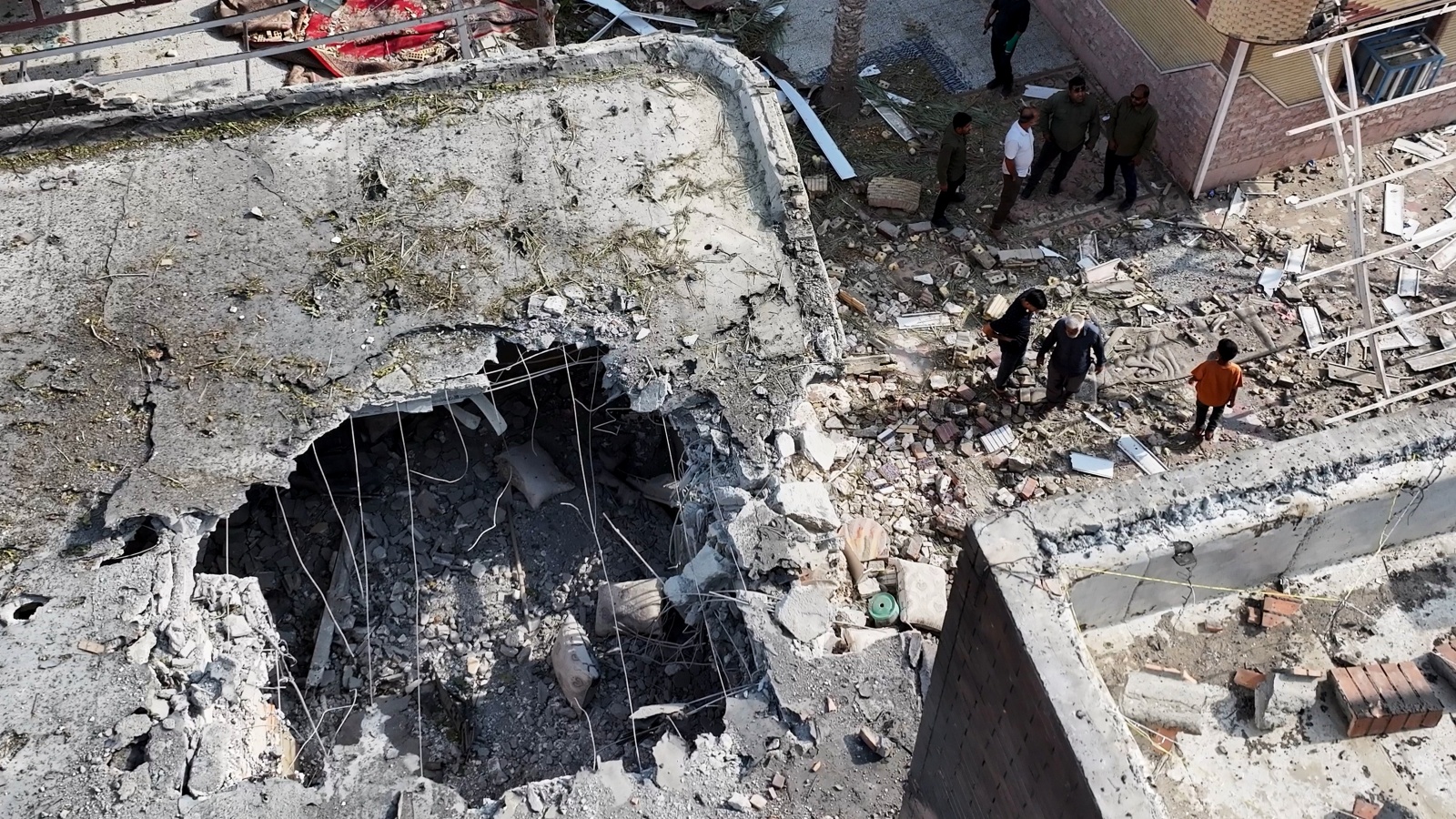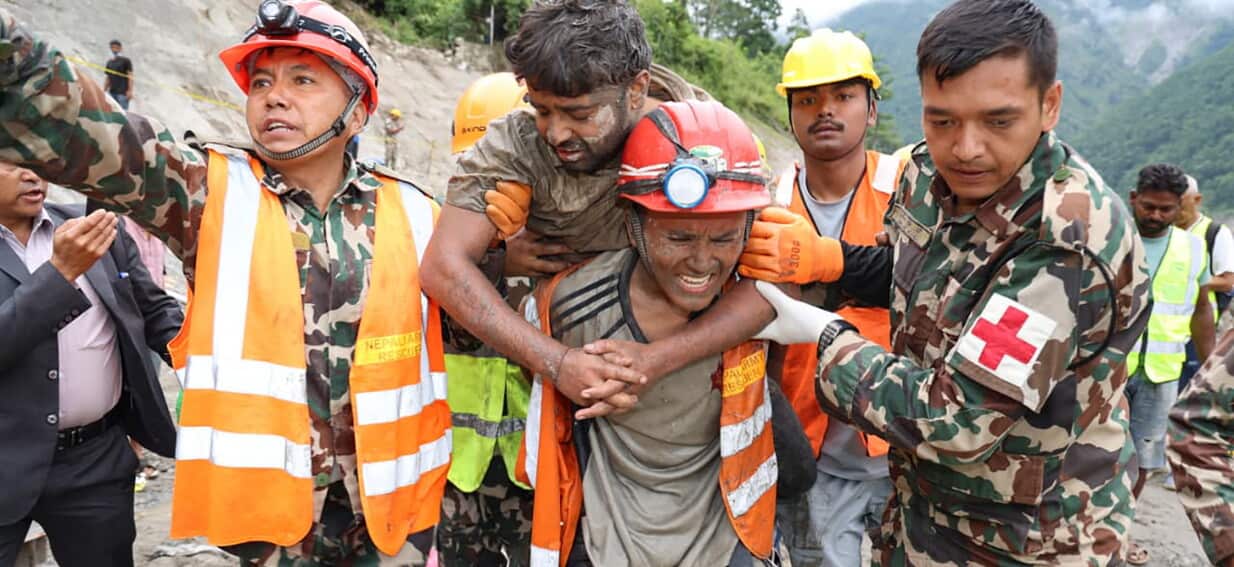
The extraction of two workers from the Trishuli 3A hydropower project tunnel nine days after catastrophic flash floods illustrates the complex physics and operational variables governing sub-surface survival economics during structural inundation events. When flash floods triggered by glacial phenomena or severe precipitation seal an underground industrial conduit, the survival function relies on micro-environmental variables: localized atmospheric pressure, pneumatic air pocket containment, thermal retention within subterranean rock matrices, and physiological adaptation to total caloric and hydration deprivation.
Standard news reporting reduces such extractions to miraculous anomalies. A quantitative breakdown of subterranean disaster management requires examining the physical constraints of the conduit, the fluid dynamics of debris accumulation, and the operational timelines of joint military and civilian rescue engineering.
The Physical Variables of Subterranean Air Pockets
The survival of mechanical foreman Sanjay Sah and mechanical supervisor Kabir Maharjan past the standard 72-hour human threshold for dehydration exposes distinct architectural properties inherent to high-head hydropower tunnels. When debris-laden torrents enter a penstock or tailrace tunnel, the hydraulic gradient rarely results in uniform, pressurized pipe-filling across the entire subterranean axis.
Air is systematically trapped behind advancing bulkheads of water and sediment, creating isolated pneumatic chambers. The survival probability function $P(s)$ over time $t$ depends directly on the volume-to-surface-area ratio of these compressed air pockets, the partial pressure of oxygen, and the rate of carbon dioxide scrubbing provided by concrete or rock absorption.
Subterranean temperature stability acts as a primary physiological preservation factor. Deep rock environments maintain constant ambient temperatures that mitigate hypothermia risks, allowing basal metabolic rates to drop in response to starvation conditions. Psychological variables, including structured routine and mental occupation—such as the continuous recitation of mantras reported by survivors—regulate panic responses, thereby reducing acute oxygen consumption rates during prolonged entrapment.
The Hydraulics of Industrial Sealing and Access
Catastrophic flooding along Himalayan river basins transforms engineering tunnels into high-pressure sedimentation traps. The Trishuli 3A infrastructure network features extended conduits designed for fluid transport, which paradoxically become lethal traps when intake gates are overwhelmed by dynamic bedloads of gravel, silt, and glacial debris.
The mechanics of post-disaster entry involve a multi-stage operational framework executed by specialized engineering corps, including the Nepalese Army and Armed Police Force.
- Phase One involves hydraulic profiling and structural stability assessments to prevent secondary collapse within unsupported sections of the tunnel bore.
- Phase Two requires acoustic profiling and seismic tapping. Because sound waves propagate efficiently through solid rock and dense steel-lined conduits, tapping protocols allow rescue teams to map void spaces based on echo resonance.
- Phase Three establishes active atmospheric ventilation, pumping oxygen past blockages to stabilize hypoxic zones before physical extraction units breach heavy silt walls.
The operational bottleneck centers on debris clearance rates. Heavy machinery is frequently useless inside narrow, flooded tunnels, forcing manual or lightweight pneumatic excavation that extends timelines from hours to days.
Economic and Structural Vulnerabilities in Hydropower Expansion
The concentration of missing personnel across multiple hydropower installations along the Trishuli River basin highlights systemic exposure in mountainous energy infrastructure. Rapid deployment of run-of-the-river projects in unstable seismic and glacial zones creates high-density human operational footprints within restricted sub-surface geometries.
Risk mitigation in these environments demands a shift from reactive extraction logistics to proactive structural engineering safeguards. Evacuation telemetry must incorporate automated pneumatic bulkhead doors designed to isolate worker galleries from sudden upstream hydraulic surges before complete inundation occurs. Furthermore, deployment of continuous subsurface wireless mesh networks—independent of standard grid power—ensures that telemetry data regarding worker locations remains accessible even after primary communication lines fail.
Execute sub-surface sensor integration across all active penstock and drainage galleries, coupling automated atmospheric monitoring with redundant, blast-hardened escape chambers designed to sustain trapped operators for a minimum of 21 days without external intervention.