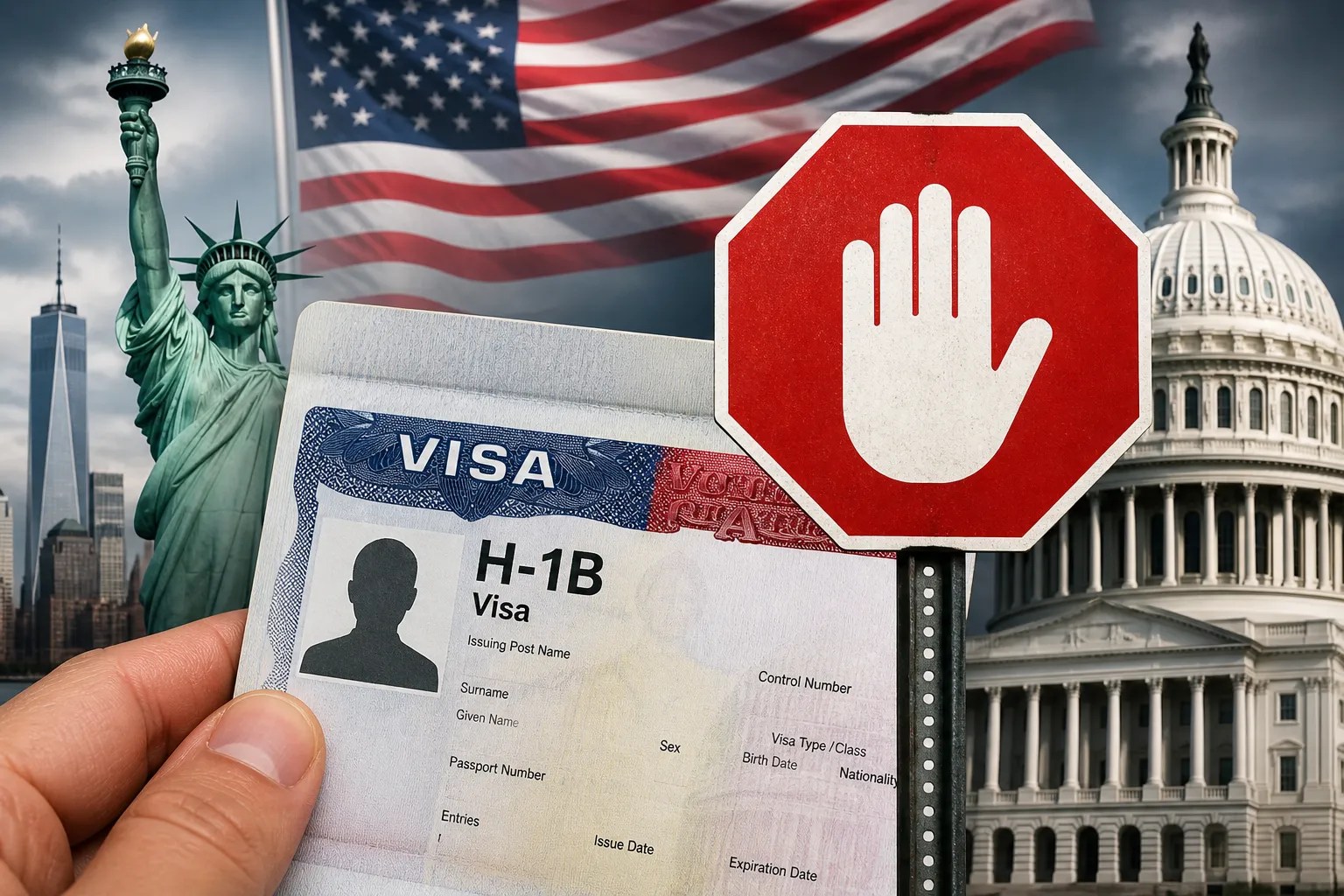
In a small, sun-drenched apartment in Sunnyvale, California, a man named Rohan stares at a three-year-old toddler playing with wooden blocks. Rohan has lived in the United States for a decade. He has designed software architectures that keep global banking systems from collapsing. He pays his taxes on time. He contributes to his 401(k). Yet, in the back of his bedroom closet, there is a suitcase that he refuses to move to the attic. It stays there, partially tucked under a pile of winter coats, a silent witness to a life lived in three-year increments.
This is the psychological weight of the H-1B visa. It is not just a document or a stamp in a passport; it is a precarious bridge. For thousands of Indian IT professionals, that bridge is currently trembling under the weight of a new legislative proposal known as the "End H-1B Visa Abuse Act." Don't miss our recent article on this related article.
The Ghost of the Pink Slip
When headlines in India scream about a "Full Stop" on H-1B visas, the panic is visceral. It ripples through WhatsApp groups in Bengaluru and sleepless nights in New Jersey. But the reality is rarely as simple as a light switch being flipped off. The "End H-1B Visa Abuse Act" isn't a total ban, but for many, it feels like a slow tightening of a noose around the American Dream.
The core of the issue isn't just about who gets to stay. It is about the price of entry. For years, the H-1B system has been a lottery—a literal game of chance where your future depends on a computer algorithm picking your name out of a digital hat. Critics argue that large outsourcing firms have "gamed" this system, flooding the lottery with multiple applications for the same individuals to increase their odds. If you want more about the context of this, BBC News offers an excellent breakdown.
The new proposal seeks to replace this luck-of-the-draw chaos with a merit-based hierarchy. Specifically, it wants to prioritize those who are paid the highest salaries. On paper, it sounds like a logical shift toward "high-skilled" labor. In practice, it creates a "pay-to-play" arena where the youngest, brightest minds—those just starting their careers—might be priced out before they even get a chance to prove their worth.
The Invisible Ceiling
Imagine being the best at what you do, but your value is determined solely by a number on a spreadsheet in Washington, D.C.
If the Act moves forward, the "market rate" for an H-1B holder could skyrocket. The logic is that by forcing companies to pay significantly higher wages, they will only hire foreign workers when they truly cannot find an American to do the job. It is a protectionist shield. But for the Rohans of the world, it feels more like a ceiling.
Consider the hypothetical case of Ananya. She is 24, a recent graduate from a top-tier U.S. university with a Master’s in Artificial Intelligence. She is brilliant. She has job offers from three startups that are on the verge of changing how we process clean energy data. Under the current lottery system, she has a fighting chance. Under the "End H-1B Visa Abuse Act," these startups—which don't have the deep pockets of Google or Meta—might find it impossible to meet the new, artificially inflated salary requirements.
Ananya’s talent doesn't change. The value she brings to the economy doesn't change. Only the legality of her presence does.
The "abuse" the Act refers to is real. There are companies that use the H-1B as a tool for cheap labor, undercutting American wages and trapping foreign workers in a state of "indentured servitude" where they cannot leave their employer for fear of immediate deportation. Eradicating that abuse is a noble goal. But the legislative hammer being used is heavy, and it risks crushing the very innovation the U.S. claims to prize.
A System of Shifting Sands
The anxiety stems from the lack of a finish line. In the American immigration system, the H-1B is supposed to be a temporary stop on the way to a Green Card. However, for Indian nationals, the backlog for permanent residency is so long it is measured in decades. Some estimates suggest a wait time of over 100 years.
This means a person can spend their entire adult life on a "temporary" visa. They buy houses, they have children who are American citizens, they lead Little League teams, and they wait. They wait for a renewal every three years. They wait for a labor certification. They wait for a priority date that never seems to move.
The "End H-1B Visa Abuse Act" adds a new layer of "what if" to this waiting game. If the rules change mid-stream, what happens to the family that just took out a thirty-year mortgage? What happens to the child who knows no other home but a suburb in Illinois?
The technical term for this is "aging out." When an H-1B holder’s child turns 21, they are no longer covered by their parent's visa. If the parent hasn't secured a Green Card by then—and thousands haven't—the child must find their own visa or leave the country. They are "Documented Dreamers," kids who grew up saying the Pledge of Allegiance but face exile because of a legislative bottleneck.
The Talent War
While the U.S. debates whether to close its doors, the rest of the world is leaving theirs wide open. Canada, Germany, and the UK have all launched aggressive campaigns to poach the very talent that the H-1B system is currently alienating.
The narrative in D.C. often paints immigration as a one-way favor—that the U.S. is "allowing" these workers to be here. This ignores the global reality. In the world of high-stakes technology, the workers are the ones with the leverage. If the H-1B process becomes too high a hurdle, the next groundbreaking AI or medical breakthrough won't happen in Silicon Valley. It will happen in Toronto, Berlin, or Hyderabad.
The "Abuse Act" is a symptom of a larger identity crisis. Is the United States a talent magnet that rewards excellence, or is it a closed shop?
The Sound of the Suitcase Closing
Back in Sunnyvale, Rohan gets a notification on his phone. Another news update about the visa bill. He doesn't click it. He has learned that the stress of the "maybe" is more exhausting than the reality of the "no."
He looks at his son. The boy is building a tower. It is tall and shaky, held together by gravity and hope. Rohan knows that if he has to leave, he will. He will pack that suitcase in the closet. He will take his skills, his experience, and his dreams elsewhere. The U.S. wouldn't just be losing a line of code; it would be losing the person who wrote it, the taxes he paid, and the future he was building.
The tragedy of the "End H-1B Visa Abuse Act" isn't the crackdown on bad actors. Everyone agrees that fraud should be punished. The tragedy is the collateral damage—the thousands of stable, productive lives that are treated as variables in a political equation.
The suitcase stays in the closet for now. But it is never fully empty. It is packed with the quiet realization that in the eyes of a cold legislative draft, a decade of contribution can be erased by a single "full stop."
The tower of blocks falls over. The toddler laughs and starts again. Rohan watches him, wondering if the next tower will be built on a different soil, under a different sky, where the bridge to the future isn't quite so fragile.