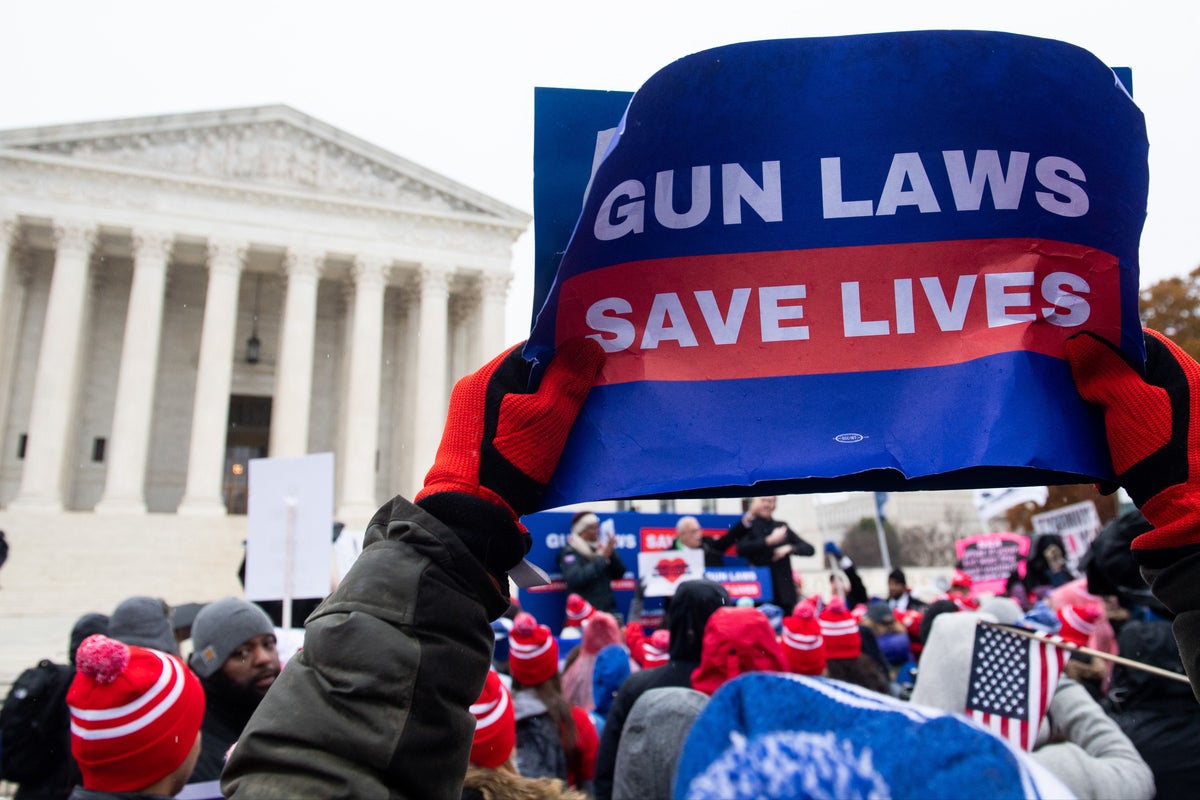
The Supreme Court just pulled the rug out from under thousands of Americans hoping to win back their gun rights. If you’ve been following the legal buzz, you know the high court has spent the last few years aggressively expanding the Second Amendment. But on Monday, March 2, 2026, the justices hit the brakes. By refusing to hear a batch of cases involving nonviolent felons, they’ve left a massive, confusing mess for lower courts to clean up.
This isn't just about a few people wanting to go hunting. It's about whether a decades-old conviction for something like mail fraud or a bad check should permanently strip you of a constitutional right. For now, the answer from the highest court in the land is a resounding "we're not touching this yet." If you enjoyed this post, you might want to check out: this related article.
The cases the justices ignored
The court turned away several high-profile petitions, including Vincent v. United States and Duarte v. United States. Melynda Vincent’s story is a prime example of why this matters. She was convicted of a single nonviolent felony—bank fraud—nearly 20 years ago. She served her time, built a career as a social worker, and hasn’t had a run-in with the law since. Under current federal law, she’s still banned from owning a firearm for life.
Steven Duarte’s case followed a similar path. He challenged the federal "felon-in-possession" ban after the Ninth Circuit, sitting en banc, ruled against him. These people aren't violent career criminals. They’re neighbors who made mistakes decades ago. The Supreme Court had a chance to decide if the Second Amendment protects them, and they took a pass. For another angle on this story, refer to the recent update from TIME.
Why the silence is so loud
You’d think after the landmark Bruen decision in 2022, the justices would be eager to clarify the rules. Bruen changed everything by requiring gun laws to be "consistent with the nation’s historical tradition of firearm regulation." That sounds simple, but it’s turned into a nightmare for judges.
Lower courts are currently split. Some, like the Third Circuit in the Range case, have ruled that the government can't disarm someone for a nonviolent offense like food stamp fraud. Others, like the Tenth and Ninth Circuits, have stuck to the old-school view that any felony conviction is enough to lose your rights forever.
By staying silent, the Supreme Court is letting this geographic lottery continue. If you live in Pennsylvania, you might have a shot at getting your rights back. If you live in California or Utah? You’re likely out of luck. It’s a mess of "justice by zip code" that makes very little sense to anyone watching from the outside.
The shadow of the Rahimi decision
Last year, the court ruled in United States v. Rahimi, upholding a ban on guns for people under domestic violence restraining orders. Many legal experts thought Rahimi paved the way for the court to finally address nonviolent felons. Chief Justice John Roberts and Justice Brett Kavanaugh have both signaled in past opinions that "longstanding prohibitions" on felons are "presumptively lawful."
However, Rahimi focused on people who are actually dangerous. It didn't answer the question for people who aren't a threat to anyone. The government argues that "felon" is a category that has always been subject to disarmament. Critics say that's a lazy shortcut. They argue that at the time the Second Amendment was written, legislatures only disarmed people who were a "threat to the public peace," not everyone who committed a "serious" crime.
What this means for the average person
If you’re a nonviolent felon or know someone who is, this news is a gut punch. It means the federal ban under 18 U.S.C. § 922(g)(1) stays fully in effect in most of the country.
Don't expect a quick fix from Congress either. Gun control is a political third rail, and neither side is particularly interested in being seen as "soft on crime" by helping felons get guns. The courts were the last real hope for a change in the status quo.
The immediate impact is clear:
- The federal background check system will continue to flag any felony conviction as a permanent "no."
- Lawsuits in circuits that haven't ruled yet will likely be dismissed or stayed.
- The "circuit split" remains, meaning your rights depend entirely on where you live.
Legal technicalities and the drug user case
Interestingly, while the court dodged the felon issue, they're currently wrestling with United States v. Hemani. This case asks if the government can ban gun ownership for "unlawful users" of controlled substances—specifically marijuana.
The justices seem more skeptical about the drug user ban than the felon ban. During oral arguments, both conservative and liberal justices questioned if a casual weed smoker is "dangerous" enough to lose their rights. It’s a bizarre double standard: the court might protect a marijuana user’s right to bear arms while leaving a nonviolent fraudster out in the cold.
Where do we go from here
The battle isn't over, but it's moved back to the trenches. Without a clear signal from the Supreme Court, lawyers will have to keep fighting these cases one by one in the lower courts.
If you're in a position where you're seeking to restore your rights, your best bet is to look at state-level relief. Some states, like Utah and others, have started creating paths for nonviolent offenders to have their records expunged or their rights restored under state law. However, even if a state says you're good, federal law often still says you're not. This "federal-state gap" is a trap that has landed many well-meaning people back in prison.
The Supreme Court’s refusal to act today is a reminder that the "Bruen revolution" has its limits. The justices aren't ready to go all-in on a literalist reading of history if it means millions of felons can suddenly walk into a gun store. They've chosen stability over consistency, and for now, the door remains locked.
If you are serious about challenging a conviction or understanding your status, consult with a specialized Second Amendment attorney in your specific jurisdiction. Don't rely on general news; the law in Philadelphia is currently worlds away from the law in Los Angeles. Stay informed, stay legal, and don't expect the Supreme Court to bail you out anytime soon.