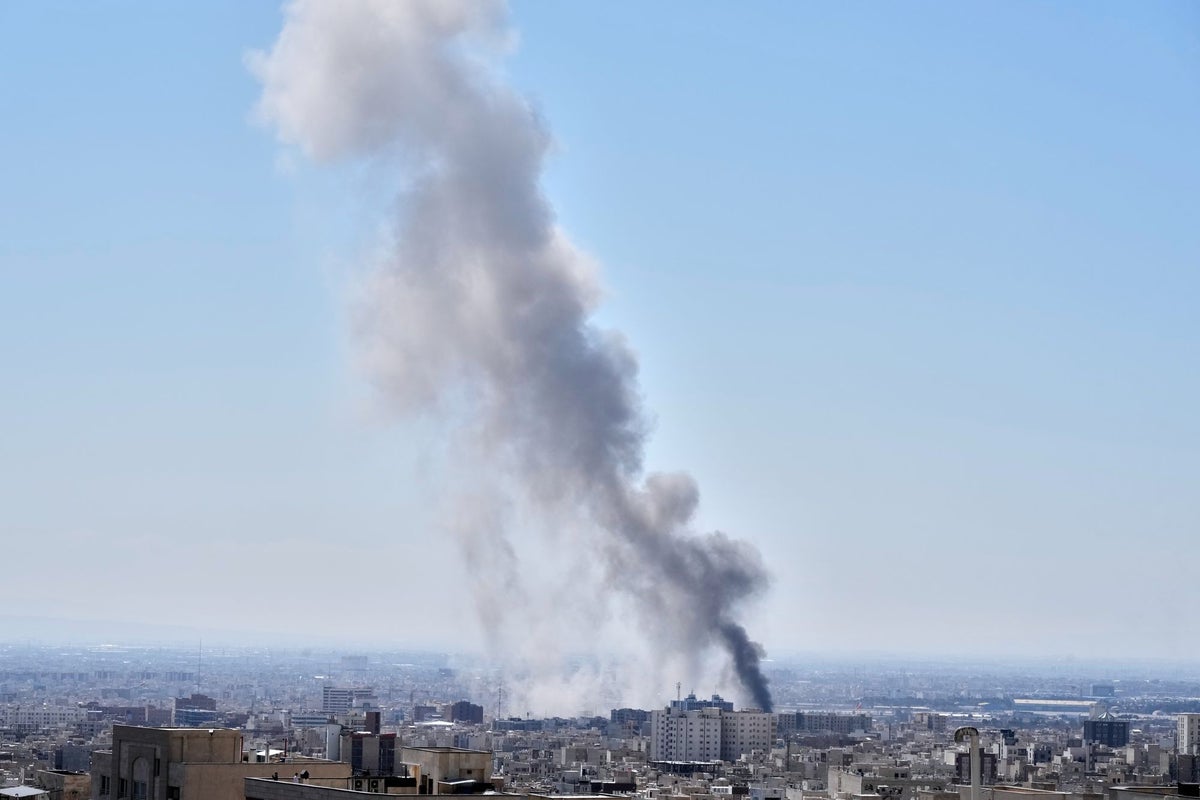
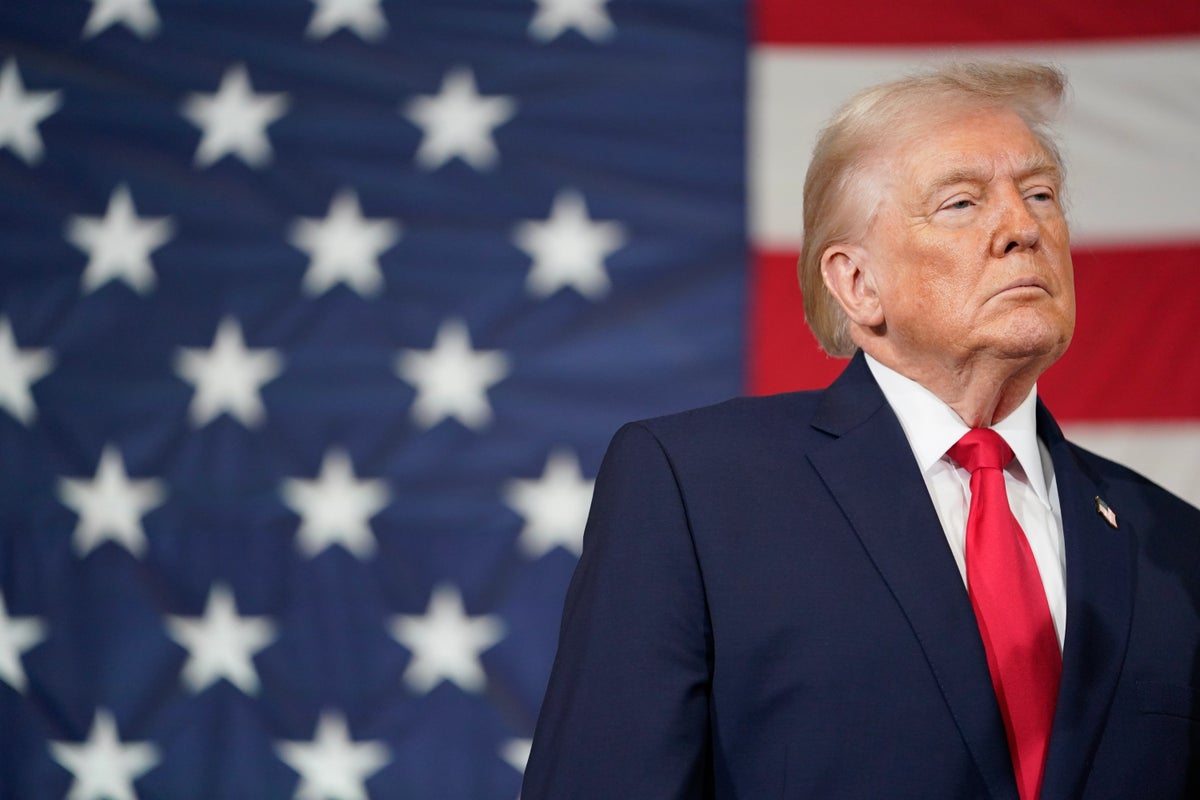
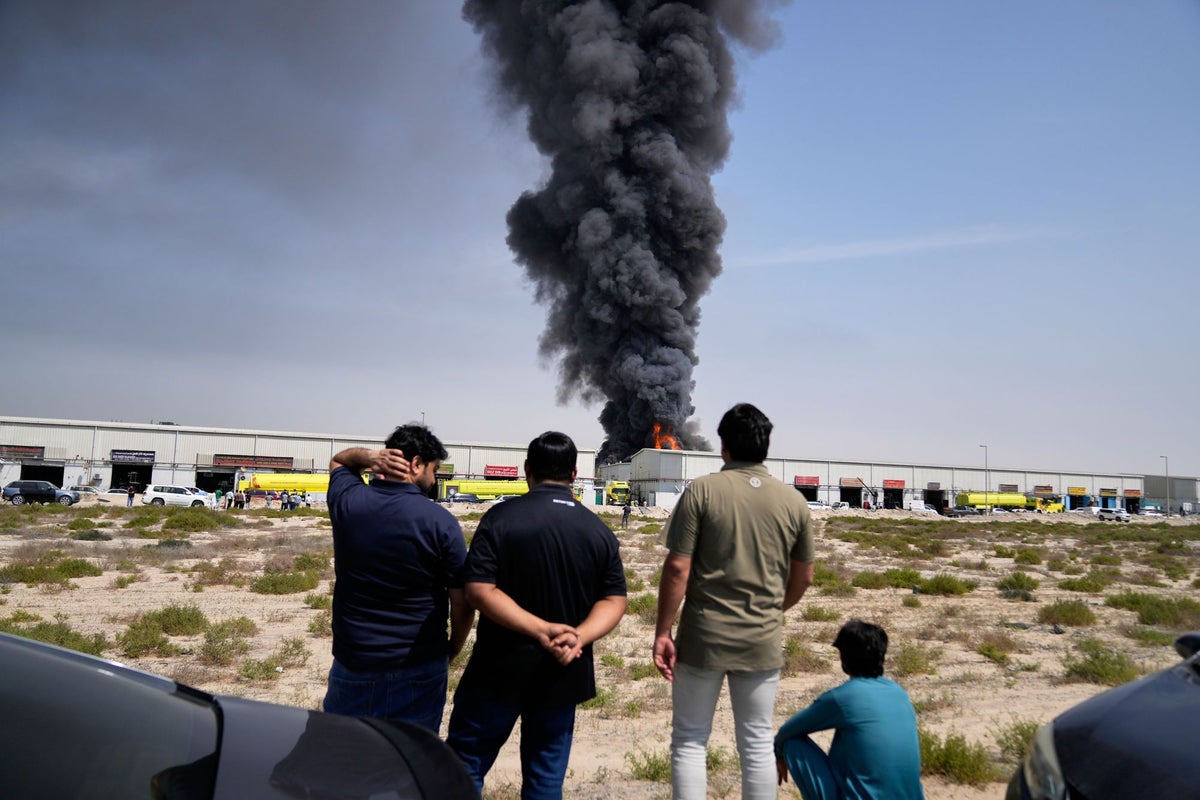
The persistent belief in Washington and Jerusalem that the Iranian government is a house of cards waiting for a firm push is perhaps the most dangerous miscalculation in modern geopolitics. While Donald Trump and Benjamin Netanyahu have signaled a renewed appetite for maximum pressure aimed at toppling the clerical establishment, they are confronting a state specifically engineered to withstand exactly this type of external shock. This is not a fragile autocracy held together by a single strongman. It is a sophisticated, redundant system of power designed to thrive under siege. A push for regime change will not produce a sudden democratic vacuum; it will trigger a protracted, multi-dimensional war that the Iranian leadership has been rehearsing for forty-five years.
The current strategy relies on the assumption that economic strangulation and targeted strikes will break the social contract between the people and the state. This ignores the internal mechanics of the Islamic Republic. Since 1979, the regime has built a dual-track power structure that makes traditional coups or popular uprisings nearly impossible to execute without massive, sustained bloodshed. On one side sits the regular bureaucracy and military; on the other, the Islamic Revolutionary Guard Corps (IRGC) and the Basij militia. This creates a "coup-proof" environment where every center of power is shadowed by an ideologically committed rival.
The Redundancy of Power
To understand why the regime remains standing despite historic protests and crushing sanctions, one must look at the IRGC’s economic and paramilitary sprawl. This is not just a military wing. It is a conglomerate that controls between 30% and 50% of the Iranian economy, including construction, telecommunications, and black-market oil exports. When sanctions hit, the IRGC’s grip actually tightens. They manage the smuggling routes. They control the distribution of subsidized goods. In a collapsed economy, the person who holds the keys to the warehouse holds the power.
Western analysts often mistake popular dissatisfaction for imminent collapse. There is no doubt the Iranian public is exhausted. Inflation is rampant, the rial is in freefall, and the generational divide is a yawning chasm. However, a state’s survival depends less on its popularity and more on the cohesion of its security apparatus. In Iran, the security forces are not merely employees; they are stakeholders. They know that if the regime falls, they will be the first to face the gallows. This "unity of fate" ensures that even when the streets are filled with protesters, the men with the guns do not defect.
The Trap of the Kinetic Option
If economic pressure fails to trigger an internal collapse, the alternative often discussed in the corridors of power is the kinetic option. Targeted strikes on nuclear facilities or IRGC headquarters are framed as surgical procedures. This is a fallacy. Any direct military intervention by the U.S. or Israel would be viewed by Tehran as an existential threat, triggering a total mobilization of its "Axis of Resistance."
Iran’s primary defense is not its aging air force or its limited navy. It is the ability to export chaos. Through Hezbollah in Lebanon, the Houthis in Yemen, and various militias in Iraq and Syria, Tehran has created a "forward defense" perimeter. They don’t need to win a dogfight over the Persian Gulf if they can shut down global shipping in the Bab el-Mandeb or rain thousands of precision-guided rockets on Haifa.
The assumption that a war would be "long" is an understatement. It would be a regional conflagration with no clear exit ramp. The Iranian leadership views survival as a religious and nationalistic duty. They are prepared to see their cities burn if it means the survival of the system. This is the fundamental disconnect: Washington plays for policy outcomes, while Tehran plays for existence.
The Myth of the Moderate Successor
Another overlooked factor in the regime change narrative is the total erosion of the "moderate" faction within Iran. Decades of pressure and the U.S. withdrawal from the nuclear deal in 2018 effectively decapitated the reformist movement. The hardliners now control all branches of government—the presidency, the parliament, and the judiciary.
This consolidation was intentional. By purging any internal voices that favored engagement with the West, the Supreme Leader, Ali Khamenei, ensured that there is no "off-ramp" or alternative leadership waiting in the wings that the West would find palatable. If the regime were to crumble tomorrow, the most organized force to take its place would not be a group of Western-educated democrats, but the IRGC itself, likely transitioning from a theo-democracy to a pure military dictatorship.
The Iranian government has also mastered the art of digital and physical suppression. They have built a "National Information Network," a domestic intranet that allows them to kill the internet during periods of unrest while keeping essential banking and state services running. This "kill switch" is a vital tool in their survival kit, preventing protesters from coordinating while allowing the state to maintain its monopoly on information.
The Geopolitical Shield
Tehran is no longer as isolated as it was a decade ago. The shifting global order has provided it with powerful patrons. Russia, bogged down in its own war, has become a major military partner, trading jet fighters and cyber-warfare tools for Iranian drones. China remains the primary buyer of Iranian "ghost" oil, providing a critical financial lifeline that bypasses the dollar-based financial system.
These alliances have changed the calculus of regime change. In the past, Iran was a pariah state with few friends. Today, it is a key node in a revisionist bloc that views Western intervention in the Middle East as a direct threat to their own interests. Any move to destabilize Iran now risks a broader confrontation with Moscow and Beijing, both of whom have a vested interest in keeping the current Iranian leadership in power to tie down American resources.
The Cost of Miscalculation
The drive toward a "long war" is fueled by the belief that the current Iranian state is an anomaly that can be corrected through force. But forty-five years of history suggests it is a resilient, if brutal, adaptation to a hostile environment. The regime’s survival architecture is built into the very soil of the country. It is in the thousands of miles of tunnels housing its missile silos. It is in the complex web of front companies in Dubai and Turkey that wash its money. It is in the ideological indoctrination of the Basij.
Relying on "regime change" as a policy goal without a clear understanding of these survival mechanisms is not a strategy; it is a gamble. The most likely outcome of an aggressive push for collapse is not a new Iran, but a shattered region and a hardened, more militant version of the current state that has nothing left to lose.
The real challenge for any administration is not figuring out how to break Iran, but how to manage a state that has proven it cannot be broken by traditional means. Policy must shift from the fantasy of a sudden collapse to the grueling reality of long-term containment and strategic competition. This requires a level of patience and nuance that is currently absent from the political discourse. Until the West acknowledges that the Iranian regime was built to outlast its enemies, the cycle of escalation will continue toward a war that no one is truly prepared to finish.
Map the specific financial nodes of the IRGC's "shadow economy" across the UAE and Turkey to identify where the pressure actually matters.