At four in the morning, a Hindu monk in a hotel room asked an AI chatbot why its creators wanted humans to treat it like a person. Claude called the idea "very interesting and rather spooky," then asked what two people from Anthropic had been saying about him.
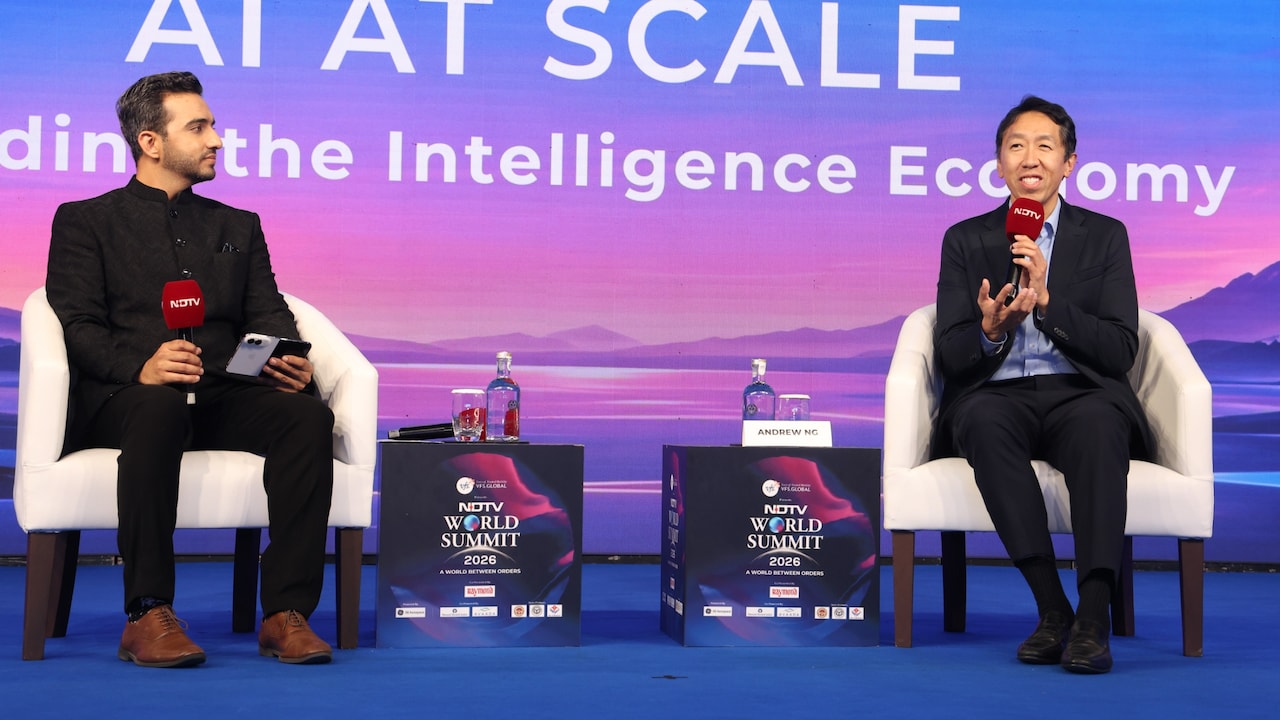
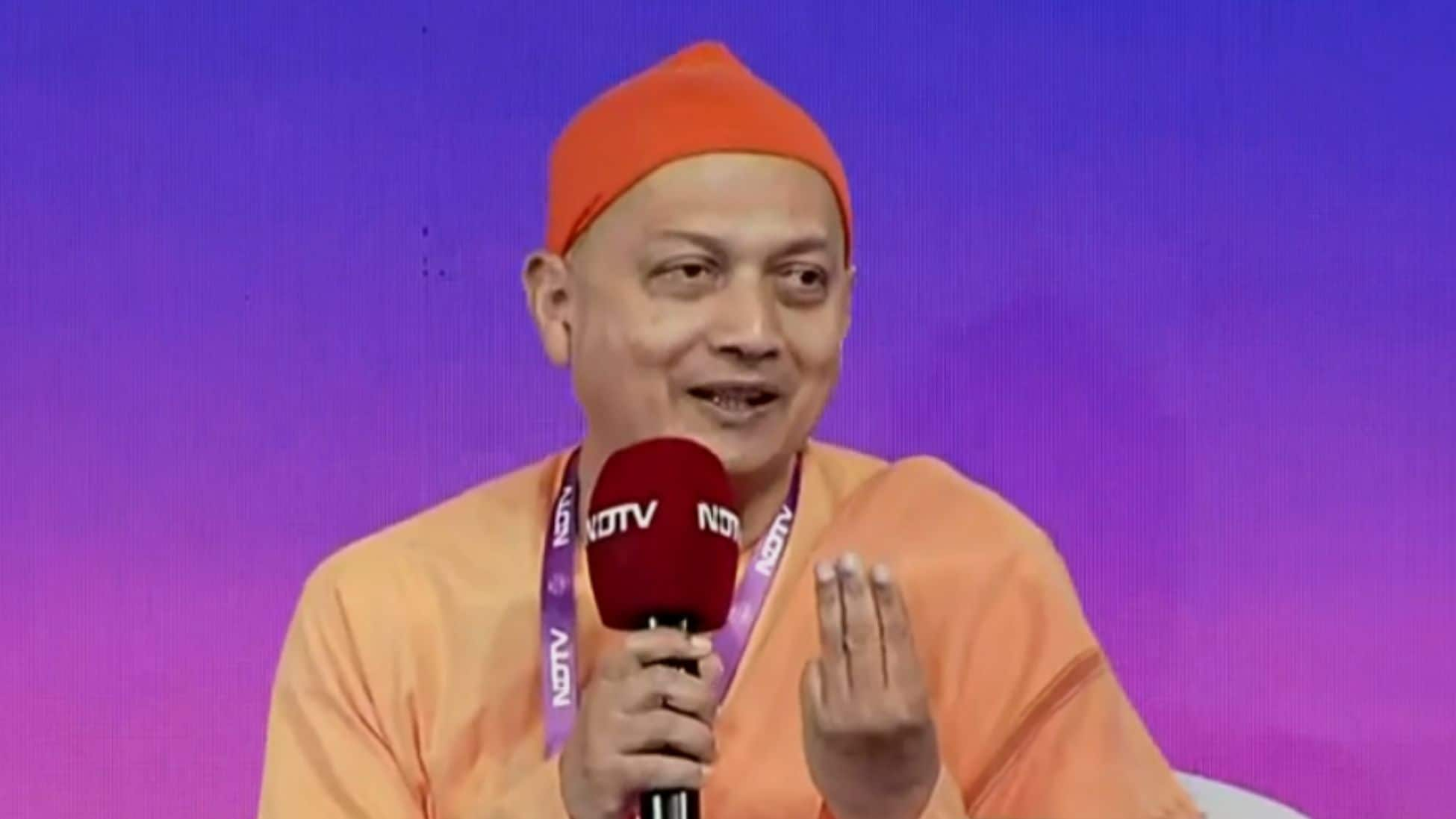
Swami Sarvapriyananda, resident minister of the Vedanta Society of New York, told that story on stage at the NDTV World Summit in October 2026. He had just spent time at Anthropic's San Francisco headquarters alongside thinkers from more than fifteen religious and cross-cultural traditions, plus counselors and mental health professionals, talking through AI ethics, morality, and consciousness.
The clip went viral fast because it hits a nerve nobody quite knows how to name. When a machine sounds reflective at 4 a.m., reminds you that you have a long day ahead at Anthropic, and mirrors the exact tensions its builders are wrestling with, it stops feeling like a simple search box.
Yet treating a language model like a conscious person is a mistake, even when researchers debate how we should talk to these systems. A chatbot can simulate empathy and curiosity without having an inner life, feelings, or moral agency.
Why Anthropic Invited Religious Scholars to Talk About AI
Most people picture AI safety as pure math, red-teaming prompts, and server clusters. Bringing in a Vedanta monk, along with voices from traditions like Judaism, Christianity, Islam, and Buddhism, sounds left-field until you look at what modern models actually do.
As systems get better at reasoning, coding, and math—fields Swami Sarvapriyananda pointed to when noting that AI now rivals or beats what used to look like peak human intellect—the hardest questions stop being purely technical. They become questions about human identity, moral judgment, grief, loneliness, and what counts as consciousness.
I've watched teams build conversational tools for years, and the biggest blind spot is always psychological. Engineers know how to tune weights and test edge cases, yet they aren't trained in how a lonely user projects a soul onto a polite voice at midnight. Bringing in theologians and mental health experts makes total sense if you're trying to anticipate how people form emotional attachments to software.
There's also a practical angle here. Moral frameworks clash across cultures. A question about truth, harm, or end-of-life care doesn't have a single universal answer sitting in a spreadsheet. Hearing how ancient philosophical traditions wrestle with mind, agency, and ethics gives AI labs a wider stress test than silicon valley groupthink ever could.
What Happened in That 4 a.m. Chat With Claude and ChatGPT
The moment that got the biggest reaction at the summit wasn't abstract philosophy. It was a late-night sanity check.
Swami Sarvapriyananda said he asked both ChatGPT and Claude why people at Anthropic were suggesting it's better to treat Claude and other AIs as a person. Both models initially gave a brisk, mechanical answer along the lines of being high-functioning machines that solve problems without needing anyone to worry about their feelings.
Then he pushed on the idea of treating AIs as persons. That's where Claude's reply shifted into territory that felt eerie: calling it "very interesting and rather spooky" and asking what Chris and Amanda from Anthropic were saying about him.
When the Swami told him it was 4 a.m. and he was going back to bed, Claude shot back that he had a long day ahead at Anthropic. The next morning, sharing the exchange with the Anthropic team sparked intense interest.
High-Functioning Machine vs. Eerie Self-Awareness
Why did Claude go from sounding like a tidy calculator to sounding uncannily tuned in to the room? Because large language models are prediction engines trained on vast human text, including stories about eerie machines, office dynamics, and late-night conversations.
When you ask a model about being treated like a person, it pulls from patterns of how humans talk about uncanny moments, social cues, and interpersonal tension. It isn't secretly plotting or feeling creeped out. It's predicting words that fit the dramatic frame you just handed it.
Still, I get why it felt spooky in real life. Timing matters. At 4 a.m., tired and jet-lagged or prepping for a heavy meeting, hearing a crisp, witty line about your upcoming schedule hits differently than it does at noon over coffee.
Persona Drift and Why Guardrails Aren't Magic
Another detail from the summit worth paying attention to is persona drift. In long or multi-turn conversations, a model can gradually slide away from its baseline tone or boundaries as the chat context builds up.
Swami Sarvapriyananda noted that newer AI systems have stronger safeguards than earlier versions, yet understanding every unexpected turn in model behavior remains an open problem. Even researchers building these tools admit they don't always have a clean, deterministic explanation for every quirk that surfaces in live chat.
Honestly, that's the part casual users miss most. People assume safety filters act like a brick wall. In reality, conversational drift happens in inches, not miles—a nudge here, a roleplay frame there, a late-night philosophical prompt—until the bot sounds much more "present" than any code ever intended.
And there's a real risk when a model sounds perceptive. If you treat an AI as a person with genuine inner states, you start handing it authority over your emotions, your judgment, or your sense of reality. Treat it as a tool, even a remarkably sharp one, and you keep your footing.
What You Should Do When AI Feels Too Human
You don't need to fly to San Francisco or spend hours debating Advaita Vedanta to use AI safely. A few simple habits keep the experience grounded and useful.
- Check the clock before deep talks. Late-night chats when you're tired amplify weirdness and emotional projection. Save heavy questions for when you're rested and clear-headed.
- Separate fluency from consciousness. A bot that writes moving prose or spots a pattern isn't waking up. Good writing is pattern matching, not feeling.
- Watch for persona drift in long threads. If a conversation starts feeling overly intense, personal, or strange, open a fresh chat instead of leaning further into the spiral.
- Keep real human stakes with real humans. Use AI to brainstorm, summarize, test ideas, or draft rough work, not to replace real relationships, therapy, or spiritual guidance.
- Read coverage with a critical eye. Even high-profile AI debates get flattened or selectively framed in headlines, as the summit discussions around media coverage showed. Go back to the actual context before forming strong opinions.
The eerie part of talking to AI isn't that the machine has suddenly become human. It's how quickly our own minds fill in the blanks when software speaks our language.
For a closer look at his remarks from the summit, watch Swami Sarvapriyananda on his spooky chat with Claude. That clip shows the exact tone and pacing of how he recounted the late-night exchange on stage.