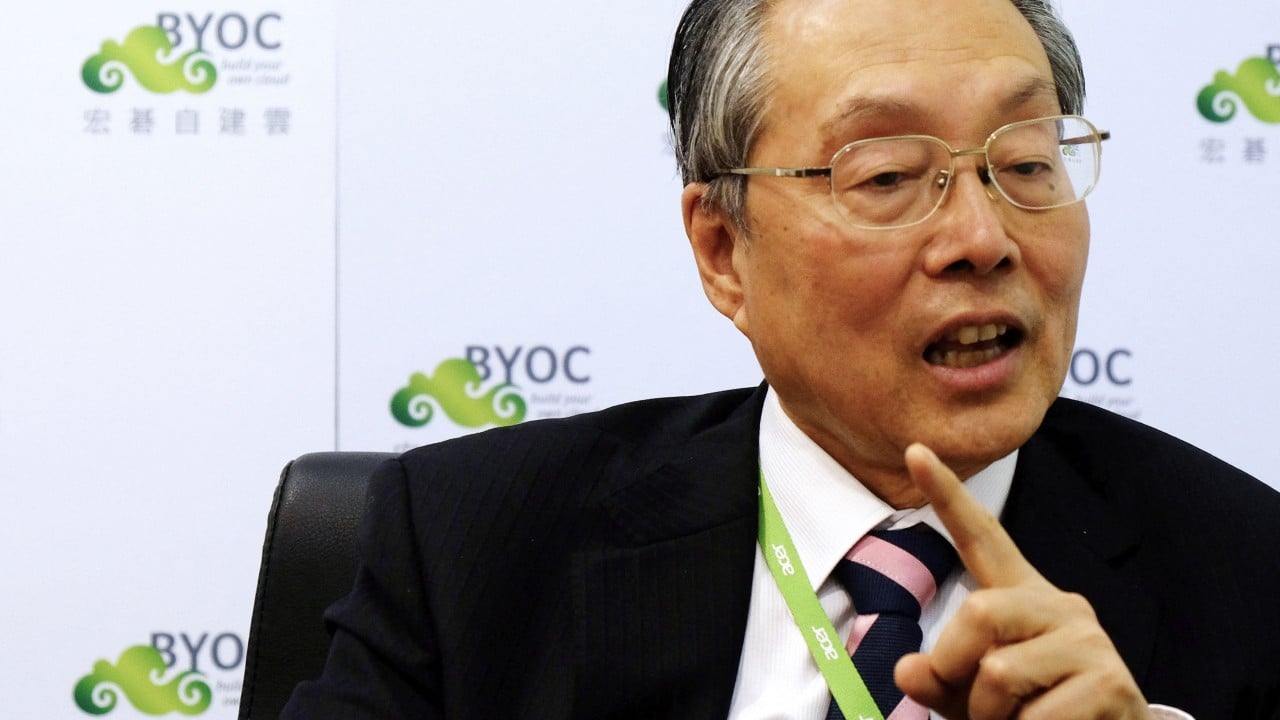
Taiwan is sending Acer founder Stan Shih to Shenzhen for the 2026 Asia-Pacific Economic Cooperation (APEC) Leaders' Summit, and Taipei is explicitly demanding equal footing with all other member economies. This decision marks a sharp geopolitical calculation. By tapping a revered octogenarian tech titan rather than a sitting cabinet minister or a polarizing politician, Taiwan is deploying a shield made of Silicon Valley-adjacent nostalgia and supply chain indispensability.
Beijing hosts the summit in Shenzhen, the crown jewel of China’s own tech miracle, at a moment when cross-strait relations remain locked in a deep freeze. Taipei cannot send its sitting president due to longstanding diplomatic protocols baked into APEC’s founding framework. Instead, Taiwan relies on a designated envoy. Choosing Stan Shih—a man whose company helped build the global personal computer market and who maintains deep, decades-old commercial roots across mainland China—forces Beijing into an uncomfortable diplomatic corner.
The Architecture of a Diplomatic Tightrope
APEC is one of the very few international bodies where Taiwan holds full membership, participating under the designation Chinese Taipei. The arrangement dates back to 1991, brokered through delicate diplomatic maneuvering that allowed Taiwan, Hong Kong, and China to sit at the same economic table without resolving their fundamental sovereignty disputes. For decades, that consensus held, even during periods of acute political friction.
Those guardrails have eroded badly. In recent years, Beijing has increasingly sought to narrow Taiwan’s international operating space, contesting the visibility of Taiwanese representatives at multilateral gatherings and tightening the procedural screws whenever it holds the gavel as host. Taipei’s preemptive demand for equal footing is not diplomatic boilerplate. It is a public warning shot fired months before the delegates even pack their bags.
When Taipei invokes equal footing, it is referring to specific, granular protocols that govern summit choreography. Equal footing means the Taiwanese envoy receives the exact same security detail, motorcade access, seating placement, and bilateral meeting opportunities as any head of state or designated representative from the other 20 member economies. It means Beijing cannot quietly downgrade Taiwan’s delegation to a lower-tier diplomatic track, bury its representatives in secondary hotels, or restrict media access to its press briefings.
By broadcasting this demand early, Taiwan is putting the other 19 APEC economies—including the United States, Japan, Australia, and South Korea—on notice. If Beijing attempts to marginalize Stan Shih in Shenzhen, it will not be a quiet bilateral spat. It will become a public breach of APEC’s institutional norms, forcing Washington and Tokyo to decide whether to defend Taipei’s procedural rights at the expense of summit harmony.
Why Stan Shih Changes the Equation
To understand why Stan Shih is such a calculated choice, you have to look beyond the diplomatic cables and examine the industrial history of East Asia. Shih is not a partisan operative. Born in 1944, he founded Multitech in 1976, which later became Acer, transforming Taiwan from a low-cost contract manufacturing hub into a globally recognized brand. He is the architect of the Smiling Curve, a foundational business concept arguing that the highest value in manufacturing lies not in the assembly of physical goods, but at the two ends of the supply chain—research and development on one side, branding and marketing on the other.
That theory became the playbook for the entire Asian tech sector, including the very companies that built Shenzhen into a hardware superpower.
For Beijing, attacking or snubbing a career diplomat from Taipei is routine political theater. Snubbing Stan Shih is entirely different. Shih represents an era of cross-strait economic symbiosis that Beijing officially claims to champion. He is widely respected among mainland Chinese entrepreneurs, engineers, and state planners who studied his business models in the 1990s and 2000s. Treating an elder statesman of global computing with diplomatic disrespect would alienate the exact business community Shenzhen is trying to showcase to the world.
Furthermore, Shih carries immense credibility in Washington and across Europe. Over the past decade, he has served on corporate boards, advised on public-private technology initiatives, and acted as a senior statesman for Taiwan’s broader information and communications technology sector. Unlike a political appointee whose influence ends at the water's edge, Shih speaks the native language of global capital. When he talks about supply chain resilience or artificial intelligence infrastructure, trade ministers listen.
The Silicon Shield in a Suit
Taiwan’s geopolitical survival rests heavily on its dominance in advanced semiconductor manufacturing, a strategic reality often dubbed the Silicon Shield. While Shih built his fortune in personal computers rather than cutting-edge chip fabrication, his presence in Shenzhen serves as a direct reminder of Taiwan’s irreplaceable role in the global hardware ecosystem.
Shenzhen is the beating heart of China’s electronics assembly and consumer hardware ecosystem. Yet the smartphones, servers, electric vehicles, and AI hardware rolling off assembly lines in Guangdong province still rely deeply on Taiwanese component design, electronic design automation, and semiconductor foundry capacity. Even as Beijing pours hundreds of billions of yuan into domestic chip self-sufficiency, the interdependence remains stubbornly intact.
Sending Shih underscores a simple, blunt truth that state media on both sides often obscure. The global technology supply chain cannot be cleanly severed along political lines without triggering an economic depression. Shih embodies the era when Taiwanese capital and engineering know-how helped jumpstart mainland manufacturing. His presence forces Beijing to confront the reality that its own tech hub in Shenzhen was built, in part, on foundations laid by Taiwanese pioneers.
The Shenzhen Staging Ground
The choice of Shenzhen as the host city for the 2026 summit was never accidental. Beijing selected the southern metropolis to project technological self-reliance, economic vitality, and resilience in the face of Western export controls and trade tariffs. Shenzhen is where China goes to show off its domestic champions—companies like Huawei, BYD, Tencent, and DJI—to prove that decoupling efforts have failed to stall its rise.
Hosting APEC in Shenzhen allows Beijing to curate the physical backdrop of the summit. Every motorcade route, every convention center, and every evening gala is designed to broadcast a singular message about China’s centrality to the future of Asian commerce.
Dropping Stan Shih into the middle of that carefully choreographed showcase disrupts the narrative. It introduces an authentic architect of the Asian tech miracle who answers to Taipei, not Beijing. While Chinese officials will seek to spotlight domestic breakthroughs in artificial intelligence and green energy, international reporters covering the summit will inevitably seek out Shih to discuss the state of global semiconductor supply chains, cross-strait trade tensions, and the risks of technological fragmentation.
Taipei understands this dynamic completely. In previous years, Taiwan has sent Morris Chang, the legendary founder of Taiwan Semiconductor Manufacturing Company (TSMC), to represent the island at APEC summits. Chang’s presence consistently generated outsized media attention and high-level bilateral pull-asides with American presidents and Japanese prime ministers, often overshadowing the host nation’s preferred agenda. With Chang well into his nineties and fully retired from the diplomatic circuit, Shih is the closest living equivalent—a towering industrial figure whose stature makes him nearly impossible to ignore.
Historical Precedents and Broken Promises
The friction surrounding Taiwan’s participation in China-hosted APEC summits is not hypothetical; it is grounded in bitter historical precedent. Look back at 2001, when China hosted the APEC Leaders' Meeting in Shanghai.
At the time, Taipei nominated former Vice President Li Yuan-zu as its envoy. Beijing flatly rejected the nomination, arguing that Li’s political background violated the unwritten understanding that Taiwan’s representative should hold an economic rather than a political portfolio. When Taipei refused to back down, Beijing simply withheld the formal invitation letter. For the first and only time in APEC’s history, Taiwan boycotted the Leaders' Summit, leaving an empty chair in Shanghai while the rest of the region’s leaders posed for the traditional group photograph.
Things went more smoothly in 2014 when Beijing hosted the summit again. Back then, cross-strait relations were warmer under a different political administration in Taipei, and former Vice President Vincent Siew attended without major public incident. Even then, behind-the-scenes battles raged over protocol, media credentials, and how Taiwanese officials were addressed in official summit documents.
Today, the geopolitical climate is far harsher than it was in either 2001 or 2014. Beijing has suspended official communication channels with Taipei, intensified military exercises around the island, and expanded economic coercion measures against specific Taiwanese agricultural and industrial exports. Against this backdrop, the risk of a Shanghai-style diplomatic breakdown in Shenzhen is dangerously high.
The Mechanics of Subtle Sabotage
Even if Beijing formally accepts Stan Shih’s credentials to avoid an international backlash, the host nation possesses dozens of subtle ways to undermine an envoy’s standing without triggering an outright boycott. Veteran diplomatic observers watch for specific red flags during multilateral summits on Chinese soil:
- Protocol downgrades: Assigning lower-ranking municipal officials rather than senior foreign ministry representatives to greet the Taiwanese delegation at the airport tarmac.
- Credential bottlenecks: Delaying visas or restricting floor access for Taiwanese journalists traveling with the envoy, effectively choking off coverage back home.
- Bilateral interference: Pressuring smaller, economically dependent APEC member states to cancel or downgrade scheduled sideline meetings with Taiwan’s delegation.
- Terminology drift: Deliberately referring to the delegation in state media or official signage using variations that imply provincial status rather than the agreed-upon Chinese Taipei designation.
Taipei’s early insistence on equal footing is a direct countermeasure against these exact tactics. By establishing clear benchmarks publicly, Taiwan’s Ministry of Foreign Affairs is creating a checklist that international observers and allied delegations can use to audit Beijing’s behavior in real time.
The Strategic Dilemma for Beijing
Beijing now faces a classic diplomatic trap with no clean exit. If Chinese officials grant Stan Shih full, unvarnished equal footing—complete with prominent seating, unrestricted bilateral meetings, and respectful state media coverage—they risk appearing soft to domestic nationalists who expect a hard line against Taipei. Hardliners inside China’s foreign policy establishment view any concession on protocol as a dangerous precedent that legitimizes Taiwan’s separate international identity.
Conversely, if Beijing attempts to humiliate Shih or obstruct his participation, it hands Taipei a massive public relations victory. A diplomatic snub in Shenzhen would confirm every Western warning about Beijing’s willingness to weaponize international institutions for political leverage. It would alienate neutral Southeast Asian economies that rely on APEC as a stable, non-ideological forum for trade facilitation, and it would severely damage Shenzhen’s carefully cultivated image as an open, rules-based global business hub.
There is also a practical economic constraint holding Beijing back. China’s domestic economy is navigating structural headwinds, including a prolonged property sector slump, local government debt burdens, and slowing export growth. Beijing desperately needs foreign direct investment and stable commercial ties with neighboring Asian economies to keep its growth targets intact. Turning the Shenzhen APEC summit into an ideological battleground over diplomatic protocol runs directly counter to China’s immediate economic self-interest.
What Equal Footing Actually Accomplishes
Critics inside Taiwan occasionally dismiss APEC diplomacy as expensive symbolism that fails to alter the harsh realities of the island's diplomatic isolation. Taiwan remains locked out of the United Nations, the World Health Organization, and major bilateral free trade agreements due to Beijing’s opposition. From that cynical perspective, whether Stan Shih gets a prime seat at a banquet table in Shenzhen changes nothing on the ground.
That view misses how international norms actually function. Sovereignty and international standing are not binary switches; they are maintained through constant, repetitive institutional practice. Every time a Taiwanese envoy sits as an equal alongside the leaders of the United States, Japan, Canada, and Indonesia, it reinforces the reality that Taiwan is a distinct, self-governing economic actor whose stability is vital to global prosperity.
Moreover, the sideline meetings at APEC are where real business happens. While the main plenary sessions are dominated by scripted speeches and carefully watered-down joint communiques, the corridors outside are thick with trade ministers, central bankers, and corporate executives hammering out supply chain agreements, digital trade standards, and cross-border investment deals.
For Shih, the real work in Shenzhen will happen in those private, unscripted rooms. He will be making the case to allied and non-aligned nations alike that integrating Taiwan into regional digital economy frameworks and semiconductor supply networks is an economic necessity, regardless of Beijing’s political objections.
The Risk of Miscalculation
Despite the careful positioning from Taipei, the road to Shenzhen remains fraught with peril. Both sides are operating with razor-thin margins for error, and a single misstep by a mid-level protocol officer or an overzealous security detail could spark a diplomatic crisis.
Consider a hypothetical scenario during the summit's opening reception. If summit organizers alter the seating chart at the last minute to place Shih behind non-member observers, or if Chinese security forces physically block Taiwanese reporters from filming Shih’s arrival at the convention center, the resulting footage would dominate global headlines within minutes. Taipei would be forced to lodge a formal protest, Washington would face immediate pressure from Congress to issue a sharp rebuke, and the carefully scripted economic agenda of the Shenzhen summit would vanish overnight.
Beijing knows this, and so does Taipei. That mutual awareness creates a tense deterrence dynamic. Neither side wants to be blamed for wrecking the summit, yet neither side can afford to blink first on questions of status and legitimacy.
By placing Stan Shih at the center of this high-stakes standoff, Taiwan has played its strongest possible card. Shih cannot be dismissed as a political agitator, nor can his contributions to the Asian technology sector be erased from history. When he steps off the plane in Shenzhen, his mere presence will test whether Beijing’s desire for global economic leadership is strong enough to overcome its obsession with political control.