The media loves a good ghost story. They take a standard diplomatic exchange between Xi Jinping and Donald Trump, strip it of its geopolitical exhaustion, and dress it up as the preamble to World War III. They tell you the "red line" is moving. They tell you "tensions are at an all-time high."
They are wrong.
The loudest voices in foreign policy are currently obsessed with the idea that a "mishandling" of Taiwan will lead to a kinetic conflict. This narrative assumes that both players are irrational actors itching for a fight. In reality, the saber-rattling is a high-stakes performance designed to hide a boring, undeniable truth: neither side can afford to win.
The Myth of the Impending Invasion
The common consensus dictates that Xi Jinping is on a ticking clock to "reunify" Taiwan by 2027. This date is treated like a religious prophecy in DC think tanks. But if you look at the cold, hard numbers of amphibious warfare and global supply chains, an invasion isn't a strategic move—it’s a suicide pact for the Chinese Communist Party (CCP).
Modern warfare isn't won by planting a flag; it’s won by maintaining the flow of capital and energy. China imports roughly 70% of its oil. Most of that passes through the Strait of Malacca. If a conflict breaks out, that faucet gets turned off. Within months, the Chinese industrial machine doesn't just slow down; it seizes.
Xi isn't warning Trump because he wants to fight. He’s warning Trump because he wants the American president to keep the "One China" facade alive so Beijing doesn't have to actually do anything. The status quo is the CCP's greatest ally. It allows them to maintain domestic nationalist fervor without the catastrophic risk of a failed military campaign that would end their dynasty.
The Silicon Shield is a Two-Way Street
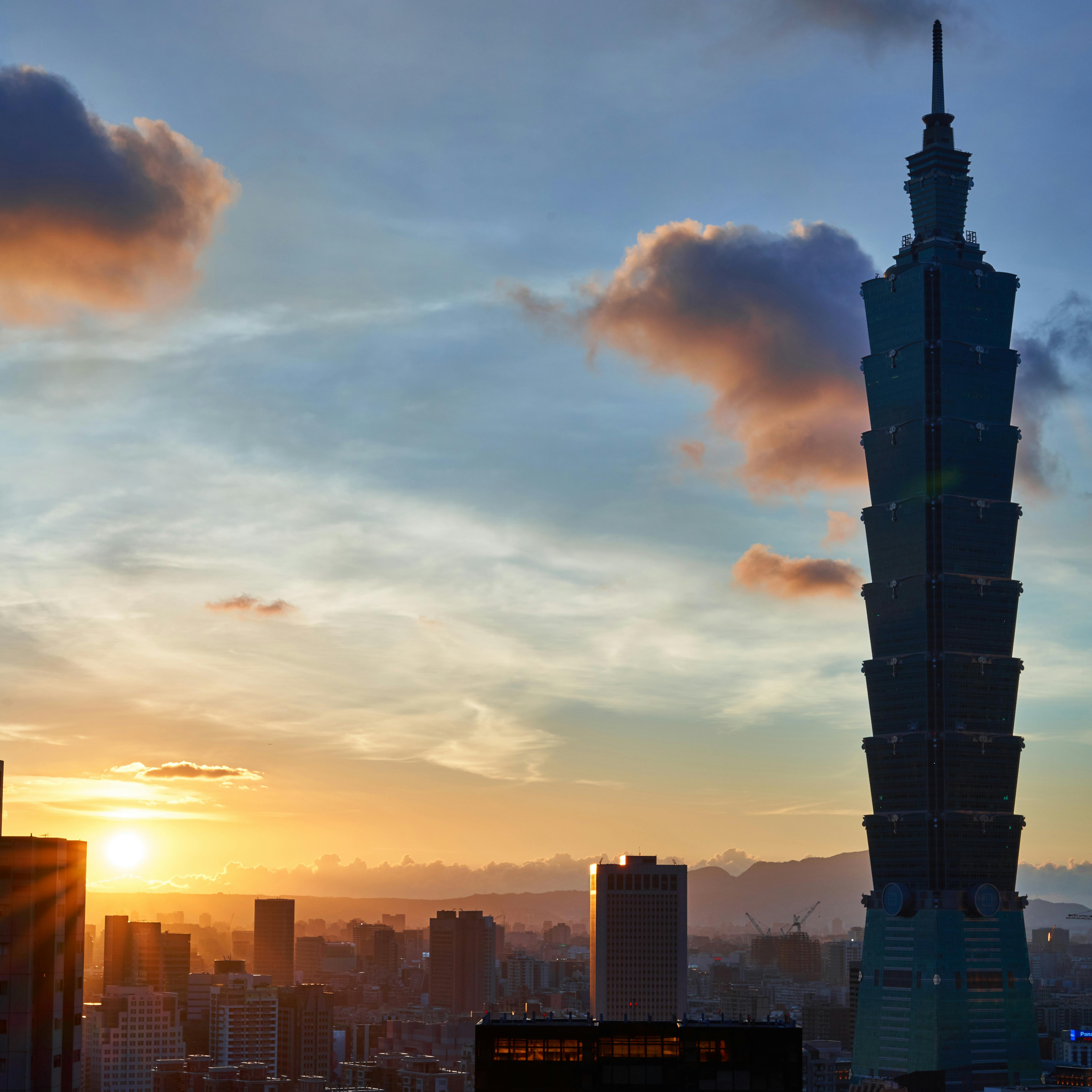
Pundits talk about the "Silicon Shield"—the idea that Taiwan’s dominance in semiconductor manufacturing (via TSMC) protects it from invasion. They argue that China wouldn't dare blow up the world’s chip supply.
This is a surface-level take. The real nuance is that the Silicon Shield also prevents the United States from allowing Taiwan to declare formal independence.
If Taiwan goes "rogue" and triggers a Chinese blockade, the US economy craters. We aren't just talking about your next iPhone being delayed. We are talking about the complete collapse of the medical, automotive, and defense industries. The US is just as terrified of a disruption as China is.
Trump understands leverage. He isn't looking at Taiwan as a "beacon of democracy." He’s looking at it as a bargaining chip in a much larger trade war. When Xi warns Trump, he isn't talking about missiles; he’s talking about the precarious balance of a global economy that is $100 trillion deep in interdependence.
The Fallacy of "Mishandling"
What does "mishandling" even mean? To the State Department, it means straying from the script of "Strategic Ambiguity." To the contrarian observer, "mishandling" is the only thing that has actually kept the peace for forty years.
The ambiguity is the feature, not the bug. Every time a president makes a "gaffe" or signs a new weapons deal, the media screams that the sky is falling. In reality, these micro-shifts are how both sides test the boundaries of the cage.
- The Chinese Perspective: They must look strong to their domestic audience.
- The American Perspective: They must look like the reliable guarantor of Pacific security.
- The Reality: Both are terrified of what happens if the bluff is actually called.
Stop Asking if War is Coming
The "People Also Ask" sections of the internet are filled with variations of "Will China invade Taiwan in 2025?"
The premise is flawed. You are asking about a 20th-century solution to a 21st-century power struggle. China doesn't need to land troops on a beach to "win." They are already winning through "Gray Zone" tactics: cyber warfare, economic coercion, and the slow-motion isolation of Taiwan from international bodies.
An invasion is messy. It’s loud. It’s expensive. Why would Xi take that risk when he can simply wait for the West to tire of the expense of containment? The danger isn't a sudden explosion; it's a gradual evaporation of Taiwanese autonomy while we are all distracted by the latest "warning" headline.
The Business of Fear
Follow the money. Who benefits from the "conflict is imminent" narrative?
- Defense Contractors: To justify the pivot to the Indo-Pacific and the trillion-dollar price tags on new carrier groups.
- Media Outlets: Because "Stable Trade Relations" doesn't generate clicks.
- Political Opportunists: Who use "weakness on China" as a cudgel during election cycles.
If you are an investor or a business leader, you have to look past the rhetoric. I’ve seen boards of directors freeze entire Asia-Pacific strategies because they read a sensationalist op-ed about Xi’s "warning." That is a failure of leadership.
The real risk isn't a hot war. It’s the "de-risking" and "de-coupling" that makes everything more expensive for everyone. We are building redundant supply chains at a cost that will eventually be passed down to every consumer on the planet. We are paying a "peace tax" for a war that isn't happening.
The Hegemon's Dilemma
Trump’s return to the scene complicates this because he doesn't play by the rules of the foreign policy establishment. He treats allies like tenants and adversaries like business rivals. Xi knows this.
The "warning" is a handshake disguised as a threat. Xi is telling Trump: "Don't break the game."
The game is simple:
- China pretends Taiwan is a province.
- Taiwan pretends it isn't a country.
- The US pretends it will defend Taiwan while acknowledging China’s position.
It’s a massive, global-scale LARP (Live Action Role Play). And it works. It has facilitated the greatest period of wealth creation in human history.
$$P(Conflict) \propto \frac{1}{Economic Interdependence}$$
As long as the cost of war remains higher than the cost of the lie, the lie will prevail.
The Hard Truth Nobody Admits
Taiwan is the most successful geopolitical fiction in history.
Everyone knows what it is, but no one can say it out loud. Xi’s "warning" to Trump is just a reminder to keep the volume down. The moment someone—whether it’s a populist American president or a nationalist Chinese leader—decides to tell the truth, the whole system breaks.
The "mishandling" the media fears isn't a tactical error. It’s a moment of honesty. If Trump decides Taiwan is just a line item in a trade deal, he might actually give Xi what he wants—not a war, but a price.
And if the price is right, Beijing will realize they’ve been sold a dream they can’t afford to wake up from.
Stop reading the tea leaves of diplomatic "warnings." Watch the cargo ships. Watch the treasury yields. Watch the chip fabs. That’s where the real war is being fought, and so far, everyone is losing just enough to stay in the game.
The world isn't on the brink of conflict. It's on the brink of realizing that the "red lines" are drawn in disappearing ink.
:max_bytes(150000):strip_icc():focal(819x186:821x188)/Murdaugh-Family-e90854a716884d608fb6fd925e18d840.jpg)