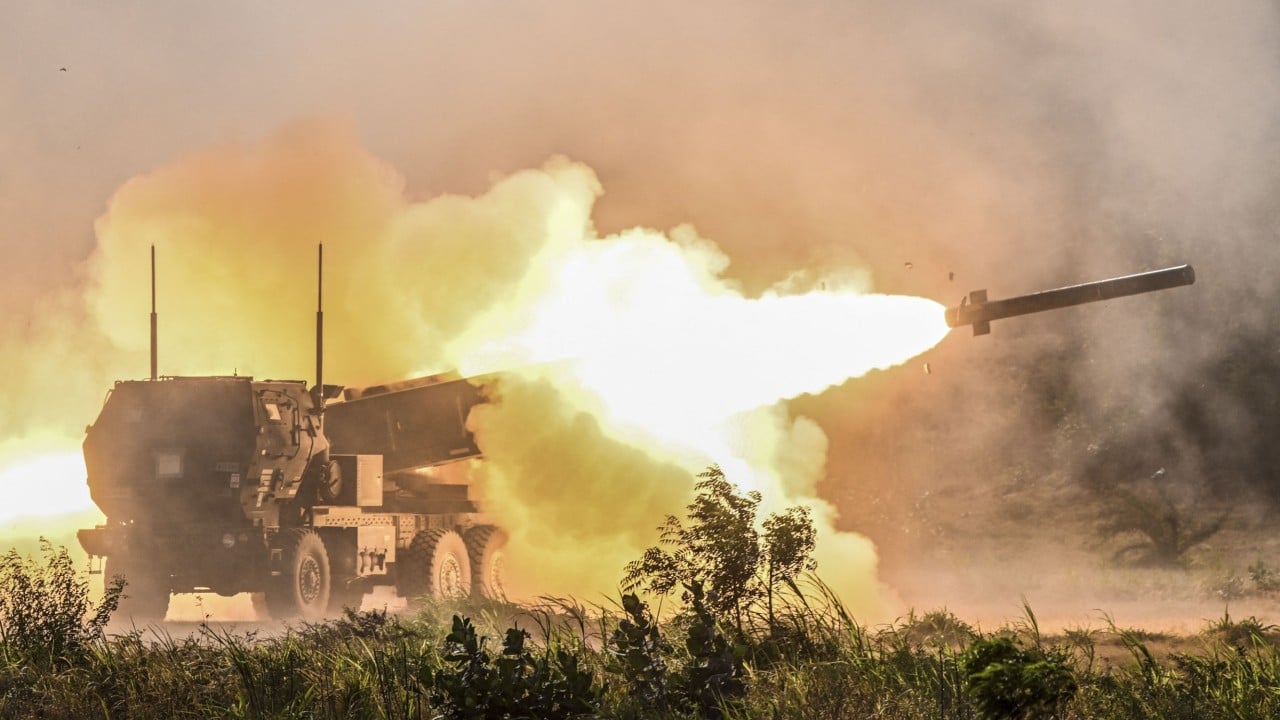
The standard reporting on Taiwan’s latest legislative brawl over its defence budget follows a tired, predictable script. You’ve seen the headlines. They focus on "partisan divisions," "budgetary delays," and "political gridlock." The implication is always the same: if only these politicians could stop bickering and sign the check, the island would magically become an "impregnable fortress."
This is a fantasy.
The current debate over the defence bill isn't a struggle for survival. It is a struggle for optics. While Taipei’s Yuan argues over whether to spend $X or $Y on traditional hardware, they are ignoring a fundamental shift in the nature of modern attrition. Buying more F-16s or Abrams tanks in 2026 is like buying the world’s most expensive candles because you’re afraid of a blackout. It feels productive, but it doesn't solve the core problem.
The Hardware Trap
The "lazy consensus" among defense analysts is that a larger budget equals a more credible deterrent. This assumes that we are still living in a world where the number of hulls in the water or boots on the ground determines the outcome of a conflict.
I have spent years watching procurement cycles in Southeast Asia and the Pacific. I have seen governments dump billions into "prestige platforms"—massive, shiny toys that look great in a parade but function as target practice in a high-intensity environment. Taiwan is currently falling into this exact trap.
The legislative gridlock being reported as a "crisis" is actually a symptom of a deeper, unaddressed reality: Taiwan is trying to fight a 20th-century war with 21st-century prices. When a single Harpoon missile costs more than a swarm of five hundred loitering munitions, the math of traditional defense collapses.
The Asymmetry Delusion
We love to talk about the "porcupine strategy." It’s a catchy metaphor. It suggests that if Taiwan makes itself prickly enough, the predator will stay away. But the current defence bill proposals are still weighted heavily toward "counter-force" capabilities—large, centralized assets that are easily tracked and destroyed within the first forty-eight hours of an engagement.
True asymmetry isn't about having a few big stings; it’s about having ten thousand small ones.
The competing proposals in the legislature are arguing over the wrong metrics. They are debating over centralized command structures and heavy industry contracts. They should be debating how to decentralize the entire grid. If your defense requires a functioning harbor or a pristine runway to be effective, you don't have a defense. You have a countdown.
The Silicon Shield is Cracked
There is a pervasive myth—the "Silicon Shield"—which suggests that Taiwan’s dominance in semiconductor manufacturing (TSMC) makes it "too important to fail." The logic goes that the global economy would implode if the foundries were damaged, so the world will naturally intervene.
This is dangerous, wishful thinking.
In a real-world escalation, the "Silicon Shield" becomes a "Silicon Target." If you are an adversary, you don't need to capture the foundries; you just need to ensure your opponent doesn't have access to them. The moment the supply chain is disrupted, the shield evaporates.
Furthermore, the US and Europe are currently spending hundreds of billions to "de-risk" by building their own domestic chip capacity. Every time a new fab opens in Arizona or Germany, the strategic value of the Silicon Shield drops by a measurable percentage. Taiwan’s legislators are debating a budget based on a geopolitical leverage that is actively rotting.
Why the "Gridlock" is a Distraction
The media fixates on the "pro-China" vs. "pro-independence" framing of the budget debate. It’s a convenient narrative that fits into a neat box. But if you look at the actual line items, both sides are guilty of the same sin: Industrial Inertia.
Large-scale defense bills are rarely about defense. They are about jobs, local industry, and keeping the "Iron Triangle" of military-industrial interests happy.
- Proposal A wants to fund domestic submarine programs to boost local shipyards.
- Proposal B wants to focus on foreign military sales to maintain diplomatic ties with Washington.
Neither proposal is prioritizing the one thing that actually matters: Resilience.
Imagine a scenario where the power grid is down, the internet is severed, and every major port is mined. In that environment, a fleet of high-tech submarines sitting at the bottom of a harbor because they can't be resupplied is useless. The current bill ignores the "boring" stuff—decentralized energy, sovereign satellite communications (not dependent on Starlink), and civilian-led civil defense networks.
The Cost of the Wrong Consensus
Let’s talk about the actual math. The 2026 budget proposals are aiming for roughly 2.5% to 3% of GDP. To a casual observer, that sounds like a lot. To a military professional, it’s a rounding error compared to the adversary's spending.
If you cannot outspend them, you must out-think them.
The "wrong question" being asked in Taipei is: "How do we get this bill passed so we look united?"
The "right question" should be: "Why are we spending 80% of our budget on 20% of our survival probability?"
The status quo is obsessed with "sovereignty" as a legal concept, but they are neglecting "sovereignty" as a physical reality. If your military relies on a centralized command that can be decapitated by a single cyber-attack or a well-placed missile, you don't have sovereignty. You have a permission slip that is about to be revoked.
The Brutal Truth of Procurement
I've seen this play out in private sector tech as well. Companies spend millions on "enterprise solutions" that are bloated and slow, while a small team of engineers with open-source tools eats their lunch. The military version of this is the "Exquisite Asset."
An F-16 is an exquisite asset. It requires a specialized crew, a massive logistics tail, and a perfect runway. A drone swarm controlled by a ruggedized laptop is a "commodity asset."
Taiwan’s current legislative debate is almost entirely focused on Exquisite Assets. This is because Exquisite Assets have powerful lobbyists. Commodity Assets do not.
Stop Fixing the Budget; Change the Goal
The "People Also Ask" section of this geopolitical crisis usually includes questions like: "Will the US intervene?" or "Can Taiwan defend itself?"
The honest, brutal answer to the first is: Nobody knows. Relying on a "maybe" is not a strategy; it’s a prayer.
The answer to the second is: Not with the current procurement philosophy.
The obsession with the "defence bill" as a singular event is a mistake. A bill is just a piece of paper. If that paper buys you the wrong things, it’s worse than no bill at all, because it creates a false sense of security. It allows the public and the international community to check a box and say, "Okay, Taiwan is taking this seriously," while the underlying vulnerabilities remain untouched.
The Unconventional Playbook
If I were sitting in the Yuan, I wouldn't be arguing about whether to buy more tanks. I would be proposing the following:
- Massive Investment in "Dumb" Munitions: Shift funds from high-tech interceptors to millions of sea mines and mobile, short-range anti-ship missiles. Quantity has a quality all its own.
- Total Decentralization: Every precinct in Taiwan should have autonomous power, water, and communication capabilities. If the "head" is cut off, the "body" must be able to keep fighting.
- Cyber-Insurgency: Forget traditional electronic warfare. Invest in the ability to disrupt the adversary’s domestic logistics through non-traditional digital means.
The current budget proposals do almost none of this. They are conservative, safe, and ultimately, ineffective.
The Danger of Professionalism
There is a specific kind of "professionalism" in the military and political class that demands adherence to tradition. They want to look like a "real" military with "real" ships and "real" planes. This vanity is the greatest threat to Taiwan’s security.
The bickering in the legislature is not about "defence." It’s about who gets to hold the steering wheel of a ship that is heading toward a sandbar. Whether the bill passes tomorrow or next month doesn't matter if the cargo is obsolete.
We are witnessing a theatrical performance. The actors are arguing over their lines while the theater itself is being sold out from under them.
The real division isn't between the KMT and the DPP. It’s between those who understand that the era of traditional defense is dead and those who are willing to bet the lives of 23 million people that it’s still 1996.
Stop looking at the total dollar amount of the bill. Look at what those dollars are actually buying. If it’s more of the same, the bill isn't a shield. It’s a weight.