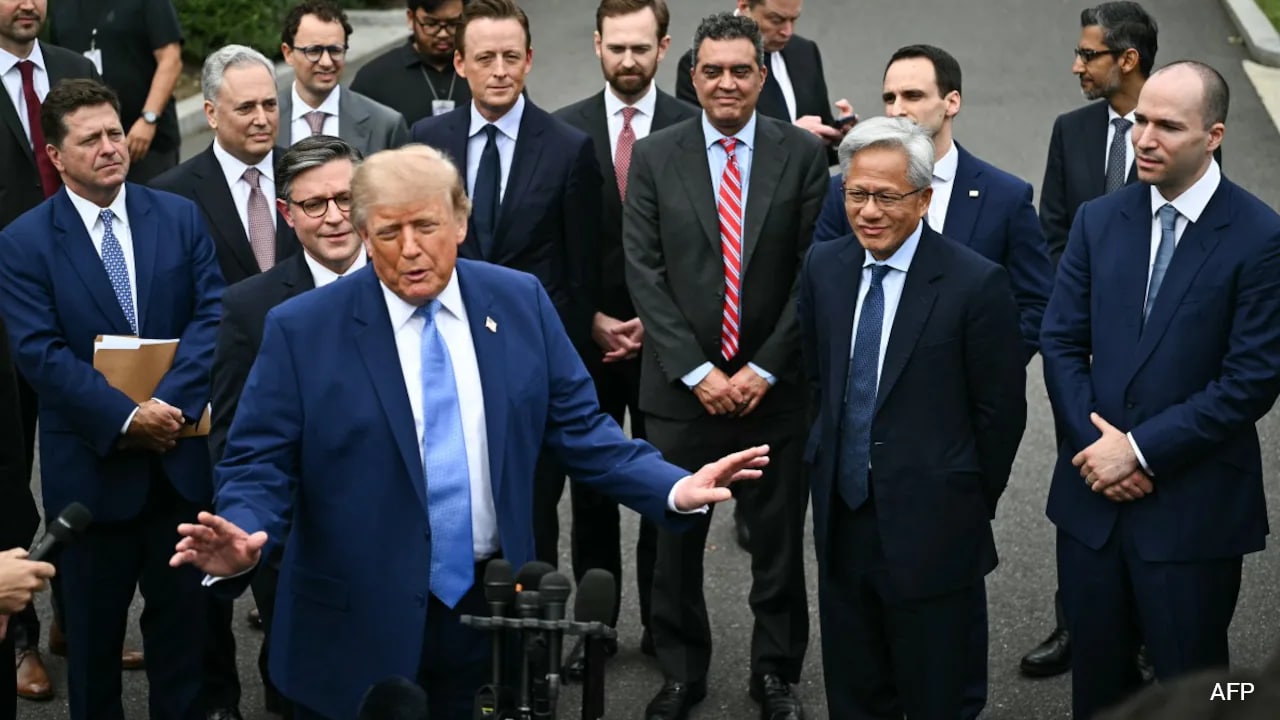
Media coverage of political rhetoric frequently treats isolated, off-the-cuff remarks as monumental admissions of failure, missing the broader strategic mechanics of how modern political communication operates.
When headlines circulate claiming a major political figure—such as Donald Trump—shocked an audience by stating, "I've done a s*** job," the immediate reaction across commentary cycles is predictable. Critics frame the quote as a rare moment of unvarnished truth or a devastating self-indictment. Supporters either dismiss it as obvious sarcasm or argue it was taken out of context. Both reactions miss the actual function of self-deprecating or hyperbolic rhetoric in public speaking. Read more on a similar subject: this related article.
The Mechanics of Political Soundbites
In political journalism and digital media, the "bombshell quote" model relies on stripping a sentence of its tonal, rhetorical, and situational context. According to media analysts and political communication researchers, audiences process live rally or town-hall speeches very differently from how readers consume isolated text headlines.
- Sarcasm and Irony as Rhetorical Tools: Speakers frequently adopt the criticisms of their opponents in an exaggerated, deadpan, or ironic tone to mock the premise of those attacks. When transcribed verbatim without vocal inflection, an ironic remark reads as a literal confession.
- The Attention Economy: Digital publishers face intense pressure to generate clicks. Framing a remark as a "shocking admission" creates an immediate curiosity gap that straightforward reporting cannot match.
- Confirmation Bias: Readers already inclined to view a political figure negatively will interpret an out-of-context quote as validation, while those inclined to support the figure will view the headline itself as evidence of media distortion.
Different Perspectives on the Rhetoric
Because the exact context of the competitor's referenced article is unavailable (URL: undefined), evaluating any specific instance of this quote requires looking at how political observers generally interpret self-critical remarks from high-profile leaders. Further reporting by The Washington Post explores related perspectives on this issue.
| Perspective | Interpretation of Self-Critical Remarks | Underlying Rationale |
|---|---|---|
| Critics and Opponents | Viewed as a slip of the tongue or an inadvertent admission of policy or leadership shortcomings. | Argues that unscripted moments reveal a speaker's genuine assessment of their own record when standard talking points fall away. |
| Supporters and Strategists | Viewed as deliberate sarcasm aimed at mocking media narratives or political rivals. | Points to a long-standing rhetorical pattern where speakers sarcastically repeat critics' talking points to highlight what they consider absurdities. |
| Communication Scholars | Viewed as a calculated tool for audience bonding and authenticity signaling. | Notes that breaking from polished, traditional political scripts makes a speaker appear candid and relatable, regardless of whether the statement is serious or sarcastic. |
Why Literalism Fails as Political Analysis
Treating every unscripted phrase as a literal policy statement or formal self-evaluation obscures the actual substance of governance. Voters and readers who focus exclusively on viral clips often overlook measurable indicators—such as legislative outcomes, economic data, judicial appointments, and regulatory changes—that actually define a political tenure.
What Readers Should Look For Instead
- Full Transcripts and Video Context: Before accepting a headline's characterization of a "bombshell" quote, reviewing the two minutes of speech preceding and following the remark usually clarifies whether the tone was sarcastic, conversational, or serious.
- Pattern Recognition Over Isolated Incidents: Single sentences rarely represent a shift in strategy. Effective analysis looks at whether a remark aligns with consistent messaging or stands as an anomaly.
- Policy Outcomes Over Rhetoric: Evaluating political performance requires examining concrete actions and verifiable records rather than reacting to the daily cycle of verbal sparring.
The Trade-Offs of Unscripted Political Speaking
While breaking away from traditional, teleprompter-driven political speech can create a sense of authenticity and keep audiences engaged, it carries significant risks. Unfiltered remarks provide endless material for opponents and headlines, often allowing critics to define the narrative around a single poorly phrased sentence. Conversely, relying strictly on sanitized, focus-grouped talking points protects a speaker from misinterpretation, but frequently alienates voters who distrust overly polished political messaging.
Ultimately, a viral quote rarely tells the whole story—it mostly reveals how easily a single sentence can be packaged to fit whatever narrative an audience is already looking to buy.