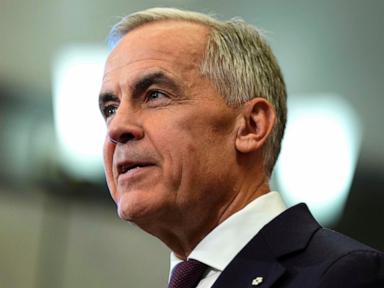
Canadian Prime Minister Mark Carney argues that President Donald Trump’s tariffs drive up costs for American families and hollow out integrated North American supply chains, even as the U.S. Embassy accuses Canadian officials of meddling in American elections. The clash exposes a deeper rupture than standard diplomatic friction. Border trade that once moved on quiet factory-floor rhythm has turned into an election-season weapon.
I have covered cross-border commerce between Ottawa and Washington long enough to recognize when a tariff dispute stops being about steel tonnage and starts being about domestic political theater. When bilateral negotiations collapsed in August 2026 after looking tantalizingly close to a deal, the fallout landed on real paychecks on both sides of the St. Lawrence. Washington moved ahead with 50 percent tariffs on roughly $20 billion in Canadian goods, triggering retaliatory measures from Ottawa and shrinking trade flows in both directions. Carney put the trade contraction plainly: Canadian auto exports to the United States fell by more than 10 percent, while U.S. exports to Canada dropped by more than 20 percent.
How Cross-Border Supply Chains Fracture Under Tariffs
For decades, North American manufacturing operated as a single continental assembly line. Parts crossed the border multiple times before a vehicle rolled off the line with a final badge. Tariffs break that math immediately because duties compound at border crossings rather than politely waiting for a finished product.
Consider a hypothetical Midwestern auto parts supplier buying stamped steel components made in Ontario and shipping finished brackets back to Michigan. If a 50 percent tariff hits the imported component, the factory manager faces an unenviable choice within weeks: absorb the margin hit, pass higher prices downstream to automakers and buyers, or slow production schedules. Neither side wins cleanly when supply chains are tightly meshed.
Carney’s argument that Washington’s tariffs hurt Americans rests on that exact friction. Higher input costs and retaliatory duties narrow consumer choice, raise prices on everyday goods, and weaken industries that spent generations optimizing around predictable border rules. At the same time, Ontario Premier Doug Ford has warned that the relationship has shifted permanently, insisting that Ottawa cannot simply bank on a return to old habits regardless of who holds power in Washington.
That is why Carney and Ford rolled out an CA$8.7 billion ($6.2 billion) support package aimed at protecting Ontario’s industrial core—steel, autos, and critical minerals. The plan allocates CA$5.2 billion ($3.7 billion) over five years for steelmakers and CA$2.5 billion ($1.8 billion) for automakers, including CA$1.5 billion ($1.1 billion) from Ottawa. Announcements like that arrive against grim factory realities, including layoffs at U.S.-owned Cleveland-Cliffs’ Hamilton, Ontario plant. Subsidies can cushion the blow for a while. They cannot single-handedly replace a massive neighboring export market overnight.
Why the Interference Charge Arrived When It Did
Timing tells half the story in diplomatic spats. The U.S. Embassy’s fact sheet accusing Canadian politicians of seeking to influence American politics arrived right ahead of the November 2026 midterm elections. That is not a coincidence.
In Washington, trade policy and electoral narratives frequently bleed together. When voters feel squeezed by higher prices or economic uncertainty, administrations often look for external pressure points to explain away friction or pre-empt criticism. Political scientist Daniel Béland of McGill University pointed out that casting routine cross-border political friction as foreign interference risks setting up a convenient scapegoat narrative around midterm results, while calling the notion that Canada could swing the midterms absurd.
Look closely at what the embassy’s fact sheet actually put on the table. It pointed to Industry Minister Mélanie Joly discussing retaliatory tariffs aimed at Republican-leaning states. Retaliatory tariffs, by definition, target sectors and geographies where political leverage exists; every trading nation does that in a dispute. It also cited Ford’s U.S. ad campaign featuring former President Ronald Reagan criticizing tariffs—a spot that aired during the World Series in October 2025 and prompted Trump to abruptly cancel trade talks with Canada.
Then there is the noncitizen voting angle. The embassy cited 11 Canadians charged with illegally voting in U.S. elections between 2012 and 2026 without tying those individual cases to the Canadian government. Meanwhile, the Justice Department reported arresting more than 200 noncitizens since the start of 2026 for illegal voting in past elections—a tiny fraction measured against tens of millions of ballots cast nationwide.
Highlighting individual prosecutions alongside ministerial statements blends distinct categories under a single alarming label. That blending is a classic political tactic. It turns loud public diplomacy and isolated legal cases into a broader story of foreign meddling.
The Overlooked Reality of Leverage and Trade-Offs
Both capitals have incentives to overstate their leverage and understate their vulnerabilities. A sober reading of the dispute requires looking at what neither side wants to admit publicly.
| Dimension | Washington's Angle | Ottawa's Angle | Practical Reality |
|---|---|---|---|
| Tariff Impact | Protects domestic industries and presses trade partners. | Raises costs for U.S. families and shrinks bilateral trade. | Both exporters and downstream buyers absorb real friction. |
| Political Framing | Flags foreign lobbying, ad campaigns, and noncitizen voting cases. | Frames actions as lawful responses to U.S. tariffs and denies meddling. | Public sparring often serves domestic audiences more than trade talks. |
| Market Diversification | Uses market size to extract concessions. | Aims to double non-U.S. exports over a decade. | Geography and logistics make replacing U.S. demand slow and costly. |
Carney has made reducing Canada’s reliance on the United States a core objective, setting a ten-year goal to double exports to other markets. Anyone who has tracked global freight and trade finance knows how hard that climb is. Ports, rail corridors, regulatory alignments, and buyer relationships built over generations do not pivot quickly, even with political will and billions in industrial support.
At the same time, Washington’s tariff hammer is not cost-free. Even if the U.S. economy is far larger than Canada’s, targeted duties on steel, autos, and components hit American manufacturers, dealers, and consumers. And Ottawa’s three-pronged approach—sorting out immediate tariff irritants first, cooperating on defense and energy second, and heading into broader free trade renegotiations—shows a government trying to keep a channel open despite harsh rhetoric. Reportedly, Ottawa has looked for an interim deal before the end of the year and ahead of a shift in the balance of power in Congress, recognizing that political dynamics on Capitol Hill alone will not rewrite White House trade posture.
What Business Leaders and Policymakers Should Watch Next
Companies caught between Ottawa and Washington cannot run operations on wishful thinking. Hope that next year’s calendar will magically restore pre-tariff predictability is a fragile business plan.
Start by stress-testing supply chains against sudden tariff shifts and retaliatory lists. Finance and procurement teams need clear visibility into where every component originates, how customs classifications are documented, and where alternative sourcing or contract clauses can limit exposure if duties spike again.
Watch the negotiations around autos and upcoming free trade talks closely. When talks stall over core industrial sectors like automobiles, rhetoric tends to heat up right as negotiators look for quiet off-ramps. Publicly, leaders trade barbs over tariffs and election meddling; privately, trade officials know that an interim truce or narrow sectoral relief often comes before any grand bargain.
In North American trade, the loudest speeches rarely settle the bill—the border crossing math eventually does.
Mark Carney Confronted Over Trump's Claims Canada Is Interfering
This video captures Canadian Prime Minister Mark Carney directly addressing the U.S. allegations of Canadian election interference alongside the broader trade dispute with the Trump administration.