Citrus greening disease is destroying orchards across the globe. Millions of trees are rotting from the inside out, and farmers are losing livelihoods. Traditional chemical treatments cost a fortune and often fail.
Then a seventeen-year-old high school student stepped in with a radically different approach.
Kai Roberts didn't wait for a university lab grant. He spent months testing natural botanical extracts and building custom machine-learning tools to tackle huanglongbing (HLB), the bacterial scourge plaguing citrus groves everywhere. If you think plant pathology is reserved for gray-haired professors in sterile university buildings, look closer. Real innovation is happening in bedrooms and garages.
The Invisible Killer Hiding In Your Orange Juice
Huanglongbing translates roughly to yellow dragon disease. It's caused by a fast-moving bacterium called Candidatus Liberibacter asiaticus, spread entirely by a tiny insect known as the Asian citrus psyllid. Once the bug injects the bacteria into a tree's phloem, the vascular system clogs up. Sugars trap inside the leaves instead of feeding the roots.
The fruit turns bitter, lopsided, and green even at harvest. Within a few years, the tree dies.
Florida alone has seen its citrus production plummet by over seventy percent since the early 2000s. Growers have tried everything. They've sprayed heavy synthetic pesticides, injected expensive antibiotics directly into trunks, and even tried breeding resistant rootstocks. Nothing stops the spread entirely. Antibiotics like oxytetracycline offer temporary relief, but they're expensive, face strict regulatory hurdles, and risk breeding resistant bacteria strains.
Orchard owners are desperate. They need cheap, accessible, organic solutions that actually work.
Why Traditional Treatments Keep Failing
Science often looks for complex, expensive chemical answers to biological problems. Big agrochemical companies spend decades synthesizing novel molecules that cost millions to bring to market. But nature often holds simpler keys.
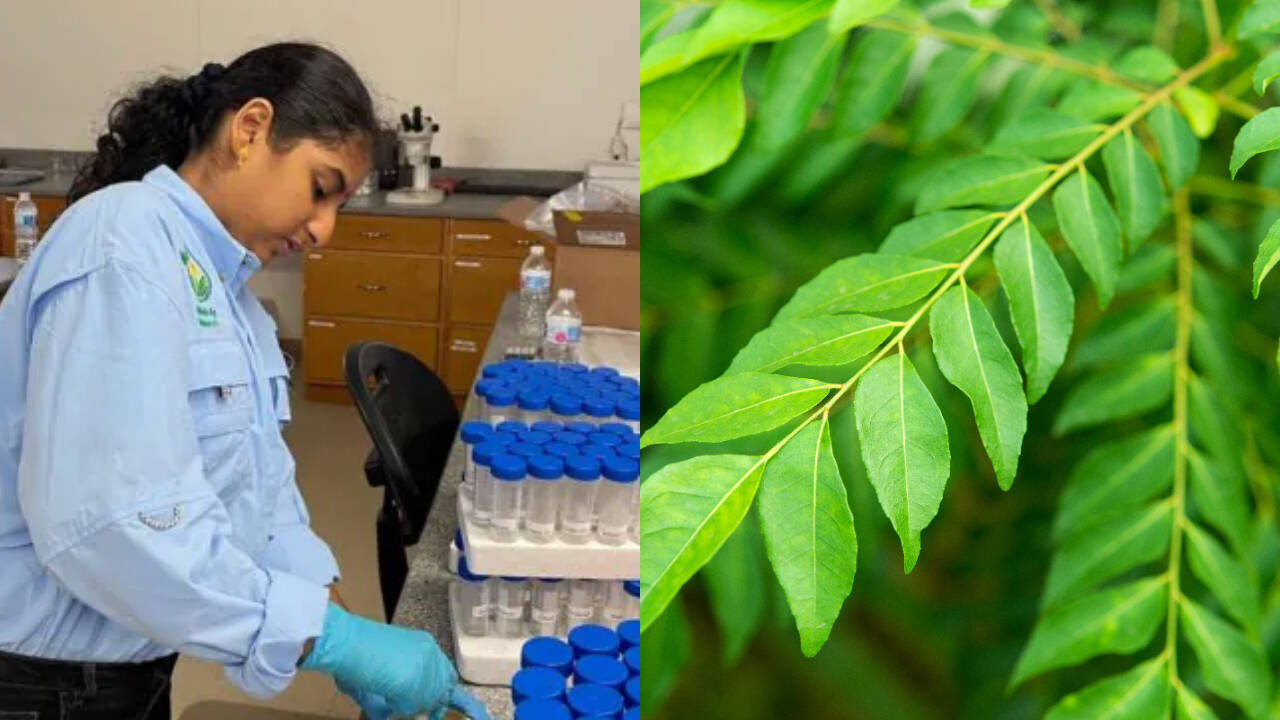
Curry leaves come from Murraya koenigii, a small tree native to Asia famous for its distinct aroma in cooking. Beyond flavor, traditional medicine systems have used these leaves for centuries due to their potent antimicrobial and antioxidant properties. When Kai Roberts looked at the crisis facing citrus groves, he wondered if the same compounds that protect curry leaves from pathogens could protect oranges, lemons, and limes.
He didn't just guess. He ran methodical lab tests, extracting active compounds from curry leaves and applying them to infected plant tissue. The results caught the attention of serious scientists. The botanical treatment showed a remarkable ability to suppress bacterial growth without scorching the delicate plant foliage.
Building An AI Tool To Catch Disease Early
Treating a sick tree is only half the battle. Spotting the infection before symptoms explode across an entire grove is notoriously difficult. By the time yellowing leaves appear, the bacteria have already colonized large portions of the tree.
That's where artificial intelligence enters the picture.
Instead of relying on human scouts to inspect thousands of individual trees by eye, Roberts developed an AI-powered diagnostic tool. Using computer vision and machine learning models trained on thousands of leaf images, the software scans photographs of foliage to detect early-stage symptoms of citrus greening with high accuracy.
Farmers can walk down orchard rows with a smartphone, snap a picture of a suspicious leaf, and get an instant assessment. Early detection means infected trees can be treated or removed before psyllids spread the bacteria to neighboring crops.
What This Means For The Future Of Farming
Technology democratizes problem-solving. You don't need a multi-million-dollar corporate laboratory to make a dent in global agricultural crises. You need curiosity, persistence, and open-source tools.
Big agriculture relies on heavy machinery and chemical saturation. The next generation of farming relies on precision, biology, and smart software. When teenagers can build functional treatments and diagnostic apps in their spare time, it exposes how rigid legacy industries have become.
If you manage a backyard citrus tree or oversee a commercial grove, keep an eye on botanical extracts and machine-learning diagnostics. Walk your rows often. Check the undersides of leaves for psyllids. Test open-source AI tools as they become available for agricultural extension work. Stop waiting for a silver bullet from a conglomerate, and start paying attention to the grassroots innovations happening right now.