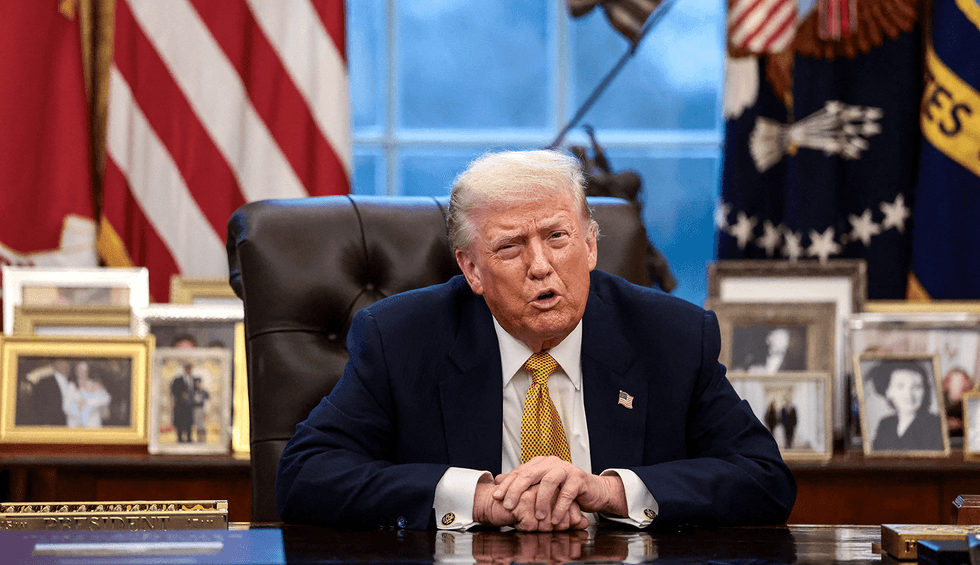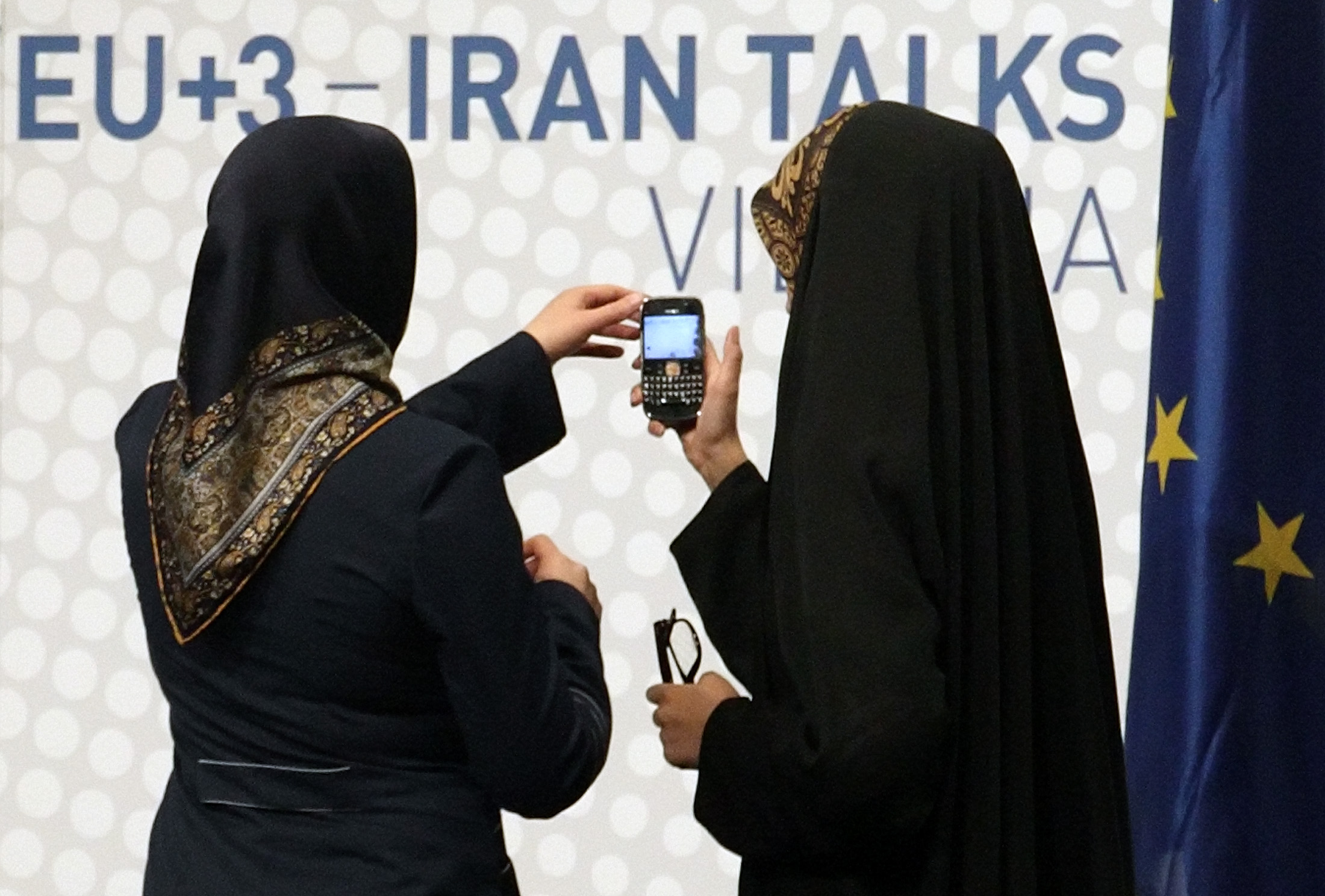
The Atlantic’s latest reporting on Trump’s supposed willingness to "talk" with Iranian leaders is more than just a recycled headline; it is a fundamental misunderstanding of how power functions in the Middle East. The media loves the narrative of the "Great Dealmaker" meeting the "Ancient Persian Empire" across a mahogany table. It’s cinematic. It’s also entirely detached from the cold reality of kinetic diplomacy.
If you believe that a sit-down between Washington and Tehran solves anything, you are falling for the lazy consensus that has paralyzed Western foreign policy for forty years. The assumption is that Iran’s leaders are rational state actors looking for a "win-win." They aren't. They are ideological survivors who view every handshake as a tactical pause to reload.
The Myth of the Rational Negotiator
The biggest lie in the competitor's coverage is that Iranian leaders want to talk because they are under pressure. This is a classic Western projection. We assume that because their currency is in the gutter and their street protests are loud, they must be desperate for a seat at the table.
I have watched three administrations try to "leverage" economic pain into diplomatic gain. It fails because the Islamic Revolutionary Guard Corps (IRGC) thrives in a closed economy. When you sanction Iran, you don’t weaken the regime; you destroy the private middle class and hand the entire black market to the military. The IRGC doesn't want the sanctions lifted if it means losing their monopoly on smuggling and internal control.
Talking to the "leaders" in Tehran is a fool’s errand because the people you meet with—the diplomats in expensive suits—have zero authority over the people holding the drones and the centrifuges. You are negotiating with the waiter while the chef is in the back poisoning the soup.
Trump’s "Art of the Deal" vs. Persian "Bazaar" Logic
The Atlantic suggests Trump’s rhetoric is a shift toward de-escalation. It isn't. It’s a classic sales technique: the "Door-in-the-Face" phenomenon. You demand the impossible, threaten fire and fury, and then offer a "chat" as the relief valve.
But here is where the logic breaks: The Iranian regime doesn’t play by the rules of real estate development. In a real estate deal, both parties want the building to exist at the end. In the current geopolitical struggle, the goals are mutually exclusive.
- The US Goal: A stable, non-nuclear Iran that stops funding militias in Yemen, Lebanon, and Iraq.
- The Iranian Goal: The total expulsion of US influence from the region and the preservation of the revolutionary state at all costs.
There is no "middle ground" here. You cannot be "halfway" nuclear. You cannot "partially" fund Hezbollah. When Trump tells The Atlantic he’s open to talk, he’s not signaling a peace treaty; he’s signaling a demand for total surrender wrapped in a photo-op.
The Technological Blind Spot: Why "Talking" is Obsolete
The competitor’s article focuses on high-level political posturing while ignoring the hardware on the ground. We are no longer in a world where a signature on a piece of paper in Geneva stops a weapons program.
We are in the era of decentralized, AI-driven asymmetric warfare. Iran’s greatest exports aren't oil or rugs; they are low-cost Shahed drones and cyber-warfare packages. These don't require a massive industrial base that can be easily monitored by the IAEA.
The Asymmetry of Risk
| Feature | US Traditional Diplomacy | Iran's Asymmetric Strategy |
|---|---|---|
| Primary Tool | Formal Treaties | Proxy Militias (Hezbollah, Houthis) |
| Timeline | Election Cycles (4-8 years) | Generational / Eternal |
| Success Metric | "Stability" | Regional Hegemony |
| Cost of Failure | Political embarrassment | Total Regime Collapse |
Imagine a scenario where the US secures a "Grand Bargain." Within six months, a "rogue" proxy group—conveniently disavowed by Tehran—launches a swarm of AI-guided drones at a desalination plant in Saudi Arabia. The treaty stays intact on paper, but the reality on the ground remains bloody. The obsession with "talking" ignores the fact that the Iranian regime has perfected the art of the "plausible deniability" strike.
Stop Asking if They Will Talk—Ask Why We Care
The "People Also Ask" section of the internet is obsessed with: "Will there be a war with Iran?" or "Can Trump make a deal?"
These are the wrong questions. The right question is: Why are we still using 20th-century diplomatic frameworks for a 21st-century ideological conflict?
The status quo suggests that diplomacy is the alternative to war. That is a false dichotomy. Diplomacy, in this context, is simply war by other means. It is a tool for stalling, for re-arming, and for spinning the Western media cycle.
If you want to actually disrupt the Iranian threat, you don't do it at a summit. You do it by:
- Breaking their Energy Monopoly: Not through sanctions, but through the aggressive deployment of modular nuclear reactors and renewables in the surrounding Gulf states, making Iranian oil irrelevant to its neighbors.
- Starving the IRGC’s Digital Infrastructure: The regime lives on restricted internet and state-monitored comms. Flooding the country with uncensorable satellite hardware is more effective than any UN resolution.
- Ending the "Great Man" Fallacy: Stop believing that one president or one supreme leader can change the trajectory of a forty-year religious revolution with a single meeting.
The High Cost of the "Photo-Op"
The danger of Trump’s "willingness to talk" isn't that he might fail; it’s that he might "succeed."
A "success" in this realm usually looks like a weak agreement that grants Iran legitimacy and cash flow in exchange for temporary, reversible concessions on their nuclear program. We’ve seen this movie before. It ends with the US leaving the region and Iran filling the vacuum.
I've seen tech companies pivot their entire strategy based on one "promising" meeting with a competitor, only to find out the competitor was just gathering intel to crush them. This is no different. Tehran isn't looking for a partnership; they are looking for an exit from the pressure cooker so they can finish the job.
The Atlantic and other legacy outlets are blinded by the spectacle of the event. They analyze the body language and the seating charts while the centrifuges keep spinning in the dark.
The Counter-Intuitive Truth
The most peaceful path forward isn't a conversation. It’s a total, cold-blooded pivot away from the obsession with Tehran. The more we center our foreign policy on "The Iran Deal" or "The Iran Talk," the more power we give a regime that should be a regional footnote.
True power is the ability to ignore a nuisance until it becomes irrelevant. By treating the Iranian leadership as "partners in peace," we validate their extremism. We tell the Iranian people—the ones actually risking their lives for change—that the West would rather shake hands with their oppressors than wait for their liberation.
Stop looking for the handshake. Start looking for the exit.
If Trump actually wants to disrupt the Middle East, he shouldn't invite Iranian leaders to Mar-a-Lago. He should stop taking their calls entirely and build a regional architecture that functions as if they don't exist. That is the only "deal" that matters.
The era of the "Grand Bargain" is dead. Anyone still trying to sell it to you is either naive or a consultant on a retainer.
Don't wait for a summit that changes nothing. Watch the technology, watch the proxies, and ignore the suits.