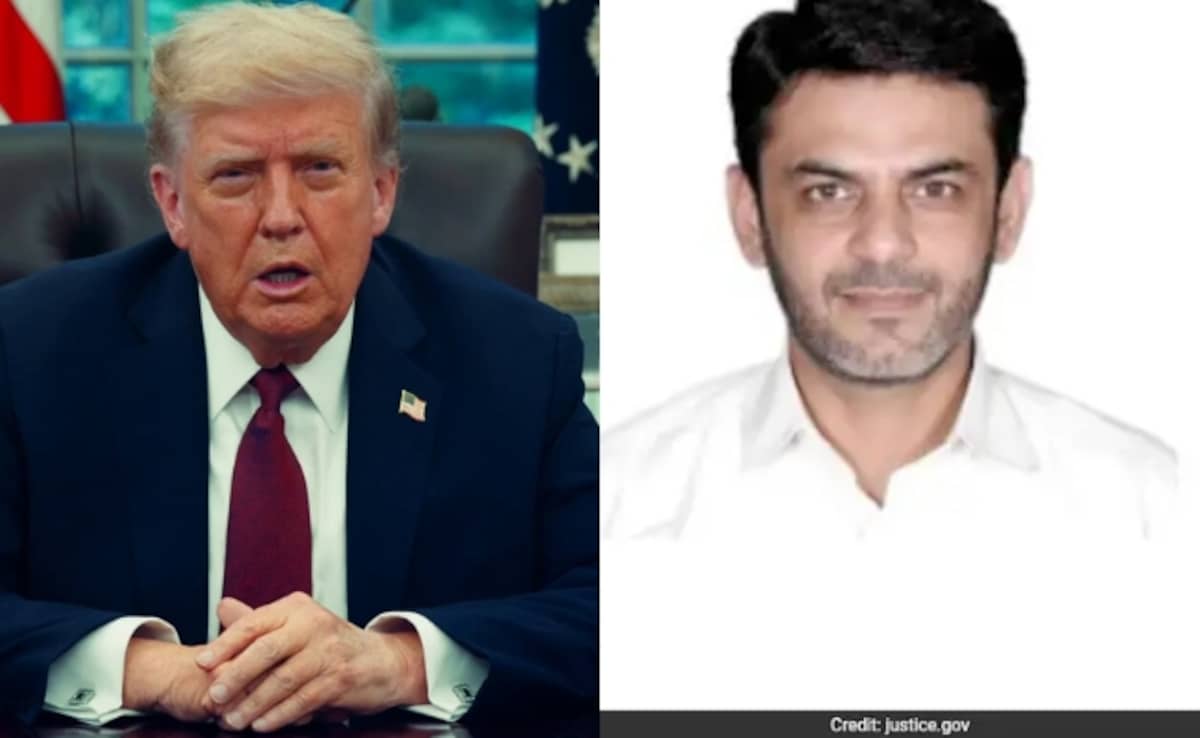
The conviction of Asif Merchant marks a chilling milestone in the shadow war between Washington and Tehran. A federal jury has found the Pakistani national guilty of attempting to orchestrate a murder-for-hire plot targeting President Donald Trump and other high-ranking U.S. government officials. This was not a lone-wolf operation fueled by internet radicalization. Evidence presented throughout the trial points to a sophisticated, state-backed assassination campaign designed to bypass traditional border security and strike at the heart of American political leadership.
Merchant, 47, spent years living in Iran before entering the United States. His arrival was the opening move in a calculated play. Federal prosecutors demonstrated that Merchant acted as a talent scout and paymaster for a foreign power, specifically seeking out individuals within the U.S. criminal underworld to carry out the killings. This strategy reveals a shift in foreign intelligence tactics. Rather than sending a trained operative who might be flagged by counter-intelligence, the handlers chose to outsource the violence to domestic actors who already knew how to move in the shadows of American cities. In related news, take a look at: The Sabotage of the Sultans.
The Mechanics of a State Sponsored Hit
The plot began to unravel because the "hired guns" Merchant thought he had recruited were actually undercover FBI agents. This is where the veteran analyst sees the cracks in the tradecraft. While the geopolitical intent was clear, the execution relied on the hope that American criminal elements could be easily bought and kept quiet. Merchant was caught on tape explaining that the hits were intended to take place in late August or September, strategically timed to cause maximum disruption during the peak of an election cycle.
Money was the primary lever. Merchant allegedly paid a $5,000 "down payment" to the undercover agents, a sum that seems paltry for a high-level political assassination but served as a "proof of concept" to show his backers that he had made contact. He didn't just want a shooter. He requested a team that could perform reconnaissance, secure getaway vehicles, and manage the logistics of a high-profile hit on a protected target. NBC News has analyzed this critical issue in great detail.
The specific targeting of Donald Trump is not an isolated grievance. It is a direct, bloody response to the 2020 drone strike that killed Qasem Soleimani, the head of Iran’s Quds Force. Tehran has never hidden its desire for "blood for blood." For years, the U.S. intelligence community has tracked credible threats against former Secretary of State Mike Pompeo, former National Security Advisor John Bolton, and others involved in the Soleimani operation. The Merchant case proves that these threats have moved from rhetoric to active operational stages on American soil.
A New Breed of Infiltration
Merchant entered the U.S. via "significant public benefit parole," a legal entry mechanism often used for people providing assistance to law enforcement or government agencies. The irony is staggering. He used a pathway designed for cooperation to facilitate a massacre. This raises uncomfortable questions about the vetting process for individuals with deep ties to adversarial nations, specifically those who have spent extensive time in Iran.
Security experts have long warned about the vulnerability of the "proxy model." By using a Pakistani national with no direct, overt link to the Iranian military, Tehran maintained a layer of plausible deniability. If the plot had succeeded, the headlines would have focused on a Pakistani immigrant and local criminals, potentially masking the state-level coordination required to fund and direct such an ambitious strike.
The Underground Recruitment Drive
Merchant’s behavior in New York and Florida was a masterclass in how not to stay under the radar, yet it also showed a disturbing level of confidence. He sought out people he believed had "connections" to the underworld, looking for those willing to commit murder for a price.
- The "Finger" Signal: During meetings, Merchant used hand signals and coded language to discuss the "work," a sign that he had received some level of intelligence training on how to avoid electronic surveillance.
- The Financial Trail: The movement of funds through the "hawala" system—an informal method of transferring money outside of traditional banking—allowed him to receive capital without triggering standard financial red flags.
- Target Diversity: The list wasn't limited to the former President. It included "politicians and government officials" who were seen as enemies of the Iranian regime.
The jury’s verdict confirms that the government’s evidence was overwhelming. From the recorded conversations to the travel records, the paper trail led back to a coordinated effort to import political violence. This isn't just a criminal case; it is a clear violation of national sovereignty.
The Failure of Deterrence
If a foreign power feels emboldened enough to recruit assassins inside the United States, it suggests that current deterrents are failing. The traditional "tit-for-tat" of sanctions and diplomatic expulsions has not stopped the Quds Force from greenlighting operations in the West. This trial serves as a public warning that the threat environment has shifted from cyberattacks and disinformation to physical kinetic operations.
The U.S. Secret Service has already faced intense scrutiny regarding the protection of Donald Trump following the separate, unrelated assassination attempt in Butler, Pennsylvania. However, the Merchant plot represents a different kind of danger. While the Butler incident appeared to be the act of a disturbed individual, the Merchant plot was a professionalized, funded, and patient attempt to utilize "local" resources to achieve a foreign policy objective through murder.
Vulnerabilities in the Interior
The trial highlighted a massive gap in how we monitor foreign nationals with ties to state-sponsored terror groups once they are inside the country. Merchant was able to travel, meet with potential conspirators, and arrange payments for months before the trap was sprung.
- Surveillance Gaps: The FBI had to rely on human intelligence (HUMINT) to break the case. If the informants hadn't been in place, the technical surveillance alone might have missed the "hawala" transfers and the face-to-face meetings in parked cars.
- Legal Loopholes: Merchant's use of legal parole to enter the country shows that our entry systems are being gamed by those with sophisticated backing.
- The Underworld Pipeline: The assumption that foreign agents will only work with other foreign agents is dead. They are actively looking to tap into domestic criminal networks.
The Global Implications of the Verdict
The guilty verdict sends a message, but it doesn't end the threat. Tehran views these operations as long-term projects. When one operative is caught, they analyze the failure and adjust the next attempt. The conviction of Asif Merchant provides a blueprint of the enemy's current playbook: use a non-Iranian national, enter legally, use informal money transfers, and recruit local muscle.
This case should force a radical rethink of how we protect former officials. The security perimeter can no longer just be a physical fence around a rally or a home; it must be a deep-intelligence net that identifies these "scouts" the moment they begin looking for partners in the American underground.
The reality is that the Merchant plot was just one thread in a much larger tapestry of Iranian aggression. From the attempted kidnapping of journalist Masih Alinejad in New York to the hacking of campaign emails, the objective is the same: to project power within American borders and influence the direction of U.S. policy through fear and violence.
Law enforcement agencies must now look at every "random" criminal contact with foreign nationals through a different lens. What looks like a standard murder-for-hire in a police precinct might actually be the tip of a geopolitical spear. The Merchant trial wasn't just about one man’s guilt; it was a revelation of how the world’s most dangerous regimes are now operating in our own backyards.
The conviction of Asif Merchant is a tactical victory, but the strategic war continues. As long as the "blood for blood" mandate remains the official policy of the Iranian leadership, more Merchants will be sent. They will be better prepared, more cautious, and even more desperate to settle the scores of the past. The only question is whether the American intelligence apparatus can keep up with a proxy war that has moved from the deserts of the Middle East to the streets of New York.
Demand a full audit of the "public benefit parole" system to ensure that the very tools used to protect the national interest aren't being turned into a backdoor for state-sponsored assassins.