The clock on the wall of a basement apartment in Tehran does not tick any differently than the one in a diner in Ohio. Sixty seconds to a minute. Sixty minutes to an hour. But when the leader of the free world reduces the spark of a potential regional war to a casual scheduling conflict, time stretches. It warps.
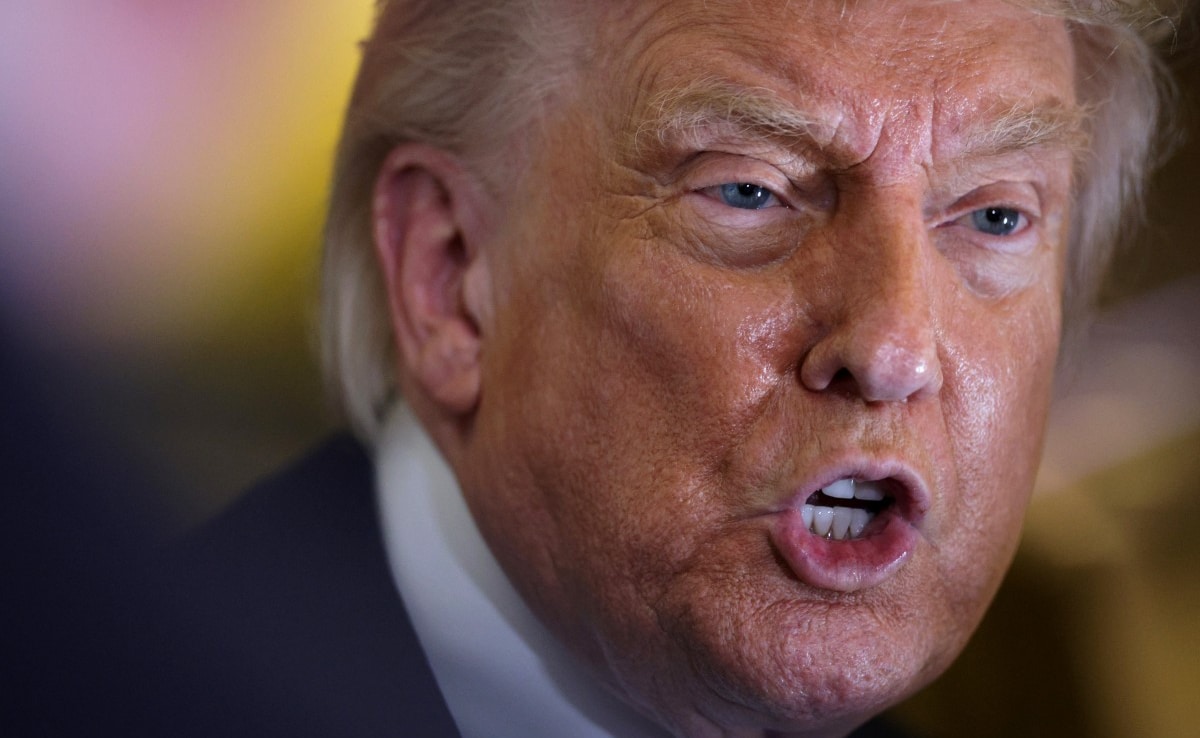
Donald Trump stood before a crowd of microphones and cameras, delivering a timeline for state-sanctioned violence with the same conversational ease one might use to schedule a haircut or a quarterly corporate review. "Two-three days," he muttered, casually tossing a Friday deadline into the ether. "Early next week."
To the political press corps, it was a soundbite. A headline to be parsed, optimized for search engines, and broadcast into the 24-hour news cycle. But to the people living under the shadow of that timeline, those words were a countdown.
The Anatomy of an Unmaking
We have become entirely numb to the language of brinkmanship. We view geopolitical conflict through the sterile lens of satellite imagery, troop movements, and economic sanctions. It looks like a board game. It feels like a simulation.
But consider what happens next when a superpower announces a window for destruction.
In the heart of Tehran, a mother named Maryam—a hypothetical composite of the millions navigating this exact anxiety—hears the translation on a smuggled satellite feed. She doesn't think about the geopolitical balance of power in the Middle East. She thinks about groceries. She thinks about whether the local pharmacy will have enough insulin for her mother by Tuesday. She looks at her children sleeping under blankets and wonders if the ceiling will hold if the percussion of a cruise missile shatters the neighborhood windows early next week.
This is the invisible tax of casual threats. It is the psychological paralysis of an entire population held hostage by a calendar.
The competitor headlines screamed about the strategy, the political fallout, and the defense stock surges. They missed the blood pressure spike of a civilian population. They ignored the agonizing calculus of a shopkeeper deciding whether to board up his windows on Sunday night or gamble that "early next week" means Wednesday.
When Precision Meets Fluidity
Military operations are, by their very nature, masterclasses in meticulous planning. Every variable is weighed. Wind speeds, fuel consumption, radar cross-sections, and satellite windows are calculated to the decimal point.
Then comes the rhetoric.
When a commander-in-chief offers a fluid, off-the-cuff timeline like "two-three days," it introduces a chaotic element into an already volatile equation. It forces the adversary into a corner. In the rigid logic of military defense, an ambiguous threat cannot be ignored. Iran's air defense networks, historically twitchy and prone to catastrophic miscalculations, are forced onto hair-trigger alert.
Remember the historical weight of this tension. It was during a period of similarly suffocating escalation in 2020 that Iranian air defense operators, blinded by panic and expecting incoming American missiles, mistakenly shot down Ukraine International Airlines Flight 752. One hundred and seventy-six innocent people died because someone on a radar screen misread a blip during a moment of maximum anxiety.
Casual timelines kill. They create the fog of war before a single shot is fired. They breed the exact brand of panicked overreaction that turns a rhetorical posture into a funeral pyre.
The Illusion of Control
There is a distinct, unsettling hubris in believing that conflict can be turned on and off like a faucet. The language used by the administration suggested a neat, orderly execution. A strike happens on Tuesday, the message is delivered, and the world resumes its rotation on Wednesday.
It is a lie we tell ourselves to make the horror of modern warfare palatable.
An attack is not a singular event. It is a stone dropped into a glassy pond, sending ripples outward in ways that defy prediction. If a strike hits an Iranian Revolutionary Guard facility, what happens to the cyber warfare units sitting in unmarked buildings in Isfahan? Within hours, a bank in Atlanta closes its doors because its digital infrastructure has been turned to ash. A hospital in London loses access to patient records. The price of crude oil jumps ten percent in an afternoon, and suddenly a family in rural Pennsylvania can no longer afford the fuel to drive to work.
The world is too interconnected for "two-three days" to remain contained. The stakes are never isolated to the desert.
The Human Ledger
We must look past the podiums and the press briefings to understand the true cost of this rhetoric. The real story isn't the man delivering the timeline; it is the millions of lives caught in the gears of his calendar.
It is the young American sailor aboard a destroyer in the Persian Gulf, writing a letter home that he hopes never has to be mailed. He watches the horizon, knowing that if the order comes early next week, he will be the one pulling the trigger, and he will be the one sitting in the crosshairs of the retaliation.
It is the Iranian student who spent years studying to secure a visa to study abroad, watching her future evaporate because a diplomatic channel was replaced by a public ultimatum.
The uncertainty is a physical weight. It sits in the stomach. It ruins dinners. It keeps cities awake at three in the morning, listening to the sky, waiting for the casual prediction of a distant leader to materialize as fire.
The television anchors will continue to debate the optics. The analysts will draw arrows on digital maps. But the reality remains far simpler, and far more terrifying. A window has been opened. The days are ticking by. And beneath the noise of the news, a quiet, collective breath is being held across the globe, waiting to see what happens when the calendar finally flips to next week.


