Faith is a weapon when used by those who don't understand the anatomy of power. Most media outlets took the bait when a high-profile pastor stood in the White House and painted an entire nation with the brush of genocidal intent. They reported it as a "controversial prayer." They missed the reality. It wasn't just controversial; it was a masterclass in the kind of reductionist thinking that keeps the military-industrial complex fed and the public perpetually terrified of a bogeyman that doesn't exist in the way they’ve been told.
The lazy consensus suggests that Iran is a monolith of radicalism, a country where eighty-five million people wake up every morning with the singular goal of erasing a neighbor. This narrative is a convenient fiction. It simplifies a complex, ancient civilization into a 2D villain for a domestic political audience. If you want to understand the Middle East, stop listening to sermons and start looking at the maps and the ledgers. For a different look, see: this related article.
The Myth of the Monolith
I have spent decades watching self-proclaimed experts map their own theological anxieties onto foreign policy. They treat the Iranian government and the Iranian people as an interchangeable unit. They aren't. To claim that "Iranians seek the death of all Jews" is a statistical and sociological absurdity.
Iran is home to the largest Jewish population in the Middle East outside of Israel. If the state's singular, kinetic goal was total extermination, that community would have been erased decades ago. Instead, they have a designated seat in the Iranian Parliament. Is there state-sponsored anti-Zionism? Absolutely. Is the rhetoric from the IRGC (Islamic Revolutionary Guard Corps) often abhorrent? Yes. But translating state-level geopolitical hostility into a universal bloodlust among the populace is a lie designed to prevent any possibility of a diplomatic off-ramp. Further coverage regarding this has been published by NBC News.
When a pastor stands in the seat of American power and broadcasts this distortion, he isn't just praying. He is lobbying for an inevitable conflict. He is stripping away the agency of the millions of Iranians who risk their lives in the "Woman, Life, Freedom" protests. By framing the conflict as a holy war, he validates the hardliners in Tehran who use that exact same framing to justify their grip on power.
The Sovereignty of Rhetoric vs. The Reality of Survival
Geopolitics is about survival, not scripts from a dispensationalist novel. The Iranian leadership is pragmatic to a fault when it comes to the preservation of the Islamic Republic. They operate on a cold calculus of deterrence.
We see this in the way they manage their "Axis of Resistance." It is not a suicide pact. It is a series of buffers. If the goal were truly "death to all," the strategy would look like a chaotic explosion. Instead, we see a highly calculated, often cautious chess game of regional influence.
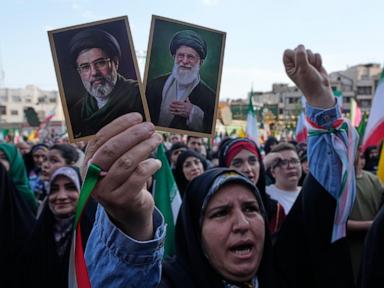
The "death to" chants that make for such great B-roll on cable news are, for the most part, ritualized political theater. I’ve been on the ground in places where these slogans are spray-painted on walls while the people walking past them are trying to figure out how to buy eggs in a sanctioned economy. They are more worried about the inflation rate than they are about fulfilling a pastor’s apocalyptic prophecy.
Why the White House Prayer Was a Strategic Failure
Allowing a religious leader to set the tone for foreign policy in the East Room is a failure of statecraft. It signals to our allies and our enemies that American policy is dictated by domestic religious bases rather than national interest.
When we engage in this kind of rhetoric, we lose:
- Intelligence Nuance: We stop looking for the fractures within the Iranian leadership that we could exploit.
- Diplomatic Leverage: You cannot negotiate with a devil. If you define your opponent as purely evil and genocidal, you have boxed yourself into a corner where the only remaining option is total war.
- Moral High Ground: We criticize the "theocracy" in Tehran while allowing our own brand of theo-politics to drive the narrative in Washington.
The Danger of the Religious Proxy War
The competitor article framed the event as a moment of friction between faith and politics. That’s too soft. This is about the weaponization of the "clash of civilizations" theory.
Samuel Huntington’s "Clash of Civilizations" has been debunked by nearly every serious historian of the last thirty years, yet it remains the favorite bed-time story of the Washington elite. It suggests that conflict is inevitable because of "culture." This is a lazy man’s way of avoiding the study of history, economics, and geography.
Conflict in the Middle East is about water, oil, borders, and the legacy of colonial map-making. It is about the 1953 coup that overthrew Mossadegh. It is about the Iran-Iraq war. It is about the vacuum left by the invasion of Iraq in 2003. When you swap these hard facts for "they want to kill us because of their faith," you are opting for a lobotomy.
Dismantling the "People Also Ask" Falsehoods
People often ask: "Does Iran really want to start World War III?"
The answer is a resounding no. Iran’s military spending is a fraction of its neighbors’. Their air force is a collection of museum pieces. Their strategy is asymmetric because they cannot win a conventional war. They want to be the regional hegemon, not a scorched-earth memory.
People also ask: "Is it possible to be pro-Israel and pro-diplomacy with Iran?"
The status quo says no. Reality says it’s the only way. A destabilized Iran, or a cornered Iran that feels it has nothing to lose, is the greatest threat to regional stability. True support for Israeli security involves de-escalation, not cheering for a "holy war" that would turn the Levant into a graveyard.
The Professional Price of Honesty
Taking this stance gets you labeled as an "apologist." That is the standard defense mechanism of the narrow-minded. I am not defending the Iranian regime; I am defending the necessity of seeing the world as it is, not as we want it to look for a fundraising email.
I have seen policy-makers ignore internal CIA briefings because the data didn't align with the "Evil Empire" narrative their constituents expected. I have watched as billions of dollars were funneled into "democracy promotion" schemes that did nothing but enrich contractors while the actual people of Iran suffered under both sanctions and domestic oppression.
The pastor’s prayer wasn't just a religious moment. It was a symptom of a systemic intellectual rot. We have become a nation that prefers comfortable myths over uncomfortable mechanics. We would rather believe in a world of monsters than a world of competing interests.
Stop Praying for War
If you want to support the Iranian people, stop validating the regime’s claim that the West is out to destroy their faith. Every time a Western leader or a religious figure uses genocidal language to describe the entire Iranian population, the IRGC gets a new recruitment poster.
The hardliners in Tehran love that pastor. He is their best PR agent. He proves their point that the United States is not a rational actor, but a crusader state. He gives them the justification they need to crack down on protesters by claiming they are agents of a foreign religious agenda.
The status quo is a circle of mutual validation between extremists on both sides. They need each other. The pastor needs the "genocidal Iranian" to keep his flock fearful and donating. The Supreme Leader needs the "Crusader American" to keep his grip on the security apparatus.
Break the cycle. Look at the data. Study the demographics. Realize that a nation of eighty-five million people is not a monolith, and our foreign policy shouldn't be a Sunday school lesson.
The most "dangerous" thing you can do in Washington right now isn't to be a hawk or a dove. It’s to be a realist. It’s to admit that the "death to all" narrative is a convenient oversimplification that serves everyone except the people actually living in the crosshairs.
If we keep treating geopolitics like an apocalypse, we shouldn't be surprised when the world starts to burn. Stop asking God to pick a side in a regional power struggle and start asking why we are so terrified of a nuance that might actually lead to peace.