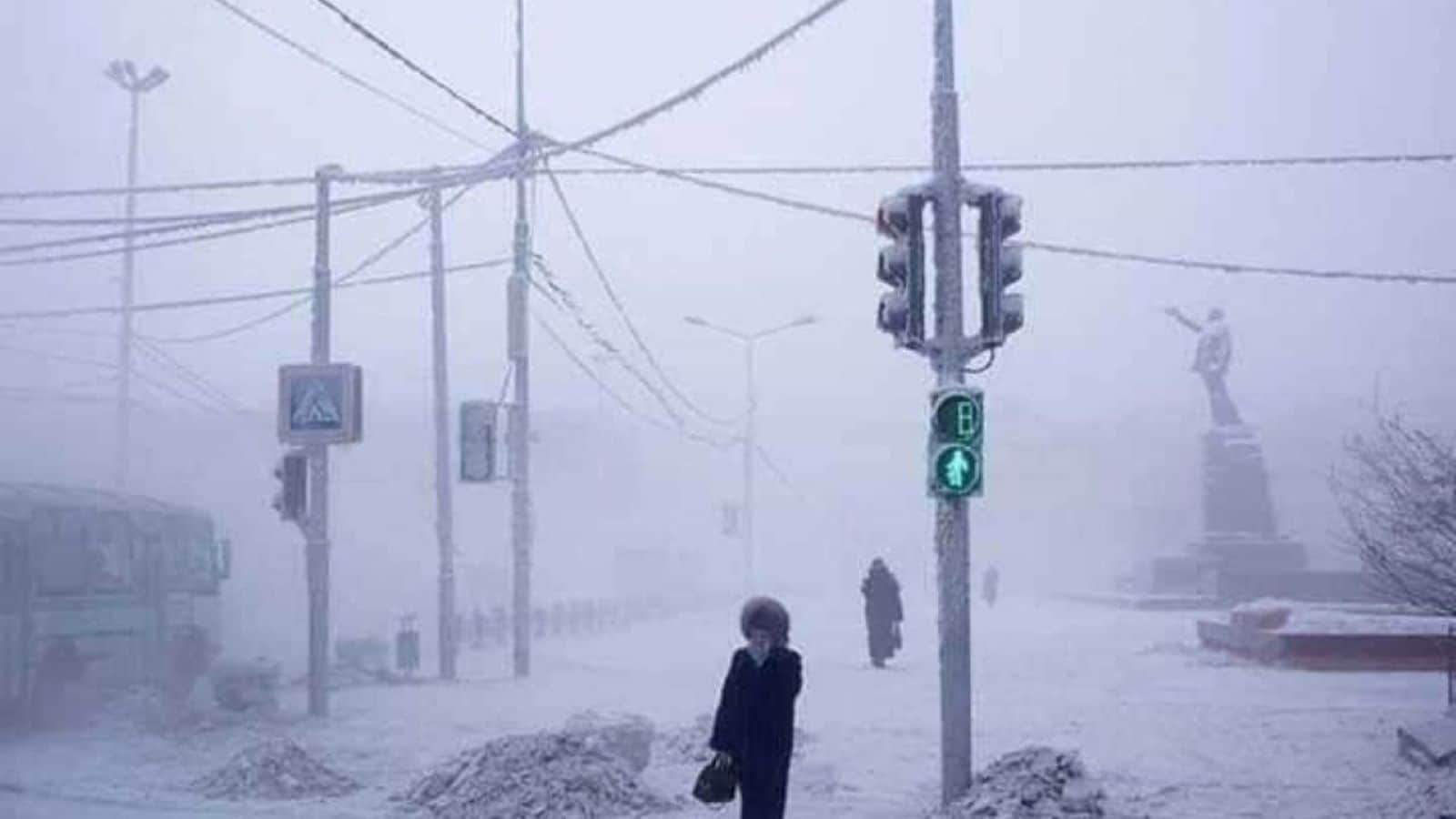
Standard rankings of the coldest inhabited places rely on single-point minimum temperature records, an approach that obscures the physical and operational realities of permanent human settlement. A transient weather anomaly in a high-altitude basin differs fundamentally from a sustained cryogenic regime that dictates the structural engineering, metabolic demands, and economic viability of an entire municipality. Evaluating extreme cold habitation requires shifting from meteorological trivia to an analytical framework built on three variables: thermal duration, topographic cold-air trapping, and infrastructural load. When mapped across the globe's most extreme permanent settlements—from the Siberian basins of Oymyakon and Verkhoyansk to the Himalayan rain shadow of Drass and the subarctic plains of North America—permanent survival emerges not as passive endurance, but as an active, continuous thermodynamic battle against heat loss.
The Meteorological Mechanics of Extreme Cold
To understand why specific settlements experience lethal temperatures while adjacent regions remain relatively temperate, one must isolate the atmospheric mechanics driving heat dissipation. Extreme cold is rarely a simple function of latitude. Instead, it is governed by continentality, elevation, and local topography.
- Continentality and Specific Heat Capacity: Water possesses a high specific heat capacity, acting as a planetary thermal battery that moderates coastal temperatures. Deep continental interiors—such as the Sakha Republic in northeastern Siberia or the interior of Yukon and Nunavut—lack this maritime buffer. During the boreal winter, solar insolation drops near zero, and terrestrial surfaces radiate heat directly into the upper atmosphere without convective replacement from ocean currents.
- Katabatic Drainage and Cold-Air Pooling: The most severe inhabited cold sinks sit inside concave valleys or basins surrounded by mountain ranges. Cold air is denser than warm air. Under clear skies and calm wind conditions, air cooled by contact with snow-covered mountain slopes drains downward via gravity—a process known as katabatic flow. Once this dense air settles on the valley floor, it becomes trapped beneath a layer of warmer air aloft, creating a persistent temperature inversion. The surrounding ridges block horizontal winds that would otherwise mix the atmosphere and break the inversion.
- The Albedo Feedback Loop: Fresh snow reflects up to 80 to 90 percent of incoming solar radiation. Once snow cover establishes early in the autumn, the surface absorbs almost no solar energy even during daylight hours, locking the local microclimate into a self-reinforcing radiative cooling cycle until spring melt alters the surface albedo.
Structural Typologies of Inhabited Cold Sinks
Comparing extreme settlements reveals that they fall into distinct geophysical archetypes. Treating Oymyakon and Drass as equivalent entries on a travel list ignores the divergent physical stressors imposed by their respective environments.
The Continental Basin Archetype (Oymyakon and Verkhoyansk, Russia)
Located in the Sakha Republic, Oymyakon and Verkhoyansk represent the purest expression of continental cold-air pooling. Oymyakon sits in a valley flanked by the Verkhoyansk and Chersky ranges, roughly 750 meters above sea level. In 1933, Oymyakon recorded an official temperature of -67.7°C (-89.9°F), matching the Northern Hemisphere record set in Verkhoyansk in 1892.
The defining operational feature of this archetype is not the single record low, but the multi-month thermal plateau. Between December and February, average daily highs rarely climb above -40°C (-40°F). At this threshold, standard atmospheric moisture freezes out entirely, creating persistent ice fog—a suspension of microscopic ice crystals generated by vehicle exhaust, heating vents, and human respiration. Visibility drops to meters, and atmospheric pressure remains chronically elevated under the Siberian High, a massive semi-permanent anticyclone.
The High-Altitude Rain Shadow Archetype (Drass, India)
Situated in the Kargil district of Ladakh at an elevation of roughly 3,280 meters (10,760 feet), Drass holds the distinction of being the coldest permanently inhabited settlement in India, with recorded temperatures dropping to -45°C (-49°F) and historical military logs citing even lower figures during severe winter anomalies.
Unlike Oymyakon, Drass is governed by altitude and orographic blocking rather than extreme latitude. The town lies at the base of the Zoji La pass, where the Great Himalayan Range intercepts moisture-laden winds from the Indian Ocean. While the windward slopes receive heavy precipitation, Drass sits in a high-altitude basin that experiences intense radiative cooling under thin, dry mountain air. The lower atmospheric pressure at 3,280 meters reduces the air's thermal mass, accelerating radiative heat loss after sunset. This creates extreme diurnal temperature swings: bright solar radiation at high altitude can warm surfaces during the afternoon, followed by a violent thermal plunge once the sun drops behind the surrounding peaks. Furthermore, Drass faces a dual hazard absent in the dry Siberian interior: massive seasonal snowfall that triggers avalanches and physically severs road access through Zoji La for months.
The Subarctic Shield and Interior Plains Archetype (Yellowknife and Snag, Canada; Utqiagvik, USA)
North American cold hubs operate under different wind and pressure regimes. Snag, a former weather station and small settlement in the Yukon, recorded North America's lowest temperature at -63°C (-81.4°F) in 1947 inside a bowl-shaped valley mimicking Siberian topography. Conversely, larger population centers like Yellowknife in the Northwest Territories or Utqiagvik (formerly Barrow) on Alaska's North Slope experience lower absolute minimums—typically bottoming out around -45°C to -50°C—but suffer from severe convective heat loss driven by persistent winds across flat tundra and frozen lakes.
In this archetype, wind chill becomes the primary biological threat. While Oymyakon's valley walls shield it from wind during peak inversions, arctic coastal and shield settlements experience high-velocity gales that strip the boundary layer of warm air from exposed skin and uninsulated structures within seconds.
The Steppe Anticyclone Archetype (Ulaanbaatar, Mongolia)
Ulaanbaatar stands apart as the coldest national capital on earth, housing over 1.5 million people at an elevation of 1,350 meters in the Tuul River valley. Winter temperatures routinely drop to -40°C (-40°F). Because Ulaanbaatar is a dense urban metropolis rather than a rural outpost, its thermal inversion traps anthropogenic particulate matter alongside cold air. Coal-burning stoves in the city's sprawling ger (yurt) districts emit dense smoke that cannot rise past the warm inversion lid sitting a few hundred meters above the valley floor. Here, extreme cold directly manufactures a severe public health crisis through atmospheric stagnation.
The Infrastructure Cost Function of Cryogenic Living
Maintaining permanent habitation below -40°C imposes an exponential cost function on civil engineering. Standard materials undergo phase transitions and mechanical failures that render conventional construction methods useless.
- Permafrost Foundations and Thermal Equilibrium: Settlements like Oymyakon, Yakutsk, and Yellowknife are built atop continuous permafrost—ground that remains frozen for at least two consecutive years. If a heated building transfers thermal energy downward into the soil, the subsurface ice melts, turning load-bearing ground into unstable mud and causing structural collapse. Engineers solve this by elevating buildings on deep concrete or timber pilings driven into the permafrost layer, leaving a ventilated air gap beneath the floor so ambient sub-zero air continuously freezes the ground below.
- Fluid Transport and Phase-Change Prevention: Burying water and sewage pipes underground is impossible where permafrost acts like concrete and frost lines penetrate dozens of meters deep. Instead, municipalities construct above-ground, heavily insulated utility corridors—often called utilidors—that run alongside heated steam pipes. Water must remain in continuous circulation; if pump pressure fails for even a few hours at -50°C, pipes freeze solid and rupture, requiring entire sections of infrastructure to be cut out and replaced.
- Metallurgical Embrittlement and Elastomer Failure: Below -40°C, carbon steel undergoes a ductile-to-brittle transition, snapping under mechanical stress that would merely bend it at room temperature. Rubber tires lose elasticity, developing flat spots where they contact the frozen ground, and shatter if driven before warming. Hydraulic lines burst, synthetic lubricants congeal into paste, and lead-acid batteries lose over 60 percent of their cranking amps. Consequently, vehicles in Oymyakon and Yakutsk are either stored in heated garages or left idling continuously throughout the workday—a massive fuel expenditure dictated by mechanical necessity rather than convenience.
- Agricultural Absence and Supply Chain Fragility: At temperatures below -45°C, agriculture ceases entirely. Soil remains locked, and greenhouses require prohibitive energy inputs to counteract radiative losses during dark winter months. Communities depend entirely on winter ice roads—frozen river corridors that become passable for heavy freight trucks only after ice thickness exceeds specific load-bearing thresholds—or high-cost air freight. In Drass, winter isolation relies on military-grade stockpiling of fuel, dried rations, and medical supplies prior to the autumn closure of the Zoji La pass.
Physiological and Behavioral Adaptation Protocols
Human biology possesses zero evolutionary adaptation to survive prolonged exposure below -30°C without technological intervention. Survival relies entirely on behavioral protocols and thermal barrier management.
- Moisture Management Over Insulation: The primary killer in extreme cold is not inadequate insulation, but internal moisture. Sweating during physical exertion saturates base layers. Because water conducts heat roughly 25 times faster than air, damp clothing rapidly drains core body heat once exertion stops. Residents regulate physical output strictly to avoid perspiration, utilizing layered wool, fur, and breathable synthetics that vent water vapor away from the skin.
- Respiratory and Ocular Protection: Inhaling air at -50°C forces the upper respiratory tract to rapidly warm and humidify cryogenic gas, risking bronchial spasms and tissue damage. Outdoor exposure requires heavy woolen scarves or heat-exchange masks that pre-warm inhaled air using the moisture and heat of the previous exhalation. Exposed corneas can freeze in high winds, while eyeglass frames made of metal will bond instantly to skin through flash-freezing of surface moisture.
- Caloric and Metabolic Scaling: Basal metabolic rates rise in extreme cold as the body expends energy to maintain a 37°C core temperature and transport heavy, restrictive winter gear. Traditional diets in Siberian and Himalayan cold hubs reflect high energy-density requirements—relying heavily on animal fats, raw or frozen meats (such as stroganina in Yakutia), dairy fats, and dense carbohydrates to sustain continuous internal thermogenesis.
Evaluating Cold Extremes Through Operational Metrics
Ranking the coldest inhabited places strictly by their lowest recorded thermometer reading creates a distorted hierarchy. A rigorous evaluation requires weighting three distinct operational metrics:
- Heating Degree Days (HDD): A measurement quantifying the demand for energy needed to heat a building, calculated by subtracting the daily mean temperature from a base comfort temperature (typically 18°C) and summing the results over a year. By HDD metrics, Oymyakon and Verkhoyansk dwarf high-altitude hubs like Drass because their thermal deficits persist uninterrupted for seven to eight months.
- Access Continuity Index: The number of days per year a settlement remains physically connected to external supply networks via ground transport. Drass scores significantly lower in access continuity than Yellowknife or Ulaanbaatar due to avalanche-prone mountain passes, making its logistical vulnerability higher despite warmer average winter temperatures than Siberia.
- Infrastructure Redundancy Threshold: The margin of safety built into municipal heating and power grids. In settlements where ambient temperatures hit -50°C, a central power plant failure transitions from an inconvenience to a mass-casualty event within six to twelve hours as indoor temperatures plummet below freezing. Survival depends on decentralized backup systems—wood-burning stoves, diesel generators, and stored solid fuels maintained in every individual dwelling.
Strategic Framework for Extreme Cold Analysis and Planning
For researchers, logistics planners, and travelers evaluating extreme cold destinations, relying on headline minimum temperatures leads to catastrophic miscalculations in equipment specification and risk assessment. Apply the following protocol when analyzing or preparing for cryogenic environments:
- Anchor on Mean Minimums and Wind Chill, Not Record Lows: Plan infrastructure, clothing systems, and mechanical tolerances around the sustained 30-day mean minimum temperature combined with peak regional wind speeds. A windy -35°C environment strips heat faster than a calm -50°C valley floor.
- Audit Single-Point Infrastructure Failures: Assess any cold-weather settlement or operation by identifying its primary thermal failure mode. In permafrost basins, monitor foundation stability and pipe circulation; in high-altitude mountain towns like Drass, prioritize avalanche forecasting and multi-month supply autonomy; in urban inversions like Ulaanbaatar, incorporate particulate filtration alongside thermal protection.
- Enforce Zero-Sweat Pacing and Redundant Heat Sources: Eliminate single-source dependency for heat and mobility. Treat moisture accumulation inside clothing layers and mechanical cold-soak of unheated engines as primary operational hazards, enforcing strict thermodynamic discipline from the moment temperatures drop below -30°C.