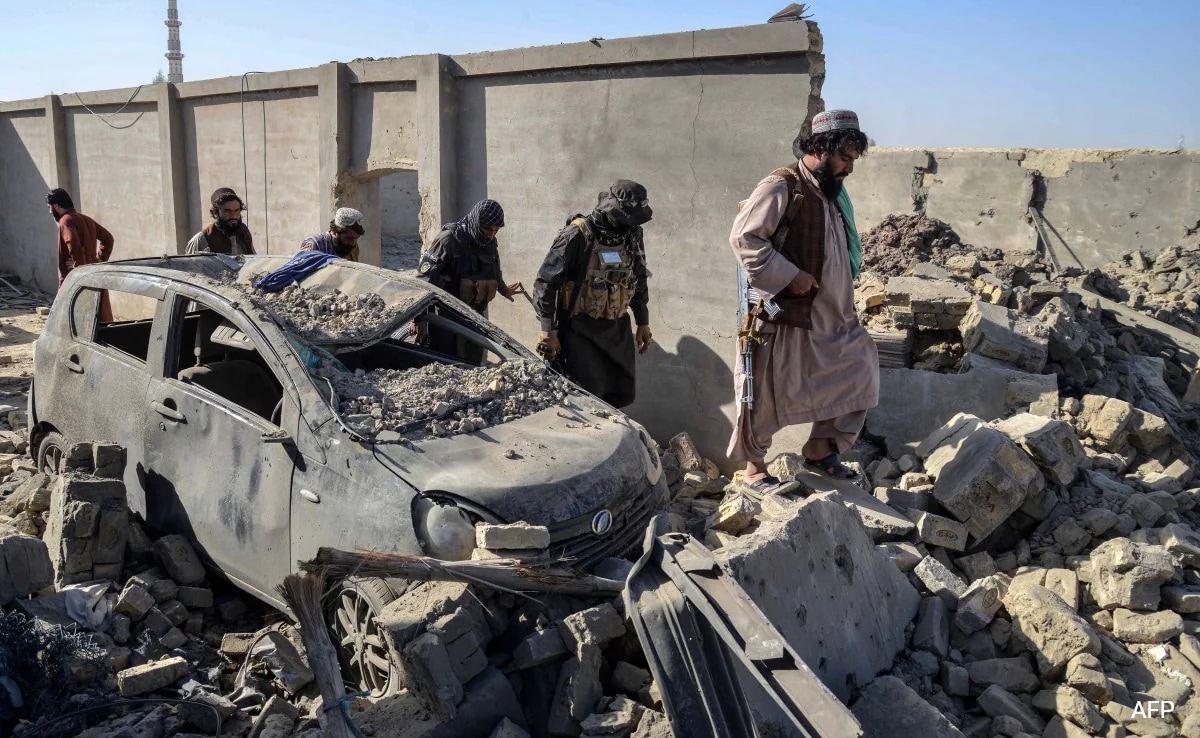
The dust along the Durand Line does not settle because of a signed treaty or a diplomatic handshake. It settles because the moon says so. In the rugged, sun-scorched corridors where Pakistan meets Afghanistan, the air usually carries the metallic tang of spent brass and the sharp scent of diesel from idling armored vehicles. But this week, a different smell drifts across the jagged peaks of the Hindu Kush: the sweet, nutty aroma of Sheer Khurma simmering in heavy iron pots.
An uneasy silence has fallen over the ridges. The heavy machine guns are cold. The border guards, men who usually squint at one another through high-powered optics with fingers hovering near triggers, are now looking at their watches for a different reason. Eid al-Fitr has arrived. For seventy-two hours, the war has been told to wait in the hallway. Recently making headlines recently: The Brazil Senate Rejection Nobody Talks About.
Consider a man named Gulzar. He is a hypothetical composite of the thousands of traders, fathers, and sons who live in the shadow of the Torkham crossing. To Gulzar, the "Temporary Pause in Fighting" announced by Islamabad and Kabul isn't a headline or a bullet point in a briefing. It is the only reason he can walk three miles to his sister's house without calculating the trajectory of a mortar shell. It is the thin, fragile grace period that allows him to buy a new pair of leather sandals for his youngest son without the marketplace turning into a graveyard.
This isn't peace. It is a deep breath taken by a marathon runner who knows the next ten miles will be uphill. Further details into this topic are covered by BBC News.
The Geography of a Grudge
To understand why a three-day ceasefire feels like a miracle, you have to look at the ground itself. The border between these two nations isn't a line on a map; it is a scar that refuses to heal. For years, the tension has simmered over territorial disputes, the movement of militants, and the literal fencing of a frontier that families have crossed freely for centuries.
When the shelling starts, it isn't just "strategic assets" that get hit. It is the supply trucks carrying flour. It is the power lines that keep the lights on in small mountain clinics. It is the very fabric of daily survival. The "dry facts" of the conflict tell us about skirmishes and diplomatic protests, but they rarely mention the silence of a classroom when the teacher is too afraid to show up, or the way a grandmother’s hands shake when she hears a low-flying drone.
The recent escalation leading up to this Eid was particularly grim. Accusations flew like shrapnel. One side claimed the other was harboring wolves; the other claimed the fence was a cage. The rhetoric reached a fever pitch that suggested a long, bloody summer was inevitable.
Then came the crescent moon.
Religion, in this part of the world, is the only force more powerful than the pride of a general. The announcement of a pause for Eid is a rare moment of shared humanity. It is an acknowledgment that even in the middle of a geopolitical chess match, the players still have homes to return to and prayers to say.
The Invisible Stakes of a Short-Term Truce
What happens when the guns go quiet for three days? The world doesn't just stand still. It moves faster.
Logistics hubs that were ghost towns suddenly surge with life. Hundreds of trucks, laden with perishable fruit and construction materials, begin to groan forward. Every driver knows the clock is ticking. They push their engines to the limit, desperate to clear the checkpoints before the seventy-three-hour mark, when the window slams shut and the rules of engagement reset.
For the soldiers on the front lines, the psychological toll of a temporary ceasefire is immense. Imagine sitting in a trench, sharing a piece of flatbread with a comrade, knowing that in forty-eight hours, you will be back to scanning the opposite ridge for a muzzle flash. It creates a strange, jarring dissonance. How do you go back to hating someone you just spent three days ignoring?
The "human element" isn't just about the civilians; it’s about the young men in uniform who get a fleeting taste of what normalcy feels like. They call home. They hear their mothers’ voices. They are reminded that there is a world beyond the caliber of their rifles.
The Fragility of the Paper Bridge
There is a profound sadness in the word "temporary." It carries the weight of an expiration date. While the international community might look at this pause as a "positive step" or "fostering a spirit of cooperation," those on the ground are more cynical. They have seen these bridges built and burned before.
The core issues haven't moved. The fence is still there. The militants are still in the shadows. The historical grievances are baked into the soil.
If we look at the statistics of past ceasefires in this region, we see a recurring pattern. Violence often spikes immediately after the truce ends, as if the combatants are trying to make up for lost time. It is a grim mathematical reality:
- Days 1-3: Relative calm, increased trade, family reunions.
- Day 4: Re-positioning of assets under the cover of the departing crowds.
- Day 5: The first "incident"—a misunderstanding at a checkpoint or a pre-emptive strike.
This cycle creates a phenomenon known as "truce fatigue." People stop believing in the possibility of a permanent solution because the temporary ones feel like a cruel tease. They learn to live in the seventy-two-hour increments, packing a lifetime of affection and commerce into a weekend.
Beyond the Briefing Room
In the air-conditioned offices of Kabul or the strategic centers of Islamabad, this pause is a "de-escalation tactic." In the border towns, it is a chance to breathe without tasting gunpowder.
We often talk about war in terms of "territory gained" or "objectives met." We rarely talk about it in terms of "sleep lost." A ceasefire is, above all else, a gift of sleep. For three nights, the children in the border villages don't have to be taught the difference between the sound of a thunderclap and the sound of an incoming rocket.
The tragedy of the Pakistan-Afghanistan border is that both sides share so much—faith, language, trade, and ancestry—yet they find themselves locked in a struggle that seems to have no off-ramp. The Eid pause is a glimpse of what could be, a flickering neon sign in a dark alleyway that says "This way out," before the power is cut again.
As the third day of Eid wanes, the atmosphere shifts. The Sheer Khurma is finished. The new sandals are already scuffed with dust. The trucks have either cleared the border or are resigned to another week of waiting.
Gulzar walks back from his sister’s house. He moves a little faster now. He looks at the ridgeline, noticing the way the sun reflects off something metallic in the distance. The three-day window is closing.
The commanders are checking their comms. The safety catches are being flicked off. The "Temporary Pause" is drifting away like woodsmoke in a high wind, leaving behind nothing but the cold, hard facts of a border that refuses to rest.
The moon is waning, and the metal is getting warm again.


