Every November, food media runs the exact same predictable playbook. They test a dozen oversized, $200 stainless-steel tubs, slap a V-shaped wire rack inside each one, and tell you which one holds a 22-pound bird without buckling.
They are solving the wrong problem. Actually, they are actively sabotaging your dinner. Meanwhile, you can find related stories here: Why Treating Racism Like Ocean Currents Misses What Actually Moves the Water.
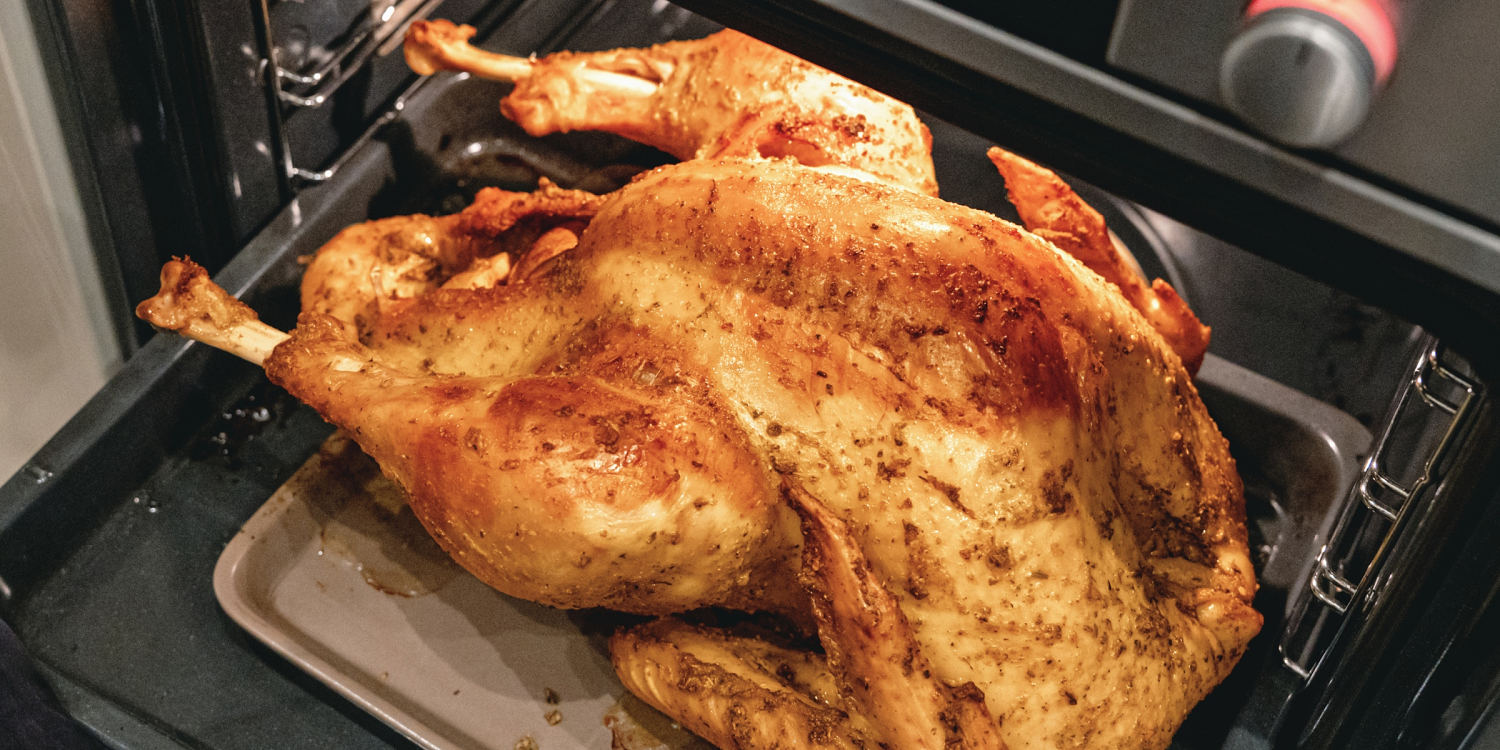
The traditional high-sided roasting pan is a culinary trap engineered to sell heavy metal, not to cook poultry. When you drop a cold, massive turkey into a deep metal box with three-inch walls, you aren't roasting it. You are steaming it in its own stagnant air pocket while shielding the most vulnerable parts of the bird from radiant heat.
If you want golden, glass-shattering skin and breast meat that doesn't taste like dry sawdust, the best turkey roasting pan on the market isn't a roasting pan at all. It is a $15 heavy-duty rimmed baking sheet paired with a flat wire cooling rack. To explore the full picture, we recommend the detailed report by Cosmopolitan.
The Physics of the High-Wall Trap
To understand why standard roasting pans fail, you have to look at how heat moves inside a domestic oven. You are relying on two primary mechanisms: radiation from the oven walls and convection from circulating hot air.
A traditional roasting pan features walls anywhere from two-and-a-half to four inches high. Those walls act as physical barriers. They deflect hot air up and over the bird rather than allowing it to circulate around the lower half. Instead of dry, swirling heat rendering the fat on the thighs and drumsticks, those parts sit in a humid microclimate trapped at the bottom of the pan.
Here is the thermodynamic disaster that follows:
- Uneven Cooking Rates: The exposed top of the turkey breast absorbs direct radiant heat from the oven ceiling, cooking rapidly. Meanwhile, the dark meat—which actually needs to reach 175°F to 185°F to break down tough connective tissue and collagen—is stuck in a shielded, cooler zone at the bottom of the pan.
- The Dry Breast Guarantee: By the time the shielded thighs finally reach a safe, tender temperature, the exposed breast has blown past 155°F and hit 175°F. At that temperature, muscle fibers contract violently and squeeze out every drop of moisture. No amount of brining or butter-basting can save overcooked protein.
- Soggy, Rubbery Skin: Crispy skin requires rapid moisture evaporation and high surface heat to trigger the Maillard reaction. High pan walls trap steam rising from the pan drippings, bathing the underside and sides of the bird in humidity. You get pale, flabby skin everywhere except the very top ridge.
I have watched home cooks spend $300 on clad copper-core roasting pans, agonize over artisanal heritage birds, and still end up carving dry breast meat next to underdone, chewy legs. They blame the oven. They blame the turkey. They never blame the giant metal bathtub blocking the airflow.
Why V-Racks Are a Design Flaw
Almost every "best roasting pan" roundup praises the inclusion of a V-shaped wire rack. Reviewers love how it cradles the bird. They rarely mention how it destroys the skin.
A V-rack presses thick metal wires directly into the side of the turkey breast and ribs under the weight of a 15- to 20-pound animal. Those contact points conduct heat unevenly, tearing the delicate skin when you try to lift the bird out. Worse, the V-shape forces the legs upward and inward, tucking the thighs closer to the body and further insulating them from heat.
Contrast that with a flat, heavy-gauge stainless steel cooling rack set inside a standard half-sheet pan (18 by 13 inches).
When a turkey rests on a flat grid, air circulates freely underneath the entire carcass. Radiant heat bounces off the shallow aluminum surface of the sheet pan and hits the underside of the bird. Every square inch of skin is exposed to dry, moving air. The result is uniform browning from top to bottom, with zero torn skin when it is time to transfer the bird to a cutting board.
Dismantling the "Budget and Bird Size" Myth
Competitor buying guides love categorizing pans by bird weight: Best for 12-pound birds, Best for 24-pound monsters. This framing buys into another destructive Thanksgiving habit—buying massive, single turkeys.
A 22-pound turkey is a geometric nightmare. The distance from the exterior skin to the deep thigh joint is so thick that the outside will inevitably burn or dry out before the core reaches safe temperatures.
If you are feeding twenty people, buying one giant bird is amateur hour. Buy two 11-pound turkeys instead. Two smaller birds cook in nearly half the time, yield a vastly higher ratio of crispy skin to meat, and fit comfortably on two standard sheet pans staggered on your oven racks.
Even if you insist on cooking a single 16-pound bird, a commercial-grade half-sheet pan easily handles the footprint. And what does it cost? About $15 to $20 at any restaurant supply store. You do not need "budget tiers" for a piece of equipment that shouldn't exist in your kitchen.
The Heavy Hitters Already Know This
This isn't a fringe internet theory. Culinary science authorities have been screaming this from the rooftops for over a decade, yet cookware marketers keep drowning them out with glossy holiday catalogs.
J. Kenji López-Alt, author of The Food Lab, famously dismantled the traditional roasting pan setup years ago, demonstrating through side-by-side thermocouple testing that a rimmed baking sheet and wire rack outperforms high-sided roasters in both skin crispness and temperature uniformity. America's Test Kitchen reached similar conclusions in their rigorous equipment trials, repeatedly noting that low sides are essential for proper browning and airflow.
If you want to take this principle to its logical extreme, you combine the sheet pan setup with spatchcocking—removing the backbone with poultry shears and flattening the bird completely.
When you lay a spatchcocked turkey flat on a wire rack over a rimmed sheet pan:
- All the skin faces upward toward the primary heat source.
- The dark meat sits slightly higher and closer to the heat, allowing thighs to hit 175°F at the exact same moment the breast hits 155°F.
- A 14-pound turkey cooks in roughly 80 minutes instead of four hours.
Try doing that in a narrow, high-walled traditional roasting pan. You can't. The walls literally won't let the bird lie flat.
The Honest Downsides of the Sheet Pan Method
No tool is magic, and pretending a sheet pan has zero flaws would be dishonest. If you ditch the traditional roasting pan, you have to manage three real operational hazards.
1. The Spill Risk
A standard half-sheet pan has a rim that is only one inch high. As a 16-pound turkey roasts, it renders fat and releases juices. If you pull that pan out of the oven carelessly with one hand, hot liquid will slosh over the low edge onto your oven door—or worse, onto your feet.
The Fix: Never move a loaded sheet pan with one hand. Always use both hands with dry, thick oven mitts, and slide the oven rack out first rather than lifting the pan directly off the grates. Better yet, place a layer of sturdy parchment paper or heavy-duty foil on the pan base—not to catch overflows, which it won't, but to make scrubbing baked-on drippings effortless.
2. Dripping Scorch and Smoke
Because a sheet pan is wide and shallow, pan drippings spread out into a thin film across a large surface area. Without the insulation of high walls, that thin layer of liquid evaporates quickly. Once the water evaporates, the remaining proteins and sugars can scorch, setting off your smoke detector and ruining your gravy base.
The Fix: Pour one cup of water or chicken stock into the bottom of the sheet pan before it goes into the oven, and add another half-cup halfway through roasting. Keep a thin layer of liquid covering the pan floor so the drippings stay dissolved and golden rather than carbonized.
3. The Stovetop Gravy Limitation
One legitimate selling point of heavy-duty, tri-ply stainless steel roasting pans is that you can set them directly across two stovetop burners after removing the turkey to deglaze the fond and whisk together a pan gravy. Thin aluminum sheet pans warp over direct burner flames and conduct heat too aggressively, burning flour roux in seconds.
The Fix: Simply pour the liquid drippings from the sheet pan into a proper saucepan or Dutch oven on your stove. Use a splash of hot stock and a wooden spoon to scrape the browned bits off the sheet pan and pour those in too. You get superior gravy control in a real saucepan without burning your hands on giant, awkward roasting pan handles.
Brutally Honest Answers to Your Roasting Pan Questions
Search engines are full of frantic November questions built on faulty assumptions. Let's clear the board.
What size roasting pan do I need for a 20-pound turkey?
You don't need a pan for a 20-pound turkey because you shouldn't buy a 20-pound turkey. Split the order into two 10- to 12-pound birds and roast them on two 18-by-13-inch half-sheet pans. If you already bought the 20-pounder, put it on a heavy-gauge half-sheet pan with a flat rack and pray your oven runs evenly.
Is stainless steel or aluminum better for roasting a turkey?
For a shallow sheet pan, heavy-gauge (13-gauge or thicker) uncoated aluminum is superior. It heats up rapidly, reflects radiant energy efficiently toward the underside of the bird, and costs a fraction of stainless steel. Save stainless steel for saucepans and skillets where non-reactive surfaces matter for acidic sauces.
Can I use a disposable foil roasting pan?
Only if you enjoy wearing hot turkey grease. Disposable aluminum pans buckle under the weight of a heavy bird the second you lift them. If you are forced to use one at a relative's house, slide a sturdy cookie sheet underneath it before putting it in the oven so it has a rigid spine.
Do I need a roasting pan with a lid?
Never. Putting a lid on a turkey turns your oven into a giant steamer. You will end up with boiled-tasting meat and wet, rubbery skin. If the breast browns too fast near the end of cooking, tent a piece of aluminum foil loosely over just the breast meat—leave the rest of the bird exposed.
What to Actually Buy Instead
Stop browsing $250 cookware sets you will use once every 365 days and store in your garage the other 364. Walk into a restaurant supply store or order these three commercial staples:
- Two Heavy-Gauge Aluminum Half-Sheet Pans (18" x 13"): Look for 13-gauge thickness with a reinforced steel-wire rolled rim so they never warp at 450°F. They will cost you around $15 each, and you will use them every single week for roasting vegetables, baking cookies, and broiling fish.
- Two Stainless Steel Wire Cooling Racks (16.5" x 11.5"): Make sure they are 100% stainless steel with welded crossbars—skip anything with nonstick coatings that flake off under high heat. They nest right inside the half-sheet pans.
- A Fast-Read Digital Probe Thermometer: An instant-read thermometer gives you exact internal temperatures in two seconds. Stop relying on those useless plastic pop-up timers embedded in the turkey breast; they are calibrated to pop around 180°F, which is 25 degrees past dry.
Cancel the order on the oversized roasting pan, pull a standard baking sheet out of your cabinet, and start actually roasting your food instead of steaming it in a metal box.