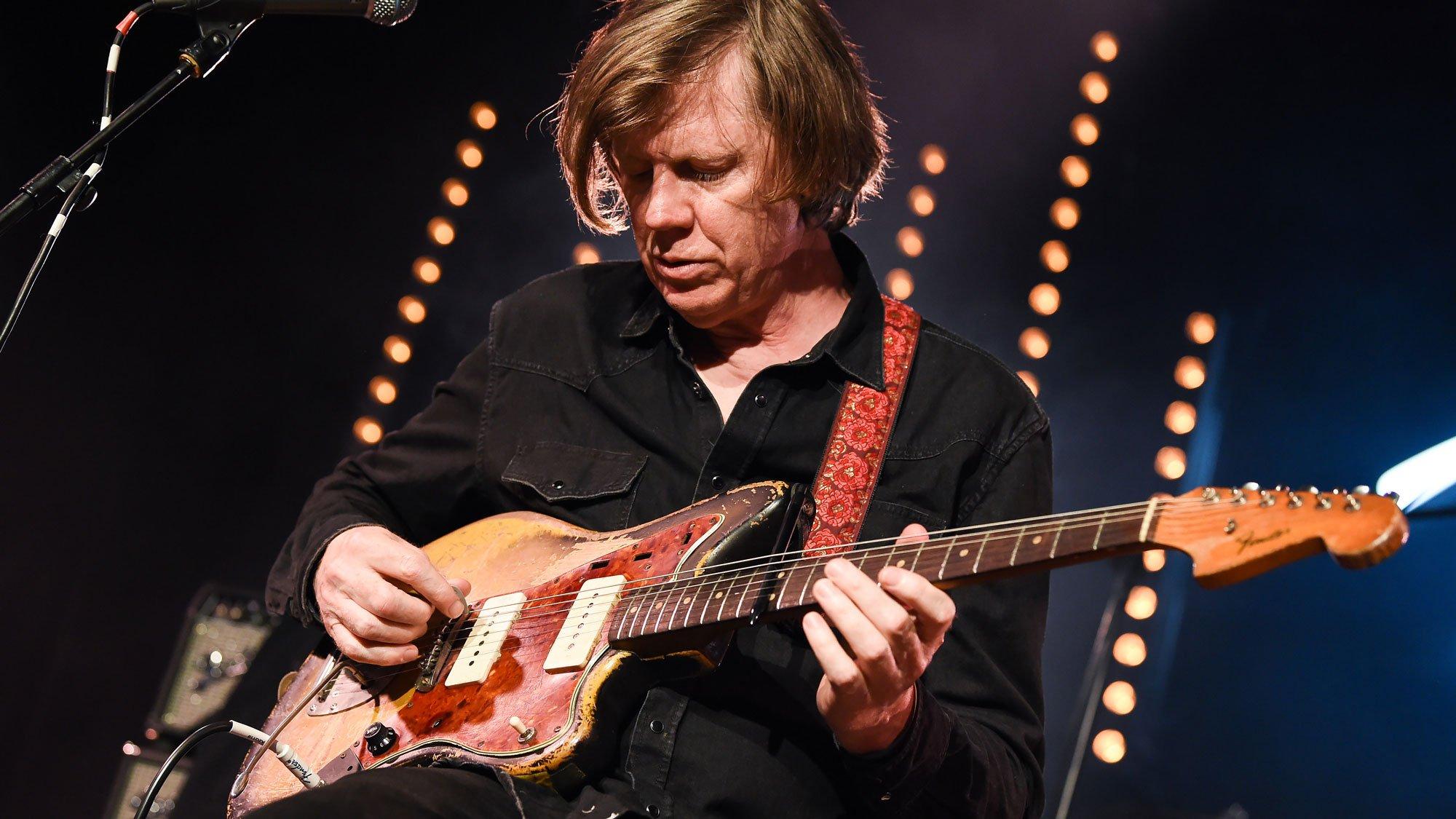
Thurston Moore’s obsession with free jazz is not a hobby. It is a long-standing structural blueprint for how he survived the collapse of the traditional music industry. While casual observers might view his upcoming book, The Master’s Notebook, as a mere fan’s tribute to the likes of Cecil Taylor and Sun Ra, the reality is far more calculated. Moore is documenting a survival strategy. By mapping the history of "Fire Music," he is effectively justifying his own shift from the stadium-filling noise-rock of Sonic Youth to a more sustainable, if more difficult, existence in the avant-garde underground.
This isn’t just about records. It is about the economics of the outsider.
The Architecture of a Noise Obsession
To understand why a man who once headlined festivals is now spending his time cataloging rare 1960s broadsides, you have to look at the math of the mid-career musician. The "Alternative Nation" of the 1990s promised a permanent seat at the table for artists who could bridge the gap between pop and the abyss. When that promise evaporated, many of Moore's contemporaries retreated into nostalgia tours or total obscurity.
Moore went the other way. He doubled down on the difficult.
Free jazz provided the intellectual cover for this pivot. Unlike the rigid structures of rock, the avant-garde thrives on scarcity and myth-making. By positioning himself as a scholar-practitioner of this lineage, Moore ensures his relevance remains untethered to the charts. He is no longer competing with younger versions of himself; he is joining a historical continuum that values gray hair and grit over hooks and hits.
The Myth of the Radical Archive
The new book focuses heavily on the ephemera of the movement—the hand-printed posters, the self-released vinyl, and the frantic energy of a scene that was ignored by the mainstream while it was happening. Moore isn’t just collecting these items. He is canonizing them.
There is a specific power in the physical object. In an era where digital streaming has flattened the value of music to nearly zero, Moore’s focus on the "Notebook" reminds us that art used to be a physical burden. You had to find it. You had to carry it. This gatekeeping isn't accidental. It creates a hierarchy of taste that places Moore at the top, not as a rock star, but as a curator of the sacred.
Why Free Jazz Matters Now
Critics often dismiss free jazz as "unlistenable," a lazy shorthand for anything that refuses to provide a steady beat. But for an industry analyst, free jazz is the ultimate "anti-commodity." It cannot be easily packaged into a thirty-second social media clip. It requires a level of attention that the modern attention economy is designed to destroy.
Moore’s obsession is a direct challenge to this erosion of focus. By documenting the "unlistenable," he is forcing a conversation about the value of difficulty. If art is easy to consume, is it actually doing its job? Moore argues, through his curation, that the friction is the point.
The history of the genre is also a history of social defiance. The artists Moore champions—Ornette Coleman, Albert Ayler, Peter Brötzmann—were often working in extreme poverty and under intense political pressure. They weren't just playing loud; they were playing for their lives. Moore’s work attempts to bridge his own experience in the New York No Wave scene with this older, more radical tradition. It’s a way of saying that the noise wasn’t just a stylistic choice; it was a necessity.
The Commercial Reality of the Avant Garde
Let’s be blunt about the business side of this. Writing a book about your record collection is a classic move for a veteran artist looking to diversify their revenue streams. There are only so many times you can tour Europe playing the "hits." A book, however, establishes authority. It opens doors to university lectures, museum curated performances, and high-end gallery installations.
- The Authority Move: Shifting from "performer" to "expert."
- The Scarcity Move: Focusing on rare, physical artifacts to drive interest in limited-edition releases.
- The Legacy Move: Linking your own name to the giants of a previous generation to solidify your place in the history books.
Moore is excellent at this. He has managed to maintain a "cool" factor that most 66-year-olds would kill for, largely because he never stopped looking for the next weird thing.
The Sound of Breaking Things
If you listen to Moore’s recent solo work or his collaborations with jazz drummers, the influence of the archive is obvious. He has stripped away the verse-chorus-verse safety net. What remains is a skeletal, percussive approach to the guitar that owes more to Cecil Taylor’s piano than to Jimi Hendrix’s blues.
This isn’t always a comfortable transition for the fans. There is a tension between the person who wants to hear "Teen Age Riot" and the person willing to sit through forty minutes of feedback. Moore is betting on the latter. He is betting that there is a global audience large enough to support a "difficult" artist if that artist has the credentials to back it up.
The "Master’s Notebook" is that credential. It is the proof of work.
The Overlooked Cost of Curation
There is a danger in this kind of obsession, though. When an artist becomes a collector, there is a risk that the collection starts to overshadow the creation. We have seen this happen before. Musicians get so caught up in the "purity" of the past that they stop making anything that sounds like the future.
Moore avoids this by remaining a chaotic element himself. He isn’t just looking at the notebooks; he is still trying to write in them. However, the sheer volume of his output—the books, the magazines, the endless stream of live recordings—suggests a man who is terrified of being forgotten. He is building a wall of paper and vinyl to protect himself from the silence.
The Counter Argument: Is it Just Elitism?
One could easily argue that Moore’s obsession is a form of cultural tourism. A wealthy white rock star co-opting the struggles and sounds of Black avant-garde pioneers is a narrative we've seen a thousand times. Does his book acknowledge the systemic barriers that his heroes faced, or does it merely treat their suffering as a "vibe" to be analyzed?
To Moore’s credit, his history with the Ecstatic Peace! label and his various publishing ventures suggests a genuine commitment to the community. He isn't just taking; he's documenting scenes that would otherwise be lost to time. But the power dynamic remains. Moore has the platform to speak for these artists, which means he also has the power to silence the parts of their story that don't fit his "noise-hero" narrative.
A Blueprint for the Post-Rock Era
The music industry is currently in a state of terminal fragmentation. There is no center. There is no mainstream. In this environment, the only way to survive is to build a cult.
Thurston Moore has built one of the best. By leaning into his obsession with free jazz, he has created a brand that is immune to the whims of the streaming algorithms. You don't listen to Moore because he's on a playlist; you listen to him because you've bought into the world he has spent decades constructing.
The Master’s Notebook is more than a book about jazz. It is a manual for how to stay relevant in a world that wants to turn you into a legacy act. It is about the refusal to go quietly. It is about the belief that if you play loud enough and collect enough history, you might just live forever.
Go to a record store. Find a copy of something you don’t understand. Buy it. That is the only way to see if Moore is right.