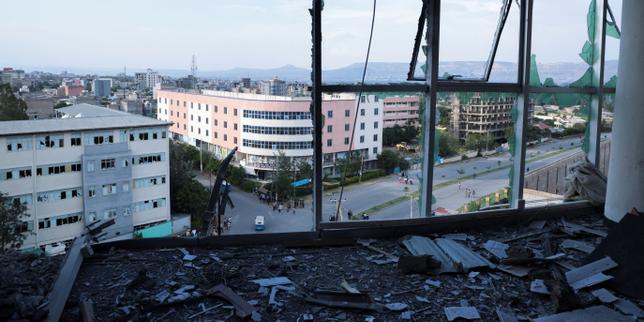
The headlines rolled out with predictable uniformity across international news desks. When Tigrayan forces withdrew from Mekelle, the regional capital, mainstream reports framed the movement through a tired, standard geopolitical lens: a government victory, a rebel retreat, and a humanitarian breakthrough.
Every single element of that consensus is fundamentally wrong.
If you look at the Tigray conflict as a traditional chess match where territory gained equals winning and territory lost equals defeat, you are missing the entire operating system of modern asymmetric warfare. Territorial possession in the Horn of Africa is a liability, not an asset. Holding urban centers while supply lines are choked, populations are exhausted, and economic levers are controlled by hostile federal apparatuses is an administrative trap.
Stepping back is not surrender. It is operational restructuring.
The Geography of Exhaustion
Let us strip away the diplomatic theater and look at the physical reality on the ground. Mekelle is a city that has bore the brunt of blockades, infrastructure collapse, and severe scarcity. To treat its occupation or abandonment as a barometer of moral or military dominance ignores how regional insurgencies actually survive.
The lazy narrative assumes that abandoning a capital city signals a collapsing command structure. History suggests the exact opposite. Insurgency doctrines from Mao to modern Sahelian conflicts teach a basic lesson: armies that anchor themselves to fixed urban coordinates to satisfy foreign press briefings usually end up surrounded, starved, and pulverized.
When Tigray Defense Forces pulled back, they weren't fleeing; they were shedding the dead weight of urban administration during a humanitarian chokehold. Maintaining a sprawling bureaucratic footprint in a contested city drains ammunition, fractures logistics, and provides a stationary target for drone warfare.
The Myth of the Clean Military Solution
For years, international observers have searched for a clean, negotiated peace modeled on Western institutional frameworks. This is a category error. Conflicts rooted in decades of ethnic federalism, constitutional ambiguity, and regional militarization do not resolve because a communique is signed in Pretoria or Nairobi.
The federal government in Addis Ababa faces its own structural crisis of overextension. Projecting power across vast distances requires financial reserves and administrative stability that are perpetually stretched thin. When analysts claim that rebel withdrawals mark the restoration of central authority, they ignore the phantom economy of resentment and low-intensity resistance that persists beneath the surface.
Peace agreements that look good on diplomatic letterhead routinely fail because they prioritize the optics of state sovereignty over the messy reality of local security architectures. You cannot decree reconciliation from a capital city while local populations remain deeply traumatized and economically isolated.
Rethinking the Horn
If we want to understand what comes next in Ethiopia, we must abandon the binary scoreboard of victors and vanquished. The real metric of stability is not who plants a flag over regional government offices in Mekelle. It is whether the underlying grievances—economic disenfranchisement, representation, and security guarantees—are being addressed or merely suppressed.
Until policymakers accept that regional actors operate on decentralized survival logic rather than Westphalian state ambitions, every major forecast on the region will miss the mark.
The capital was never the prize. It was just the noise.