The sea does not negotiate. It does not pause for petitions, nor does it adjust its temper for the fragility of human ambition. It only pounds, swells, and swallows.
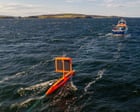
Out there, where the map dissolves into a white, unmarked border at the bottom of the globe, a small vessel is climbing a mountain of dark green water. It is not a titan of steel. It is a humble craft, barely noticeable against the sheer, crushing scale of the Southern Ocean. Yet it carries a burden far heavier than its own tonnage: the answers to how our world is unravelling.
For months, this little ship will chew through twenty-two thousand kilometers of the most treacherous waters known to humanity. It will endure freezing gales that strip paint from metal, waves that dwarf lighthouses, and an isolation so profound that the crew can feel the curvature of the planet beneath their boots. This is not an expedition of conquest. It is an act of listening.
To understand why this journey matters, you have to step away from graphs and satellite readouts. You have to stand on a rolling deck at three in the morning, tasting salt on your lips, listening to the groaning frame of a ship taking a beating from swells born five thousand miles away.
Consider what happens in the deep south. Antarctica is the great regulator of our atmospheric engine. Its frozen breath cools the planet; its currents pump oxygen and nutrients into the veins of the global ocean. But this engine is stuttering. The ice is coughing up secrets we spent centuries ignoring, and the ocean is absorbing carbon dioxide at a frantic, exhausting pace.
Inside the cramped galley of the vessel, Elena shifts a heavy mug of black coffee between calloused hands. She is an oceanographer, though right now she mostly feels like a piece of cargo sliding across a linoleum floor. Her eyes are rimmed with red from sleep deprivation and the unrelenting glare of sea spray frozen to the glass.
"People talk about climate change as if it is happening somewhere up in the sky," Elena says, her voice cutting through the deep, rhythmic thrum of the diesel engine. "They look at a thermometer on a city sidewalk and think they understand the pulse. They do not. The real story is down here, hidden beneath miles of black water and blinding foam."
She points a finger at a glowing monitor strapped securely to the bulkhead. Green lines dance across the screen, tracking salinity, temperature, and dissolved gases. Every dip and spike represents a conversation between the ocean and the atmosphere, written in a language we are only beginning to translate.
The Southern Ocean is a giant sponge. It acts as Earth’s primary shock absorber, soaking up excess heat and carbon emissions generated by human activity thousands of miles away. But a sponge has limits. When it saturates, the physics of our entire biosphere shift. The water becomes acidic, chewing away at the microscopic foundations of marine life. Currents that have maintained a steady rhythm for millennia begin to stall or accelerate, altering weather patterns across continents.
Yet, for all its planetary importance, vast stretches of these southern waters remain a blank space on scientific charts. Satellites can measure surface temperatures from space, but they are blind to what happens beneath the skin of the waves. They cannot taste the water. They cannot measure the carbon dioxide pressure five hundred meters down. They cannot feel the sudden, violent shifts in density where warm sub-tropical currents collide with polar meltwater.
That is why this ship is here.
The journey is a gauntlet. The Drake Passage alone is enough to test the nerve of seasoned mariners. Here, the Atlantic, Pacific, and Indian oceans slam together in a narrow funnel, unobstructed by continental landmasses. The winds circle the pole in an unbroken sprint, generating waves that can rise forty feet high—walls of water capable of picking up a steel ship and tossing it like driftwood.
On board, every movement is calculated. Walking down a hallway requires three points of contact. Sleep is an art form practiced wedged between a mattress and a safety rail. Equipment is double-bolted, then strapped, then watched with hawk-like vigilance. A single unsecured wrench can become a lethal projectile when the ship rolls thirty degrees to port in the middle of the night.
Marcus, the chief engineer, has spent thirty years at sea. He knows every metallic groan the hull makes. He can tell the difference between a wave slapping the bow and a structural stress point begging for mercy.
"Everyone thinks technology makes us safe out here," Marcus remarks, wiping grease from a knuckle with a stained rag. "It doesn't. Technology just lets us go deeper into places where we shouldn't be. The ship keeps us alive, but the ocean decides if we come back."
He is not being cynical. He is being realistic. In the Southern Ocean, human arrogance is stripped away within the first forty-eight hours. You realize very quickly that you are an uninvited guest in a realm belonging entirely to wind, ice, and deep water.
The scientific work does not stop for weather. In fact, the worst weather often brings the most vital data. When the gales howl and the surface churns, the exchange of gases between air and sea reaches its peak. Sensors must be dropped over the side on winches that groan under tension. Water samples must be drawn, bottled, cataloged, and analyzed before the ship's motion scrambles the chemistry.
Every sample tells a piece of a larger story. It tells us how fast the overturning circulation is slowing down. It tells us how much carbon is sinking into the abyss and how much is being burped back up. It provides the hard, unvarnished numbers that policymakers need—and often try to ignore—when drafting agreements that affect billions of lives.
We live in a time of abstract urgency. Fires rage across continents; floods swallow towns; glaciers retreat with terrifying speed. Yet, because these events are broadcast on screens, they can feel distant, like scenes from a movie playing in another room.
This journey strips away that comfortable detachment.
When you watch a single research vessel brave the freezing emptiness of the Antarctic circle, the scale of the problem snaps into focus. It is not an abstract crisis. It is a physical reality being measured by tired humans working in cramped rooms while freezing spray turns to ice on the deck rails.
The mission is grueling, expensive, and dangerous. It offers no immediate economic payoff. It does not promise comfort or convenience. What it offers is truth.
And truth, in an era defined by comfortable illusions, is the most radical thing we have left.
The ship crests another swell, pausing for a fraction of a second at the precipice before sliding down into the trough. Ahead lies thousands of miles of gray horizon, towering icebergs drifting like silent monoliths, and the fierce, unyielding wind.
Elena turns back to her monitors. The green lines keep dancing. The data keeps flowing. Somewhere out in the dark, the ocean continues its ancient, heavy breathing, keeping time for a world that refuses to listen until the water is already at the door.