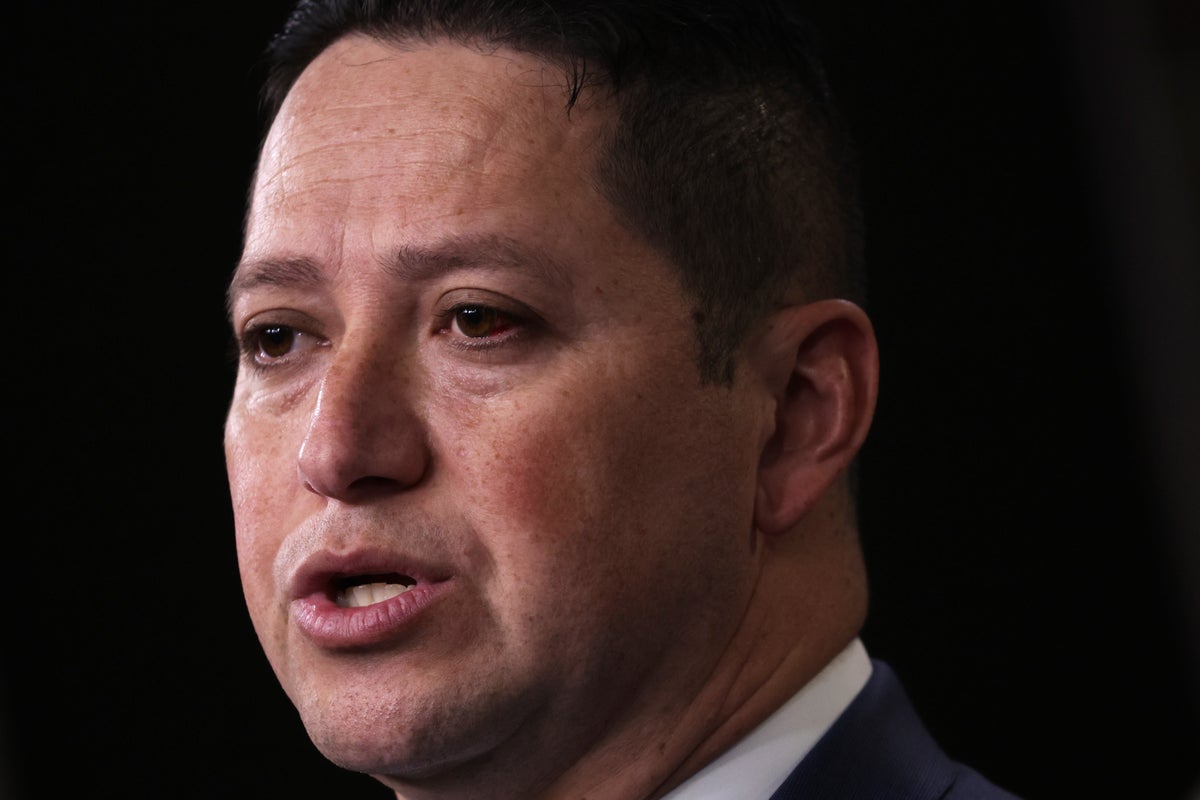
The second wave has hit, and it is more damning than the first. On Monday, fresh allegations surfaced against U.S. Representative Tony Gonzales, a Republican from Texas, as a second former staffer came forward with a massive archive of sexually explicit text messages. This development effectively shatters the narrative that Gonzales’s previous admission of an affair was an isolated "lapse in judgment." Instead, the mounting evidence points toward a systemic pattern of what the victim describes as "sexual bullying" within a high-stakes political office.
The timing is catastrophic for the embattled congressman. Gonzales had already announced he would not seek re-election in March after admitting to a relationship with another aide, Regina Santos-Aviles. That admission only came to light after the tragic death of Santos-Aviles, who died by suicide in late 2025. This second accuser, who served as the political director for his 2020 campaign, has provided hundreds of messages that detail a relentless, weeks-long effort by Gonzales to initiate a sexual relationship and solicit nude photographs.
The Anatomy of Sexual Bullying
This isn’t just about "inappropriate" texts. It is about the leverage of power. The former political director described the experience as "dealing with a toddler," constantly trying to redirect a superior who refused to accept "no" as an answer. According to reports first broken by the San Antonio Express-News, Gonzales allegedly asked for nude photos more than a dozen times over a three-day window.
The behavior fits a classic predatory profile: the persistent testing of boundaries, the refusal to acknowledge professional distance, and the use of a high-pressure environment to wear down resistance. Unlike the relationship with Santos-Aviles, this accuser maintains that the interaction never became physical, despite Gonzales allegedly visiting her home twice. She stayed in her role not out of desire, but out of the professional necessity that often keeps young political operatives tethered to their superiors.
A Culture of Protected Silence
The real story isn't just Gonzales; it's the Capitol Hill machine that allowed this to simmer for years. Representative Nancy Mace has been vocal about the "disgusting" nature of these texts, but she is also pointing her finger at a broader institutional failure.
“Both parties colluded today to protect predators,” Mace stated after a recent failed floor vote. “They voted to keep sexual harassment records buried, and they did it together.”
The House Ethics Committee is currently investigating whether Gonzales violated conduct codes by engaging in sexual misconduct or dispensing "special favors" to subordinates. However, the history of these committees suggests they often act as a vacuum where scandals go to die quietly. The "slush fund" used to settle harassment claims with taxpayer money remains largely shielded from public view, creating a safety net for members of Congress that their constituents in the private sector would never enjoy.
The Financial Trail and the Suicide of Regina Santos-Aviles
To understand the gravity of the Gonzales case, one must look at the tragic end of his first known affair. Regina Santos-Aviles, a regional district director in Uvalde, took her own life in September 2025. Her widower, Adrian Aviles, has since released forensic downloads of her phone that show Gonzales making explicit sexual requests as recently as 2024.
Even more troubling are the financial anomalies. Records show that Santos-Aviles’s pay spiked significantly in 2024—the same year the affair allegedly took place. This raises a critical question for investigators: Was taxpayer-funded compensation used as a tool to maintain an illicit relationship? If a salary increase was tied to sexual favors, the scandal moves from personal immorality into the territory of federal crimes and the misappropriation of public funds.
The GOP Internal Fracture
The Republican party is currently eating itself over the Gonzales fallout. While leadership finally pressured him to drop his runoff bid, the delay was palpable. Figures like Rep. Anna Paulina Luna have moved to censure him, while others have remained silent, fearing the precedent that full transparency might set for their own ranks.
Gonzales currently intends to serve out his term until January 2027. This lame-duck status creates a vacuum in his district and a liability for a party trying to maintain a thin majority. The emergence of the second staffer has removed his ability to claim the Santos-Aviles tragedy was a unique, regrettable mistake. It was a strategy.
The professionalization of sexual harassment in Congress thrives on the "political differences" excuse. The second staffer didn't quit immediately because of the texts; she eventually left due to policy disagreements and began working for Brandon Herrera, Gonzales’s primary opponent. This detail is often used by defenders of the status quo to claim allegations are "politically motivated," yet it ignores the reality that in Washington, your boss is often the only person who can keep your career alive or kill it.
The push for a full release of every sexual harassment record held by the House Ethics Committee is the only way to break this cycle. Until the names on those settlements are made public, the "sexual bullying" described by Gonzales’s former staffer will remain a standard feature of the American political landscape, rather than a fireable offense. The tragedy in Uvalde should have been the end of the story. Instead, it was just the opening of a very dark ledger.
Exposure is the only disinfectant.