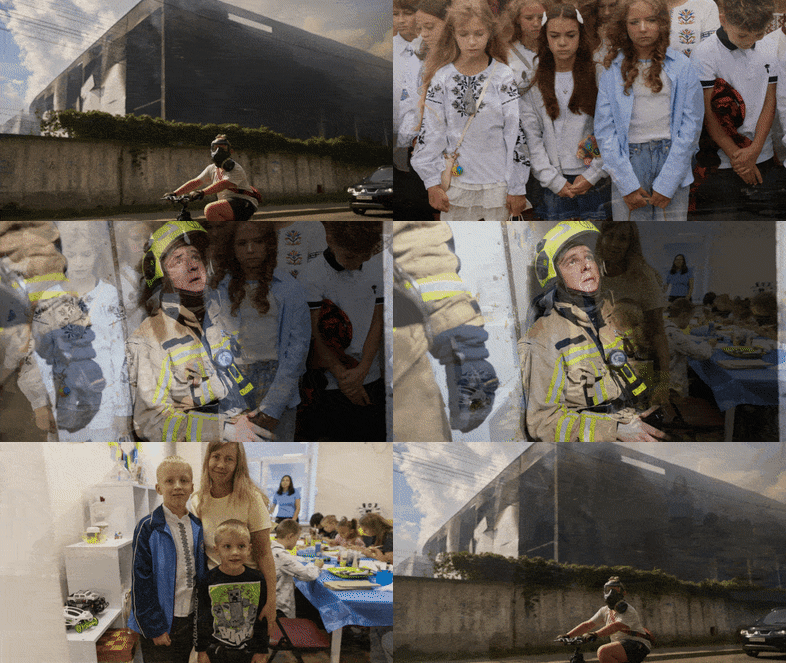
War doesn't stay neatly confined to front lines. When massive state violence shatters a nation's borders, the concept of a civilian rear guard evaporates overnight. Total war reshapes every heartbeat, turning living rooms, bakeries, and schoolyards into active components of a vast, suffering survival machine.
If you look past the daily casualty figures and military briefings, you find millions of ordinary people caught in an absolute storm. They aren't soldiers, but they carry the heavy weight of a conflict that demands everything they have. Let's break down what this human cost actually looks like on the ground when entire societies get dragged into total confrontation.
The Shrinking Safe Zone
Modern mechanized combat doesn't respect old-fashioned boundaries. Artillery shells and cruise missiles don't check IDs to see if someone is wearing a uniform before striking an apartment complex.
When infrastructure collapses, the definition of the frontline changes. Cities hundreds of miles away from the trenches suddenly become frontline zones because their power stations, water grids, and railway junctions are targeted to starve the war effort of momentum.
You wake up to sirens. You learn to read the specific whistle of incoming ordnance versus outgoing defense batteries. Basements transform into makeshift bomb shelters where neighbors share stale bread and whisper about who managed to charge their phone generator today.
People caught in these zones face an impossible choice. Do you stay in your ancestral home with all its memories, risking death from the next blast wave? Or do you pack a single suitcase, leave your aging parents or pets behind, and join the endless sea of refugees moving west toward uncertain futures?
Daily Survival as an Act of Resistance
When the economy implodes, just staying alive takes a full-time job. Currency loses its value. Supermarket shelves empty out within hours of a delivery.
Communities adapt through sheer grit. Grassroots volunteer networks pop up overnight to cook thousands of meals in cast-iron pots over open fires on sidewalks. Teachers become logistics coordinators, distributing medical kits and sleeping bags instead of algebra homework.
You see grandmothers knitting heavy wool socks for men and women they've never met on the eastern front. Mechanics weld scrap steel into anti-tank barriers in dark garages lit only by flashlights. Everyone contributes because neutrality stops being an option when destruction knocks directly on your door.
This hyper-localized resilience keeps society from completely fracturing. Yet, it takes an immense psychological toll. Chronic sleep deprivation, constant adrenaline spikes, and the grief of losing friends wear people down faster than physical labor ever could.
The Invisible Wounds That Last Generations
Physical rebuilding takes concrete, steel, and billions of dollars. Repairing a bridge or paving a cratered highway is straightforward engineering. But healing a society ripped apart by total conflict is a multi-generational project.
Children growing up with the deep rumble of explosions learn to flinch at backfiring cars. Classrooms are conducted online from damp basements or hastily constructed bunkers. The social fabric frays under the pressure of mass displacement, separation of families, and the pervasive trauma of loss.
Families split across international borders struggle to maintain bonds over crackling phone lines and intermittent internet connections. Millions live in temporary housing blocks, wondering if the town they fled still has a roof to return to.
Confronting the Human Reality
We tend to view major geopolitical conflicts through the cold lens of maps, troop movements, and tactical gains. That detachment lets us forget the human cost ticking away in every ruined town and crowded transit station.
Total war strips away the illusions of safety and routine, forcing ordinary individuals to display extraordinary endurance just to see another sunrise. Remembering their faces and their choices is the only real way to grasp the true magnitude of what happens when diplomacy fails completely.


