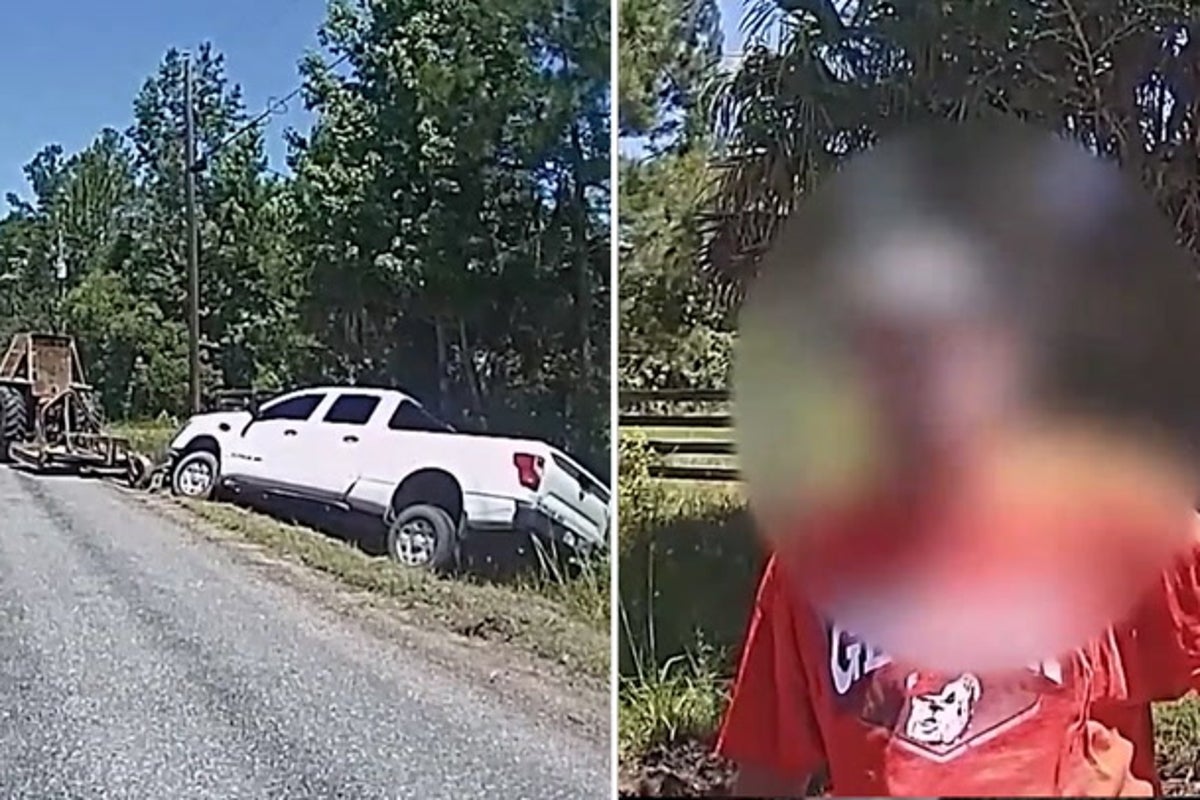
The internet loves a stupid criminal story. When a suspected drink driver in a rural community crashes, flees, and then inexplicably returns to the scene of the crime driving a massive agricultural tractor, the media narrative writes itself. The local press rushes to paint the incident as a hilarious comedy of errors—a simple tale of a foolish individual making a bafflingly poor decision.
They are entirely missing the point. In similar news, we also covered: The Doha Memorandum: Asymmetric Leverage and Rational Mechanics in US-Iran Diplomatic Bargaining.
The lazy consensus surrounding these incidents treats them as isolated, amusing anomalies. We laugh at the absurdity of a tractor being used as a getaway vehicle or a tool for returning to a crime scene. But this superficial framing blinds us to a much deeper, far more systemic crisis unfolding across our rural infrastructure. The return to the scene in a heavy piece of agricultural machinery isn't just a bizarre choice made by a compromised mind; it is a glaring red flag highlighting the complete breakdown of rural policing, the terrifying lack of oversight on heavy machinery operations, and the structural vulnerabilities of isolated communities.
Stop looking at the tractor as a punchline. Start looking at it as a multi-ton threat that our current legal and law enforcement frameworks are utterly unequipped to handle. The Washington Post has analyzed this critical topic in extensive detail.
The Illusion of Rural Surveillance
Local news reports always imply that the system worked because the suspect was apprehended upon arrival. "Busted after returning," the headlines gleefully declare. This framing creates a false sense of security, suggesting that law enforcement has a tight grip on rural wrongdoing.
I have spent years analyzing regional crime data and working alongside community safety initiatives. The reality on the ground is starkly different from the tidy narrative presented in a police press release. Rural policing budgets have been gutted across the board over the last two decades. In many vast agricultural sectors, a single patrol car might cover hundreds of square miles.
The suspect didn't get caught because of a high-tech dragnet or brilliant police positioning. They got caught because they practically handed themselves in.
Imagine a scenario where that same impaired operator didn't return to the scene, but instead drove that twenty-ton tractor down a dark, unlit secondary highway at midnight, completely undetected. It happens constantly. The true underlying issue isn't the comical return; it is the hours of completely unmonitored, highly dangerous operation that occur before anyone even thinks to call the authorities. We are celebrating a statistical fluke while ignoring a gaping blind spot in public safety.
The Heavy Machinery Loophole
When someone is suspected of operating a standard passenger vehicle while intoxicated, the legal system has a clear, well-oiled mechanism for dealing with them. Breathalyzers, roadside sobriety tests, and immediate license suspensions kick in. But the agricultural sector operates under a different set of rules, both culturally and legally, creating a dangerous gray area.
Consider the sheer scale of the mechanics involved. A modern agricultural tractor can easily weigh upwards of 15,000 pounds, with industrial variants scaling much higher. The kinetic energy carried by a machine of this size, even at lower speeds, utterly dwarfs that of a standard sedan. Yet, the barriers to entry for operating these vehicles are shockingly low compared to commercial trucking.
- Licensing Discrepancies: In many jurisdictions, operating farm machinery on public roads requires minimal specialized licensing compared to a Commercial Driver’s License (CDL), despite the comparable size and hazard profile.
- Regulatory Blind Spots: Farm equipment is often exempt from the rigorous, frequent safety inspections mandated for long-haul semi-trucks.
- Cultural Compliance: In tight-knit farming hubs, there is a pervasive "mind your own business" mentality. Neighbors are historically hesitant to report erratic driving when the vehicle involved belongs to a local farm worker or landowner they see every day.
By focusing on the absurdity of the tractor, the media glosses over the terrifying reality that someone in an allegedly altered state was able to access, start, and pilot an industrial asset onto public roads without a single systemic checkstop preventing it.
Dismantling the Public Safety Narrative
If you look at the public commentary surrounding these events, a specific question always dominates the conversation: Why would anyone be foolish enough to go back?
This is completely the wrong question to ask. It assumes that standard, rational decision-making frameworks apply in these scenarios. When we analyze these events through the lens of behavioral logistics, the return to the scene isn't an anomaly—it is a predictable outcome of asset dependency.
In a highly specialized agricultural economy, a tractor isn't just a vehicle; it is a primary livelihood, a mobile workstation, and often a multi-hundred-thousand-dollar investment. When an incident occurs, the panic that sets in isn't just about avoiding a DUI arrest; it is about recovering property, mitigating financial ruin, or attempting to undo damage before the authorities arrive.
The honest, brutal truth is that our rural infrastructure relies on a fragile honor system. We allow massive, potentially lethal machinery to share narrow, poorly lit roads with families, cyclists, and commuters, under the assumption that the operators will always be responsible. When that honor system fails, the results are catastrophic.
To illustrate the disparity, let us look at how the transport sector handles risk management versus the agricultural sector:
| Factor | Commercial Transport (Class 8 Trucks) | Agricultural Machinery (Tractors/Combines) |
|---|---|---|
| Operator Monitoring | Electronic Logging Devices (ELDs), mandatory drug screening pools. | Largely self-regulated; virtually no digital tracking required by law. |
| Weight & Force | High impact, heavily regulated route restrictions. | Extreme mass, frequently operates on narrow, unlined rural roads. |
| Public Perception | Viewed as a professional hazard requiring strict oversight. | Romanticized as a benign symbol of rural heritage. |
The data shows that agricultural distinctiveness shouldn't mean a free pass from modern safety scrutiny. Yet, every time an article treats a tractor-based crime as a lighthearted caper, it reinforces the dangerous myth that farm equipment poses no real threat to mainstream public safety.
The Trade-Off of Direct Intervention
Fixing this systemic vulnerability requires stepping away from the comforting laughter of the "dumb criminal" trope and confronting uncomfortable solutions.
If we want to prevent these dangerous machines from being weaponized on public roads, the agricultural industry must accept stricter oversight. This means advocating for the widespread implementation of ignition interlock devices on heavy farm machinery, mandating telemetry tracking for commercial agricultural fleets, and eliminating the licensing loopholes that allow untrained or high-risk individuals to pilot industrial equipment on public thoroughfares.
The downside to this contrarian approach is obvious: it adds bureaucratic red tape and financial burdens to an industry already facing tight margins and immense economic pressure. Independent farmers will argue that installing monitoring systems on a tractor used primarily in an isolated field is an overreach. They aren't entirely wrong; it is an annoying, costly intervention.
But the alternative is maintaining a status quo where a multi-ton industrial vehicle can be driven directly into a active crime scene on a public road because the local police force is thirty miles away dealing with another crisis.
We need to stop writing chuckled-filled columns about bizarre getaways. We need to start demanding accountability for the massive, unmonitored power rolling through our rural backroads every single day. The next time a tractor returns to a crash site, don't laugh at the driver's stupidity. Demand to know how our system made it so incredibly easy for them to get behind the wheel in the first place.