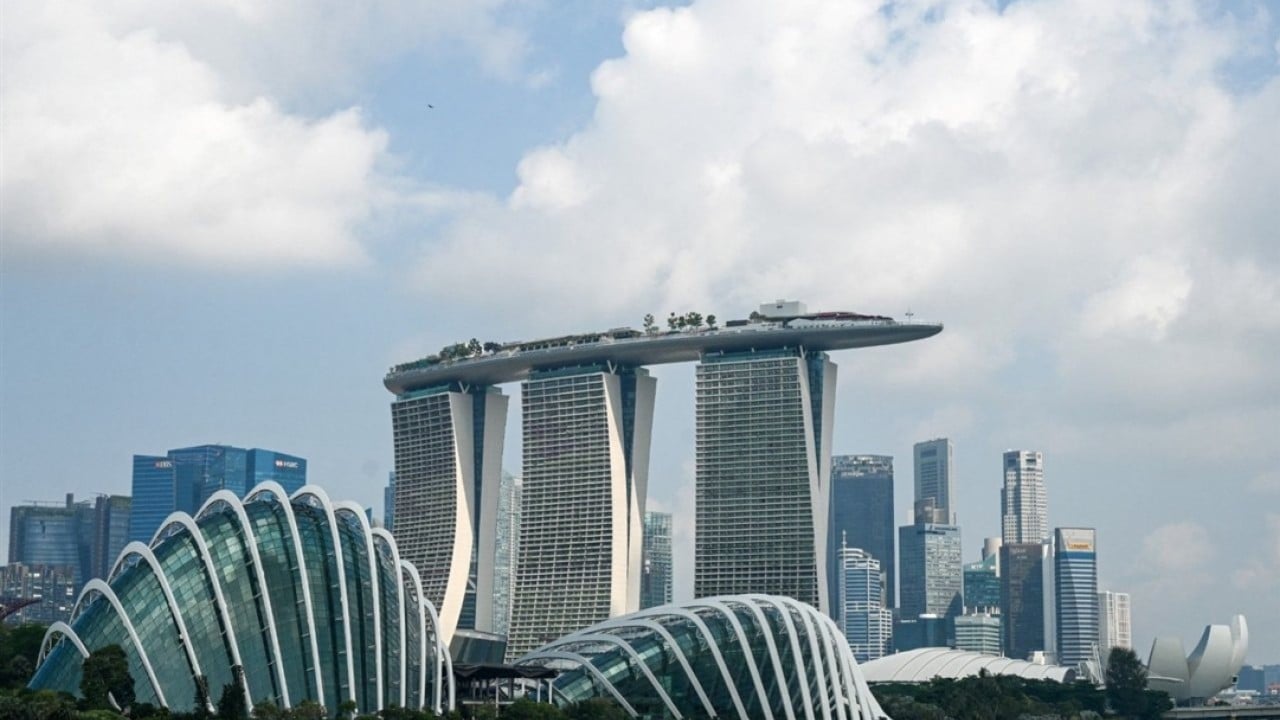
The humidity in Singapore does not just sit in the air. It presses against you. On a standard tropical evening, the glass of a high-rise hotel balcony acts as a barrier between two entirely different worlds: the crisp, conditioned luxury of the interior, and the heavy, suffocating heat of the outside.
For a mother and her young child, that glass barrier suddenly became a prison.
We tend to view luxury hotels as sanctuaries. We pay for the illusion of absolute safety. When you key into a room high above a glittering metropolis, you leave the vulnerabilities of the street level behind. You unpack your bags. You let your guard down. But security is a fragile construct, dependent entirely on the assumption that predators stay outside the gates.
They don’t.
The Click of a Lock
It began with a deception so ordinary it barely registered. A knock on the door of a room inside a well-known hotel along Beach Road.
When the door opened, the illusion of safety shattered instantly. Three men, driven by a calculated desperation, forced their way inside. In the modern era of travel, we worry about digital scams, skimmed credit cards, or luggage lost in transit. We rarely prepare for the raw, visceral terror of a home invasion compressed into a transient space.
The metrics of the crime are stark. The men seized sneakers, luxury clothing, and an array of jewelry. They targeted the high-value, easily transportable markers of wealth that flow through a global financial hub like Singapore.
But the economic theft was minor compared to the psychological cruelty that followed.
To ensure their escape, the intruders forced the woman and her child onto the balcony. The heavy glass door slid shut. The lock turned from the inside.
Consider the sudden shift in reality. One moment, you are a traveler relaxing in a premium suite. The next, you are marooned fourteen stories in the air, watching through a pane of glass as strangers ransack your life. The child looks up, feeling the sky open above and the sheer drop below. The mother is left with a terrible, localized claustrophobia—trapped in the open air, utterly helpless, shouting into the void of a bustling city that feels miles away.
The criminals slipped out into the corridor, leaving behind a scene of quiet devastation. They believed they had bought themselves time. They believed the vast, anonymous machinery of an international escape route would swallow them whole before anyone realized what had happened.
They miscalculated the city they were in.
The Invisible Net
Singapore operates on a philosophy of absolute intolerance toward chaos. To understand how the subsequent manhunt unfolded is to understand a system designed around total surveillance and rapid, surgical execution.
The moment the victims managed to raise the alarm, a silent, massive machinery spun into motion.
The standard criminal playbook relies on the friction of borders. If you can commit a crime in one jurisdiction and cross into another before the paperwork clears, you win. The three suspects—all Chinese nationals—immediately headed for the checkpoints. They split up. Two attempted to flee via the land crossing at the Tuas Checkpoint, aiming for the sprawling geography of Malaysia. The third headed toward the Changi Airport terminals, looking for a flight that would take him far beyond the reach of local law enforcement.
They underestimated the speed of a digitized border.
Within twelve hours of the report, the police had not only identified the trio but had also mapped their trajectories across the island. It was not a chase filled with screeching tires and cinematic gunfire. It was a sequence of quiet, inevitable interceptions.
Officers intercepted the first two men at the border complex, just as the reality of escape seemed within reach. The third was pulled from the transit area of the airport, minutes before he could disappear into the clouds.
All the stolen property was recovered. Every single piece. The system proved flawless in its execution, a textbook demonstration of why the city-state maintains its reputation as one of the safest places on earth.
But a flawless arrest record does not erase the trauma left behind in room 1401.
The Illusion of the Threshold
This incident exposes a deeper, uncomfortable truth about modern travel and personal security. We rely heavily on institutions to keep us safe, outsourcing our vigilance to keycard readers, concierge desks, and security cameras.
When those systems are breached, the psychological fallout is profound.
A hotel room is a strange hybrid of public and private space. It is a temporary home, a place where we sleep, undress, and keep our most intimate belongings. Yet, the walls are shared with strangers, and the doors open to corridors that anyone with enough malice can navigate. The vulnerability is inherent, masked only by the plush carpets and polite staff.
The legal system will now take its course. The three men face charges of unbailable aggravated robbery, a crime that carries severe penalties under local law, including the prospect of caning. The state will make an example of them to preserve the sanctity of its tourism and business sectors. The message to the global criminal underworld is unambiguous: do not bring your chaos here.
Yet, as the news cycle moves on and the court dates are set, the true lingering cost remains with the survivors.
The physical items were returned, neatly cataloged in plastic evidence bags. The sneakers, the jewelry, the clothes—all recovered. But you cannot return the sense of peace that was stolen when that balcony door clicked shut. Long after the luxury suite has been cleaned and rented to the next unsuspecting traveler, a mother and a child will remember the night the tropical air felt cold, the city felt distant, and the glass between safety and terror was only an inch thick.